Ernesto Ekaizer: "In the world of justice, Marchena commands and the PP obeys"
Journalist
-
CAT -
CAST
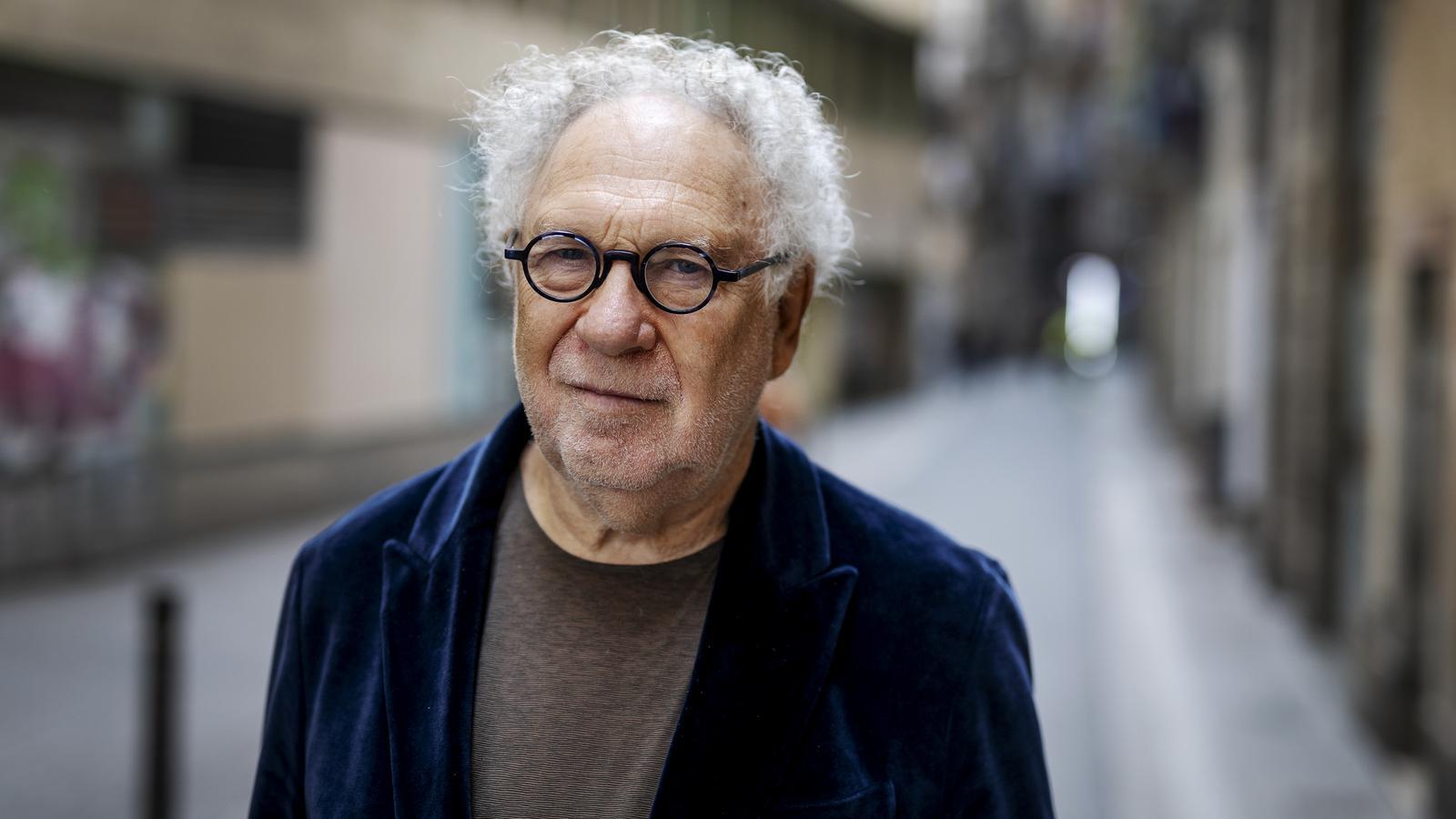
BarcelonaErnesto Ekaizer (Buenos Aires, 1949) is possibly the journalist who best knows the underworld of the judiciary in Spain, and especially its connections with political and media power. From this experience comes Estado de golpe (Ediciones Akal), a book in which he reviews recent political history.
His book begins by explaining his beginnings as a journalist in Argentina, from where he had to leave due to threats from the far right. He left behind murdered and tortured colleagues. How did it affect him?
— I had never spoken about it. The repression in Argentina was fierce. It is understandable that many people die in a civil war, but in Argentina there was no civil war; they made it up. There were armed groups, terrorists, but they did not endanger the stability of the state. There comes a point when you become immune. Notice that I left the country in December of '77, which was when the worst of the dictatorship ended because the '78 World Cup was coming and they dismantled the camps. I had been threatened since 1975, but I resisted leaving.
Who was threatening him/her?
— The Triple A (Argentine Anticommunist Alliance). The madness was such that I went around with a pistol in a briefcase. The idea was: if they attack you, at least defend yourself. It was terrible, but you got used to it.
And why is he explaining this now?
— Because I am trying to explain that I know very well what a coup d’état is. I have invented a word: golpeólogo. I lived through the different coups in Argentina and also the one in Chile.
What is the thesis of the book? That in Spain there are also some kind of soft coups?
— What I saw at the end of Felipismo was a period of systemic corruption that affected the institutions and the socialist party. The icing on the cake was the Segundo Marey case. And then there were figures like Luis María Ansón who were central. Therefore, there were cases of corruption and at the same time a group of journalists who distrusted Aznar's ability to defeat González, and they started a media campaign. It is the famous crime syndicate that operates in Spain: media outlets coordinated with magistrates of the Supreme and Constitutional Court who pass them the documents. It is of an institutional nature.
The newspaper El Mundo also played a prominent role.
— Yes, with Pedro J. Ramírez, who later, already under Aznar, argued that the 11-M was the work of ETA. Political alternation must always be carried out with forceps, it cannot be natural. And this is when coup-like mechanisms operate.
And is that what is happening now too?
— The difference is that Felipe already wanted to leave in '96. But I saw that the same pattern was repeating itself with Sánchez. And Feijóo, when he saw that he won in 2023 with a great result but didn't have enough to form a majority, he went crazy. Especially when the amnesty was announced. And it was when Aznar went with Feijóo to the Francisco de Vitoria University and made the proclamation: “Whoever can do, let them do”. And that was when events started to be linked together. In this sense, the book works like a novel.

Where do you see the most suspicious fact?
— You have that in the year '23 the National Court convicts Miguel Bernad and Luis Pineda of Ausbanc for blackmailing banks. But, in cassation, the president of the court, Manuel Marchena, annuls the sentence and they are acquitted. These are the people from Manos Limpias, who are growing in confidence. They are the ones carrying out the campaign against Sánchez's brother, against Begoña...
So Marchena acquits the one who will later lead the judicial offensive against Sánchez and his government.
— I expose the facts. To understand what is happening in this country you have to know the sequence of events. And Marchena is a main character in this story, who basically just wants to be in charge. He uses the Procés trial to become famous, thanks to streaming. For the judges of Madrid, Alcobendas, Fuenlabrada and Girona, he becomes a star. With the trial he consolidates his leadership, but then he strengthens it by becoming the champion against the amnesty law.
But does he act on his own or does he coordinate with the PP?
— He does not coordinate with anyone. Marchena commands and the PP obeys. The orientation is his. He says that the first draft of the law is much better than the second, and that such an important law cannot be left in the hands of bunglers, as he calls them, like Zapatero, Santos Cerdán, Boye, etc. He asserts that no one really knows what he thinks about the amnesty... In the second draft, Boye places the issue of enrichment and makes things easier for Marchena, who will later build the theory that by not paying the money out of his own pocket, they had enriched themselves. Ana Ferrer, who is a member of the court, denounces it and calls it a “legal fiction”.
But at what point do the judges declare war on Sánchez?
— I suppose there is an accumulation. Look: abortion law, same-sex marriage law, euthanasia law, law of the only yes means yes... All of this is incompatible with them. Judges are mostly right-wing. Judges support the PP, they are impervious to the Transition. The access system is the same as it was during the Franco regime. It is a reactionary caste, very religious. In the case of the Peinado investigation, for example, the intellectual force lies with section 23 of the Provincial Court of Madrid, all reactionary judges. Begoña Gómez is not facing a judge's investigation, but rather an entire supervisory court. This is no longer lawfare, is directly prevarication.
Can you imagine the possibility of seeing Pedro Sánchez before a court?
— It cannot be excluded. Judge Tardón, who is investigating the assault on Ceuta, is on a campaign against the government. She could be the parallel to Peinado with Begoña. The government does not even control its own police, look at the UCO. It is what I call the double power: a campaign within the same state to bring down the government. In the end, the conclusion is that the coup state triumphs.
