The advisor who said that councilor Vergés was asking to stop the vaccination of the police is now defending her in court
Carmen Cabezas says that neither she nor Argimon could order the vaccination of the agents
-
CAT -
CAST
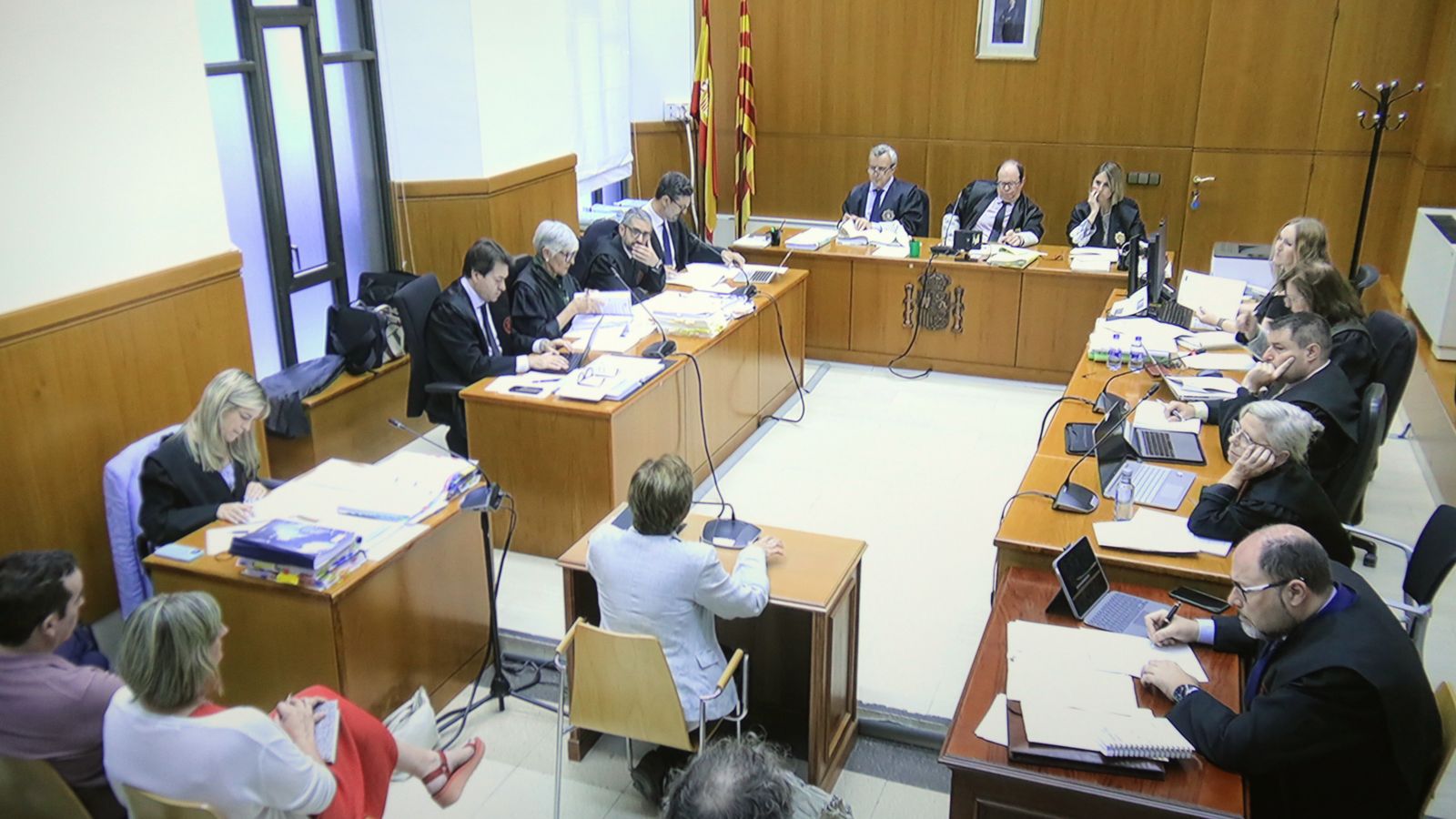
BarcelonaNew round of witnesses in the trial for allegedly "discriminating" against national police and civil guards with covid vaccines. After the commanders of both forces cleared the defendants, among whom are former ministers Josep Maria Argimon and Alba Vergés, this Monday it was the turn of other former Health directors to explain themselves. Among them, Vergés's advisor who sent a key message in the investigation of the case, in which she said: "Once again, the minister asks to stop Civil Guard and National Police. We cannot justify it. We should stop it".
Contrary to the incriminating interpretation that had been made of the message, Judit Viñals explained to the court that in that message she was referring to stopping the vaccination of officers under 60 years of age. At that time, the AstraZeneca vaccine was being prioritized for people between 60 and 65 years old, whether or not they were essential workers, because they were the age group with the most deaths and hospital admissions due to covid. For this reason, as the advisor explained, Vergés considered that vaccinating younger officers first would go against the elderly and also against other groups of essential workers, who were only being vaccinated if they were between 60 and 65 years old.
Viñals said that Vergés never gave her orders not to vaccinate members of the National Police and Civil Guard, nor to relegate them or make excuses not to do so. She also said that she never justified the decisions with reasons other than health or applying the decisions of the Interterritorial Council of Health.
The former Secretary of Public Health, Carmen Cabezas, who was investigated at the beginning of the proceedings but was ultimately cleared, has also supported the decision to prioritize vaccinating the elderly. "What was always said is that vaccination for 60-65 year olds was prioritized, as well as essential groups," she clarified. Cabezas was the one who received the messages that have been part of the case, and she said they are "whatsapps expressed quickly." She assured that Vergés ordered her to "continue with the age criteria and continue with the essential groups." She, on the other hand, was in favor of vaccinating all agents with whom the work of finding them a day and time and summoning them had already been done: "More than for public health reasons, because in terms of mortality it was more relevant to vaccinate those over 60, it was mainly for operational reasons. I also said it due to a certain inequality with other autonomous communities."
"Organizational problems"
Several witnesses have explained, in fact, that the logistics were a bit more complicated because the agents wanted to be vaccinated in police stations and not in health centers. They also had to request the list of agents several times to be able to summon them. The then Spanish government delegate in Catalonia, Teresa Cunillera, explained that the delegation did not have access to this data, and therefore the police forces had to provide it directly to Health. Cunillera also said that the vaccination rate was slow "due to organizational problems".
Cabezas' testimony also served to clear Argimon, clarifying that from Public Health neither of them could order to continue vaccinating agents. The former director of the CatSalut professional area, Sara Manjón, also said that neither she, nor Argimon, nor Adrià Comella – who directed CatSalut and is also accused – decided on the vaccination process. Also accused are the former Secretary General of Health Marc Ramentol and the former Director of Health Services Xavier Rodríguez Guasch, in his case only pointed out by police unions of the popular accusation because the Prosecutor's Office requested his acquittal. For the rest, the prosecutor requests 12 years of disqualification for prevarication. The unions wanted the case to be judged as a crime against workers' rights, which could have resulted in prison sentences, but the court dismissed it.
