The police clear Health in the trial for the covid vaccination
The National Police and the Civil Guard say at trial that the department was always available to coordinate it
-
CAT -
CAST
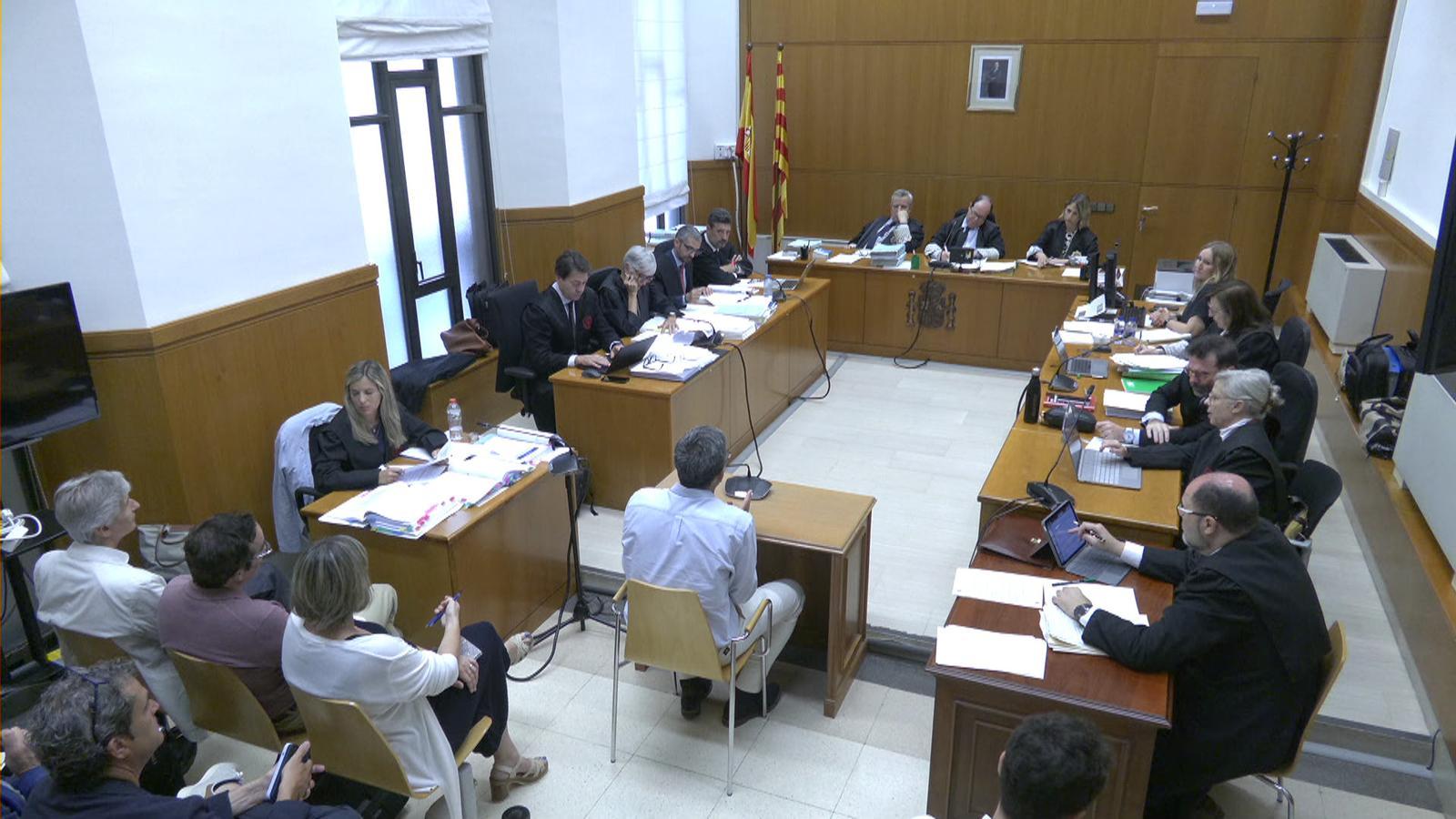
BarcelonaThe testimony of those responsible for the covid vaccination of National Police and Civil Guard agents in Catalonia has been a cold shower for police unions that accuse former heads of the Health department of having "discriminated" against them compared to the Mossos d'Esquadra. The second day of the trial of former councilors Alba Vergés and Josep Maria Argimon focused on the statements of the commanders of these two forces who organized the vaccination of their agents stationed in Catalonia, and both stressed that they spoke daily with their interlocutor at Health, Xavier Rodríguez Guasch, about whom they said he always had a good disposition for coordination.
They also agreed in explaining that the vaccination of agents was done with AstraZeneca and was suspended — as for the entire population — when thrombosis problems were detected. Later, this vaccine was administered again only to the population between 60 and 65 years old, and both witnesses clarified that agents of those ages were also vaccinated, while younger ones received doses from other laboratories.
In fact, the coordinator of the National Police vaccination in Catalonia, Daniel Rapado, explained that he used to be in contact with Xavier Rodríguez Guasch until one in the morning. He himself proposed that the police force give him a decoration in gratitude for his work with the vaccination plan. At that time, Rodríguez Guasch was the director of Health services, and now he is one of those accused in this trial by four police and civil guard associations and faces a sentence of 12 years of disqualification for prevarication after the court dismissed a crime against workers' rights at the start of the trial, which could have led to prison sentences.the court dismissed a crime against workers' rights, which could have led to prison sentences. Guasch is the only defendant accused solely by police unions, because the Prosecutor's Office requested the case against him be dismissed. On the other hand, the public ministry maintains the charge of prevarication against former councilors Vergés and Argimon, as well as against former Secretary General of Health Marc Ramentol and former Director of CatSalut Adrià Comella.
Organizing "wasn't that fast"
The two commanders who testified this Wednesday specified that their agents began to receive AstraZeneca vaccines on March 12 and 15, 2021, but on the 16th, vaccination was stopped throughout the State by order of the Ministry of Health due to the detected risk of thrombosis. At that time, only the AstraZeneca vaccine was maintained for the population between 60 and 65 years of age, including agents of that age, and this forced a revision of the census of police officers and civil guards to be vaccinated. In fact, the national police coordinator Daniel Rapado admitted that they had to redo the lists of eligible agents several times because some were on secondment to other parts of the State, or on leave, or had doubts about whether to get vaccinated. For agents under 60 years of age, vaccination resumed with doses from other laboratories, mainly Moderna. He himself said that "the paralysis of vaccination was brief", but at the same time the process of reorganizing the agent lists "was not so fast", and he explained that by the end of March all agents were vaccinated.
On the other hand, the lieutenant colonel of the Civil Guard who was in charge of coordinating vaccination in the corps, Esteban Gómez, explained that even when vaccination resumed for younger agents with Moderna, there were difficulties due to a lack of doses. On March 23, 2021, Rodríguez had communicated to him that they could resume vaccination for all agents the next day. On the morning of the 24th, all the civil guards who had appointments that day were vaccinated, but that same afternoon Xavier Rodríguez Guasch notified him that there were not enough vaccines. "They thought a batch would arrive but it didn't, and the remainder would be for people between 60 and 65 years of age and urgent cases," explained the civil guard.
