A simple change that could revolutionize the election night count

-
CAT -
CAST
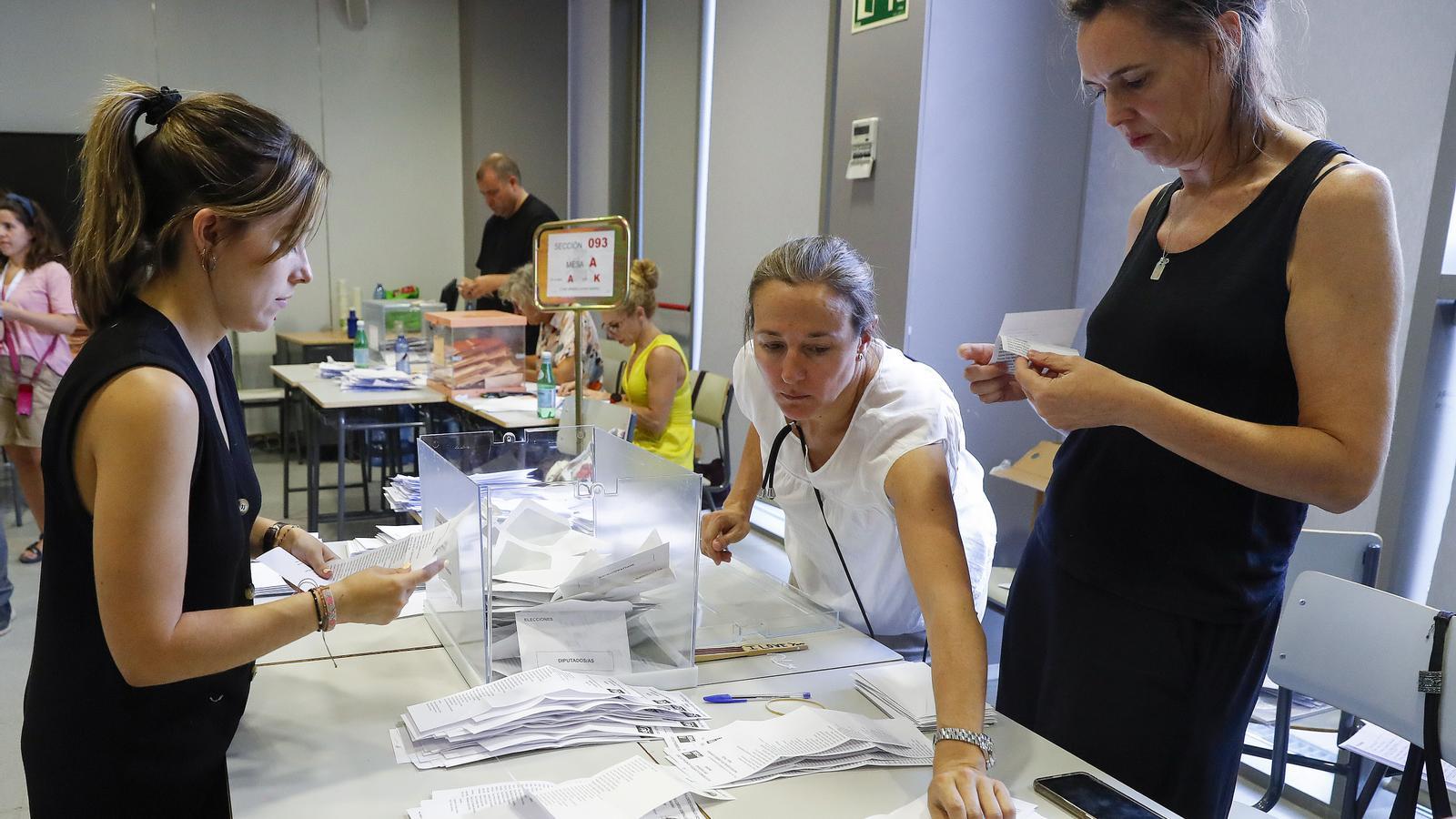
BarcelonaMost likely, the evening of November 29th will repeat the script of every election night. At 8:00 PM the polls will close and television stations will keep us entertained for a while with the results of a survey commissioned in the last few days. About an hour later, we will begin to see partial results on the screen with 1%, 2%, 5%, or 10% of the vote counted. Journalists and analysts will be forced to comment on these results. And citizens might watch it confused and disoriented, because it is very likely that the results of the first half of the count will bear little resemblance to the final ones. This is because the polling stations that are fastest to count usually report first, which are those in small towns. Then, small and medium-sized cities enter, and finally, the bulk of the large cities is incorporated. It will be at this moment that the partial results will begin to approach the final ones, although until the end of the night there will remain the doubt of whether some seats could shift.

All of this is part of the ritual. But it is a problematic ritual, and it has a very easy solution. Let's take it one step at a time. It is problematic because it forces television stations to spend a lot of money on a poll that has little more than an hour of life and that has often differed substantially from the final result. Furthermore, it creates a lot of confusion to show partial results that do not resemble the final ones at all. This encourages the circulation of conspiracy theories which, in times of democratic distrust, do not help at all. And, finally, it is problematic because someone in government likely has a reliable projection of the final result from very early on and can prepare their public reaction with a certain advantage.
How could this process be improved? Perhaps some readers remember Duran i Lleida's famous "hundred polling stations": the UDC leader would receive information from the first hundred votes counted in key polling stations, and this allowed him to offer a reliable estimate of the final result very early on. It was an artisanal method, logistically costly and with a certain risk of error. Nowadays, there would be no need to resort to a network of informants across the territory: a small change in the way the electoral administration publishes the data would be enough for citizens to have, very soon, reliable information on the final result.
A cost-free solution
The solution is very simple: the electoral administration would only need to identify which polling stations the partial results being published during the night are coming from. With this information, the media or analysts could correct the partial results by comparing the results of previous elections in the scrutinized polling stations with the overall results. With this simple statistical adjustment, very reliable projections of the final results can be generated even with a very low percentage of votes counted.
We can demonstrate the superiority of this method with a simulation exercise using previous results. In fact, in the last four general elections, it would have been possible to project the final result for all parties with less than a 1% margin of error when barely 5 to 7% of the votes had been counted. And, often, the final distribution of seats could be very closely approximated from as little as 15% of the vote, although in some cases (2019) it would have been necessary to wait until more than half of the scrutiny, because many seats moved within very narrow margins among four parties.
This small reform in the way data is communicated would imply a very substantial improvement in information during election night, could reinforce citizens' trust in the electoral process, and would put all parties, the media, and the public on an equal footing regarding information during a high-voltage political night.
