Junts follows the wake of PP and Vox and questions "the demographic impact" of the clean law in Catalonia
The Popular Party proposes a legal reform to allow hot returns in Ceuta and Melilla
-
CAT -
CAST
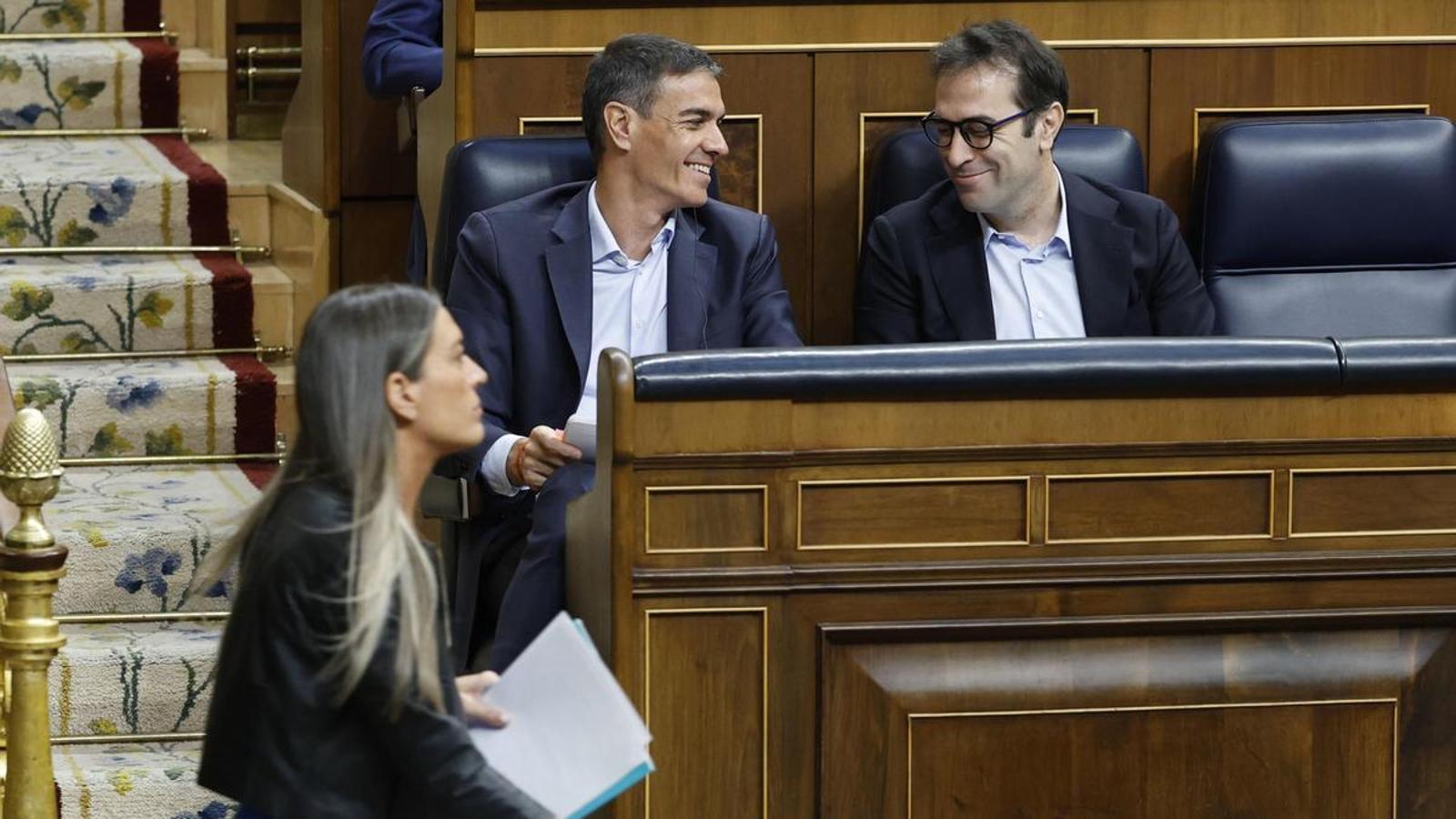
MadridOne of the cornerstones of the PP and Vox argument in recent weeks has been to point out that the Spanish government would supposedly be trying to alter the electoral roll by massively incorporating people of foreign origin. The "ley de nets" (law of the clean slate), which grants Spanish nationality to relatives of exiles during Francoism, and the extraordinary regularization of immigrants, which grants residence and work permits to people already in the country, have been the focus of criticism from the Spanish right and far-right. Not only because of the impact they predict it could have on the results of the upcoming Spanish elections —regularization does not grant the right to vote, while the "ley de nets" does grant this possibility— but also on the social structure and access to public services. Now Junts has partially joined these theses.
The Junts members have registered several parliamentary initiatives in Congress focused on obtaining more information about both procedures. Carles Puigdemont's party justifies this by the "opacity of the Spanish government" and demands "the data to know the impact of demographic change in Catalonia". In this regard, Junts has asked the Spanish government to provide them with, among other things, the number of applications and nationality files resolved under the "ley de nets" as well as those related to regularization, broken down by districts in Catalonia. In relation to this data, the leader of the PP, Alberto Núñez Feijóo, has accused Pedro Sánchez of carrying out "electoral and social engineering".
These statements by Feijóo have been criticized by the left, which accuses him of following in Vox's footsteps in order to prevent a transfer of votes to the far-right. Junts' move in the lower house to join this debate, which has been primarily fueled by Vox, comes days after the barometer of the Centre d’Estudis d’Opinió (CEO) predicted that Aliança Catalana would clearly surpass Junts in Catalan elections. Faced with the rise of the Catalan far-right, Junts members also recalled this Wednesday that they have fought for Catalonia to have immigration competencies, a proposal that PP and Vox specifically rejected in Congress with the support of Podemos.

The CERA vote
Although Junts' main warning is based on the fact that they consider that "demographic decisions cannot be made without rigorous planning", in the battery of questions registered they focus on the voting procedure through the Electoral Census of Absent Residents (CERA), although the Junts members do not explicitly speak of risk of electoral fraud. PP and Vox have repeatedly warned that the incorporation into the CERA of new Spanish citizens through the cleanup law could alter the results of the 2027 elections, although this is a very unlikely hypothesis. In the case of Junts' questions, they request information on how new citizens are incorporated into the census, with what supervision and on what criteria they are assigned to a specific municipality.
"Under what circumstances can the administration not accept the municipality proposed by the interested party and determine a different one?", Junts asks the Spanish executive. According to the PP and Vox, there is a risk that the Spanish government will register people in key constituencies to snatch seats that could be decisive. In response to questions from ARA, the Ministry of Foreign Affairs recently replied that it is the interested party who chooses the municipality based on their roots in the territory. In the case of the cleanup law, it is most common for it to be based on the place of origin of their ancestors, diplomatic sources specified.
Hot returns
Within the framework of a progressive hardening of proposals on immigration by the PP, Feijóo's party has announced that they will promote a legislative reform to cover the "hot returns" of immigrants who arrive swimming to Ceuta and Melilla. This was defended by the deputy secretary for sectoral coordination of the PP, Alma Ezcurra, after meeting with various police associations in Palma (Mallorca). The way forward is a modification of the foreign nationals law with the aim that security forces can expel "with all legality", without having to give guarantees to immigrants before doing so, those people who try to arrive illegally by sea to these border territories with Morocco.
