Ceuta, a free port
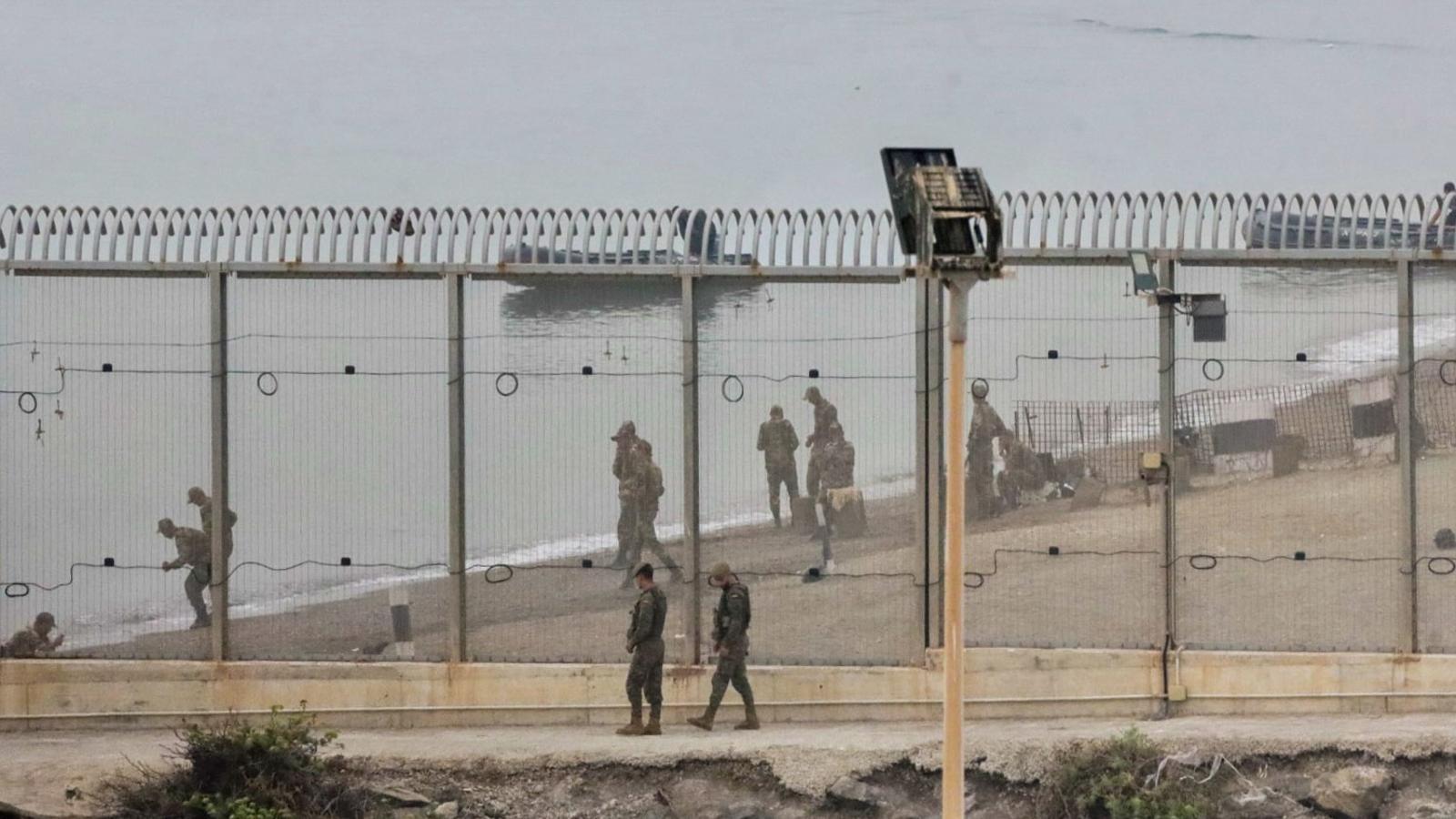
The facts: Ceuta has a population of a little less than 90,000 inhabitants. Between 1995 and 2025, 85,000 people have arrived there irregularly. It has a population density of 4,500 inhab./km². An area of almost 20 km². And a GDP/capita of €23,000 (Spain, €34,190; Morocco, €4,600). The population with Moroccan nationality in Ceuta is 12%. The Muslim population, 45%. (In 1970 they were 10%.) The proportion of income coming from the General State Administration is 47%.Based on this reality and evolution, the future situation is foreseeable. 50% of the income is public. Little wealth is generated from private activity. The income is 68% of the Spanish one and five times the Moroccan one, which ensures intense irregular immigration destined for Ceuta or in transit to the EU.Spain's military and economic superiority over Morocco is indisputable, but the weapon of demography is an advantage for Morocco. The population versus the army: the Green March 50 years ago and the invasion of Ceuta a few weeks ago. Human life does not have, in Morocco, the same importance as in Europe.It is hard to understand why, in the long term, it is necessary to maintain Ceuta as a Spanish enclave in Morocco (except for the historical reason and the will to protect the population). There is no economic motivation. Spain, in case of conflict –and despite its military and economic superiority– would have two problems: 1) Morocco's demographic weapon (the population is used for political ends despite the risk it may pose to them). 2) An armed conflict would produce a rift in Spanish society that would be difficult to resolve (the right would probably be in favor and the left, probably, against). Morocco knows this and exploits it. Any alternative that is proposed in the short term must establish the Spanish nature of Ceuta. We cannot get out of one problem and enter another.
The solution to all of this could be that of Singapore, but it must be quantified and qualified: converting Ceuta into a free port within the Spanish state. This solution eliminates the problem of nationality, but confers an economic value to Ceuta, –both for Spain and for Morocco– that it does not currently have. And it is compatible with EU legislation.Singapore, with 700 km² of extension and 5M inhabitants between locals and foreigners (60-40%), separated from the Malaysian Federation in 1965 to establish an independent state based on its geographical position –a port in a privileged situation for traffic (Ceuta also has this)–, and the capacity to attract investments –through the elimination of taxes and the mobilization of a talent concentration policy with activities linked to finance, technology, and education–. President Lee's vision made it possible. In Singapore, different ethnicities, languages, religions, and cultures were mixed: Malays, Chinese, and Muslims. It was not a problem (in Ceuta it should not be either). The GDP per capita in Singapore has gone, in 50 years, from nothing to more than €80,000/inhabitant. The lack of space has been a problem, but they have made their territory grow from 500 to 700 km² (modern piling systems allow doing it at a low cost and without affecting the environment). The population density in Singapore is 50% higher than that of Ceuta. Ceuta, by gaining space from the sea and increasing its density, could double its population, an important element for its economic viability as a free port.Taxes in Ceuta are globally 50% of those in force in Spain. If one wishes to turn Ceuta into a free port, they must be almost entirely eliminated, including personal income tax and corporate tax, to attract talent and investments. To verify the viability of the initiative, it would be necessary to quantify the needs for services and infrastructure and establish the taxation required to fund it. There are models that have been successful on small islands in the Caribbean, in Asia, and in the English Channel or in Gibraltar, but the economic solution that leads to stability is a model of a medium-sized economy, not a micro one, such as, for example, Jersey. A free port would not generate costs for the State, but it has significant collateral advantages.
Creating a container transshipment port, from the major Asian lines to local cabotage, taking advantage of the fact that the major Asian lines pass nearby (as Tangier Med aims to be and Algeciras will cease to be due to excessive regulation of stevedoring and the corporate union that stifles it). It is a possibility worth evaluating. Having a small free port (Ceuta), next to a large one (Tangier Med), has competitive advantages.Finding a management team that knows how to do it is the most difficult part of the problem. No one doubts that Lee was the inventor of the Singapore model. Do we have a Lee in Spain to do it? Surely yes if we provide the necessary economic incentive. If we locate an investment incentive in Ceuta, we will find investors.The port must be built over the sea with a concrete platform on piles and on a seabed of no more than 25 metres for cost reasons. On the west coast, a platform of more than 350 ha can be accommodated without affecting the city (as a reference, we have the container terminals in Barcelona, which total 238 ha). The beaches on the east coast would not be affected. The conclusion is that the port fits there, with minor impact on the coastline.
Doing so requires political will. It is obvious that what is done in Ceuta must be done in Melilla, but the fact of having two enclaves can be an advantage. The workforce from Morocco can continue to come (more will be needed), but returning every day... like in Gibraltar. This is a key to the solution, which should also benefit Morocco.Thinking big has advantages. One should not think in political or military terms. The solution lies in the economy.
