What is the net law?
The Spanish government opened a procedure for descendants of exiles to obtain nationality, which entails the possibility of voting
-
CAT -
CAST
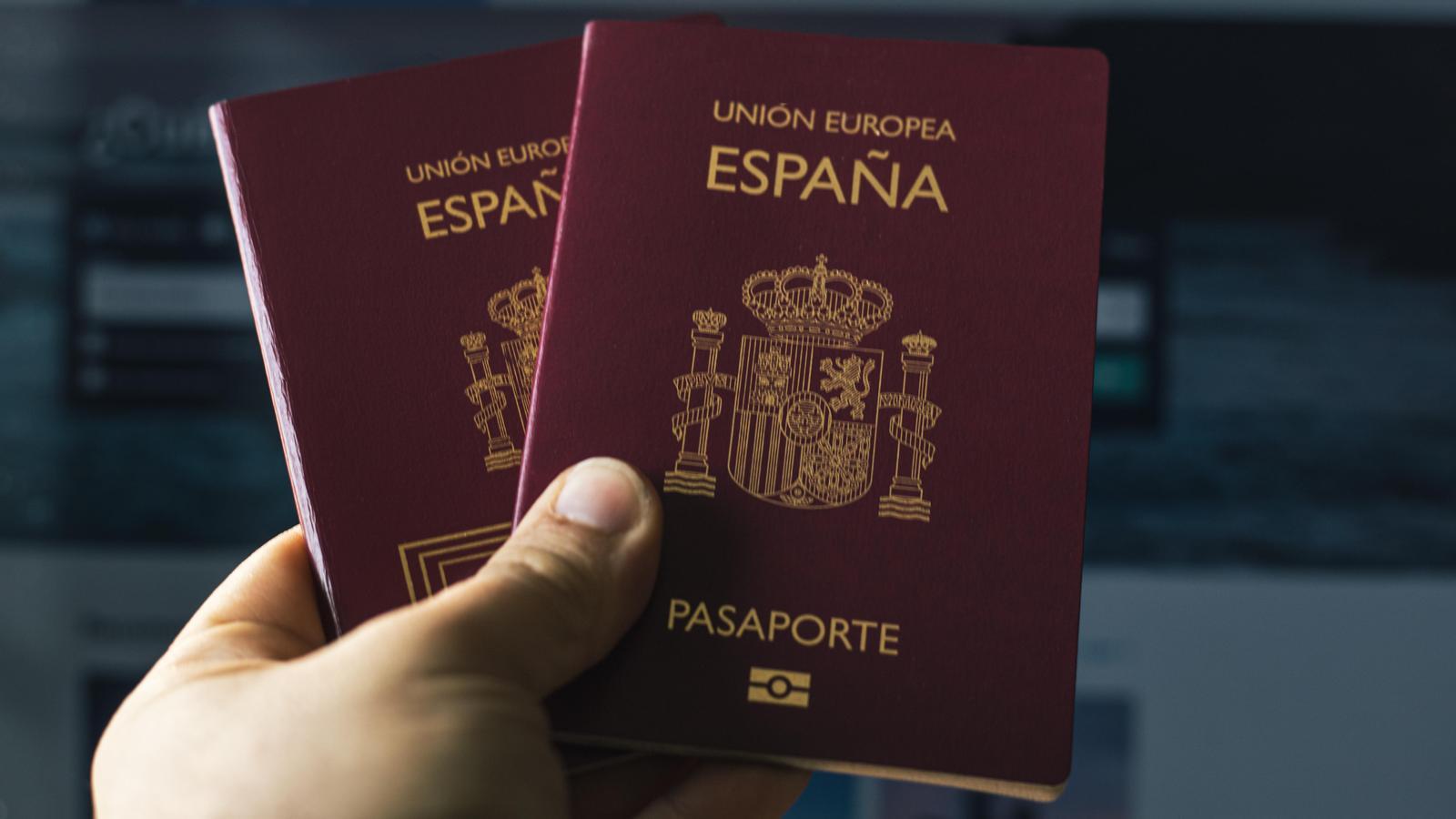
MadridIt has been almost four years – October 2022 – since Congress approved what has been dubbed the "nets law." It is not a law as such, but rather a provision included in the democratic memory law that recognizes Spanish nationality for descendants of exiles from the Civil War and Francoism. Given the volume of requests – especially from Latin America – and the limited resources of consulates abroad, where applications must be processed, hundreds of thousands are still pending resolution. However, it is in the media spotlight these days because the PP and Vox have used it as an argument to accuse the Spanish government of trying to alter the electoral roll for the upcoming Spanish elections. What exactly are we talking about?

The granting of nationality
The aforementioned provision, which came into force on October 21, 2022, established that people born outside of Spain, but who are daughters or granddaughters of Spaniards who lost their nationality as a consequence of suffering "exile for political, ideological, belief, or sexual orientation and identity reasons," could opt for it. An instruction from the Ministry of Justice issued four days later specified that this status of exile is recognized by default for people who left between July 18, 1936, and December 31, 1955. Descendants of those who left Spain later, until December 28, 1978, had to prove their relative's condition as an exile.
The possibility was also given to grant nationality to those born outside the State who are children of Spanish women who lost their nationality for marrying foreigners before the entry into force of the 1978 Constitution, as well as to adult children of persons to whom nationality was recognized under a similar, but more limited, provision of the previous historical memory law of 2007. Applications could be submitted for three years, from October 22, 2022, to the same date in 2025.
The procedure
These nationality applications had to be made before the civil registry "of the applicant's domicile". Since the vast majority are residents abroad, the procedure affects Spanish consulates. The one that has received the most is that of Buenos Aires. It has registered 645,052, the majority of which are still pending resolution. In fact, there are more requests made in the Argentine capital than have already been approved worldwide. According to the latest data provided by the Ministry of Territorial Policy and Democratic Memory, nationality has been granted to 544,722 people, of whom 306,000 are already officially registered in the civil registry. However, consular offices still have pending work because up to 2.4 million people have requested an appointment to obtain nationality under the law of 'descendants of Spaniards who had to leave Spain'.
The officials
The responsibility for validating the granting of nationality, after verifying the documentation provided to prove the link with the relative and their exile, falls directly on the consuls. Hence, the suspicions expressed by PP and Vox have caused unease among the diplomatic corps, which also complains that they "cannot cope" because this task is added to the ordinary activity of the consulates, which already have a "limited" staff. In statements to ARA, the president of the Association of Spanish Diplomats, Alberto Virella, warns that the applications "will have to be analyzed over many years" and defends the professionalism of the Spanish officials in charge of the procedure.
The right to vote
Granting nationality gives the right to vote in Spanish elections, but it is not automatic to be able to exercise it. At the end of the procedure, a specific registration process must be carried out in the electoral census of absent residents (CERA). There is, therefore, the possibility that people who have obtained a Spanish passport may not take or may take a long time to take this step in order to vote. Faced with insinuations from the right and the far-right, who claim that the Spanish government could register them in key constituencies so that the PSOE can gain more deputies, official sources from the Ministry of Foreign Affairs reply that it is the interested party themselves who chooses which municipality they are assigned to for electoral purposes.
"They will do so exclusively based on the criteria provided in the same form" which, given the nature of this procedure, is usually the "of greatest roots of their ascendants". The same sources insist that this registration system has been in force since 2009 and that, in addition, the Central Electoral Board "always reviews" the forms relating to the CERA.
