Final sprint of the two Spains that face each other on 11-29
Sánchez appeals to the grandchildren of exiles to avoid an "involution" towards the past

-
CAT -
CAST
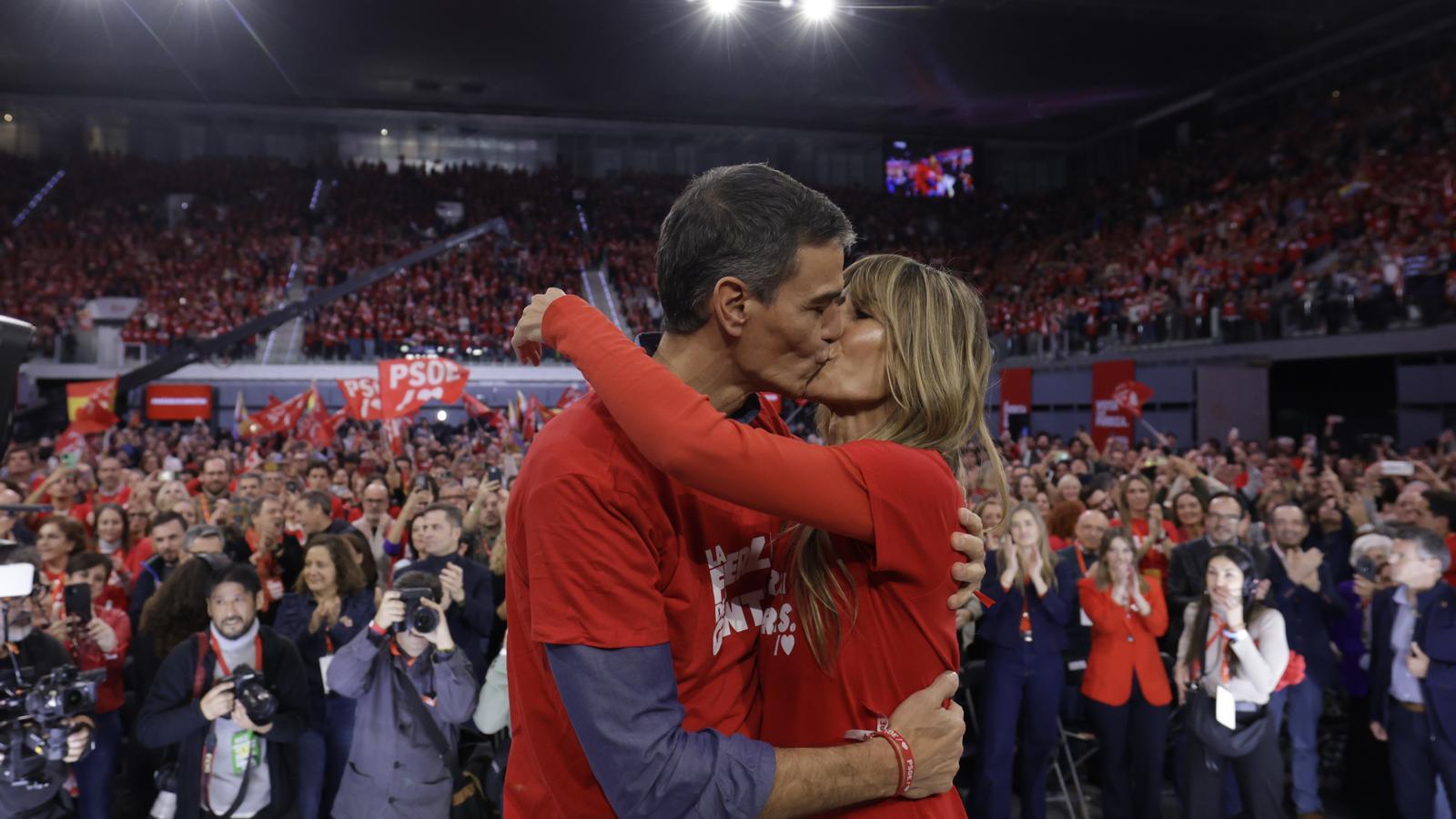
MadridSpain is divided down the middle and faces the polls this Sunday in one of the most decisive elections of its democracy. For the right and the extreme right of the PP and Vox, it is time to oust Pedro Sánchez from the Moncloa, the president who according to them has betrayed the State by granting amnesty to the leaders of the 'Procés', making deals with Basque independentists, and filling the ministries with "corruption", while for the progressive bloc, all the political and social rights conquered since the Transition are at stake this Sunday. Not in vain, at the last PSOE rally this Friday in Madrid, the cry of "They shall not pass" resounded in the Caja Mágica stadium, renamed as the Red Box, which Ferraz has managed to fill with more than 10,000 people. Filling the venue had become one more competition with the PP, since on Wednesday at Alberto Núñez Feijóo's rally on this same stage there were empty seats. Pedro Sánchez achieved it; with buses arrived from all over Spain, also from Catalonia, but he filled it. "There are those who say we will even win in Madrid", assured a leader upon leaving.
Reminiscences of 1939, the Civil War, and the exile following Francoism have frequented the iconography that the socialists have been showing on the big screen that presided over the event. "In memory of the republican exile, let us vote with more strength this Sunday", proclaimed the Spanish president. "These elections are not about me, they are about your rights, your housing, your dignity", he asserted.
In this way, he called for a final push to forge a new progressive government, this time with Yolanda Díaz of the Broad Front, with whom the PSOE believes they made a good tandem against the right-wing parties in this Thursday's four-way debate. "Facing the involution represented by Feijóo and Abascal, mobilization, mobilization, mobilization", reiterated the leader of the PSOE. This, in fact, has been the party's motto in this campaign. Although no poll indicates it, with the permission of the CIS, Ferraz considers that they have options to "do it again". That is, to make a comeback as they did three years ago and maintain the Moncloa by adding up all the left-wing and nationalist forces.
Why do they express this faith? They rely on the turnout that may take place this Sunday, which has traditionally benefited the progressives, although polls now indicate that a part of Vox's voters also come from abstention. At Moncloa, there are those who dream of winning and not needing either Junts or the PNB, but it is a forecast that no polling expert supports. Sánchez has once again repeated the magic formula in the final act: a 75% turnout to reach 176 progressive seats.
The socialists speak of an “undercurrent” in favor of the progressives and of a mobilization they have felt in cities and towns that goes beyond the usual people. “We notice gestures of complicity in the street,” they assure, including in Madrid, people of foreign origin who are “afraid” of the decisions that a Feijóo-Abascal tandem could take from Moncloa. Sánchez has warned from the stage: “It takes a lot for rights to reach the BOE, but in a single day, if we don't go to vote, they can vanish.” The PSOE's strategy has flipped the catchphrase “seeing is believing”: it has ensured that the base believed, to have options to see, with the risk that it all ends in a mirage. In fact, from Génova, they are convinced that they will win the elections, that they will form a majority with Vox, and that, moreover, Catalonia (in particular the seats that the PP can win in Lleida and Girona) will be key for the road to Moncloa. “We have the progressive majority in sight,” assured Sánchez, who in any case, in this final stretch, has counted on the support of filmmaker Pedro Almodóvar.
The coalition of voters
The recipe for the PSOE and also for the Broad Front is to appeal to different layers of voters: women, pensioners –to whom they have announced a new revaluation of the pension–, young people due to housing policies, and all those who feel threatened by a government with the presence of the extreme right. “The problem with PP and Vox is that they want to govern a Spain that no longer exists; women are no longer silent. The strength of women is what will make us win the elections once again,” predicted Sánchez. At the rally, there was no direct message to Catalonia, although a good part of his mandate has been marked by the amnesty for the leaders of the 'Procés', Catalonia in Europe, or the new financing system.
For the PSOE, the campaign has gone from less to more, since the Urda accident short-circuited the climate of joy and love that they at Ferraz had wanted to convey just after the calling of elections. This spirit was recovered on the opening day of the campaign in Seville, with the appearance of Begoña Gómez on stage. She has been a key element in mobilizing the base and has already become a permanent protagonist of the PSOE rallies. “I will vote for Begoña’s husband,” said a banner today. Sánchez has made electoral use of his relationship: from the kiss in the interview in Lecturas to the intervention of Gómez herself appealing to the female vote. But what the socialists most claim now is the four-way debate and Feijóo’s “quiet” to Yolanda Díaz, since after the face-to-face that the popular leader won, it has boosted the spirits of the PSOE cadres. In fact, this Friday, in the front row there were ministers dancing and giving everything they had inside.

“How are we going to surrender?”, asked Díaz herself, in turn, and also from Madrid, at an event where the shouts of “Yolanda comeback” have resonated. “No one will silence us,” she proclaimed –reports Martí Odriozola–. And the fact is that after a campaign in which they have struggled to make headway, those from the Broad Front feel emboldened by the good reviews of their candidate in the debate. Also because the competitors they have to their left in Madrid, Podemos, do not expect a good result in the Spanish capital, according to the polls. In fact, although the alliance with Gabriel Rufián in Catalonia has indeed worked for them –their candidate could enter through Barcelona–, Irene Montero does not by any means have her seat in Madrid assured. “The PSOE wants to eat its left to avoid doing useful politics,” said an indignant Montero, who this Friday had Pablo Iglesias on stage: “We are the minority that is not for sale”.

The election results
The vote count on Sunday night will be heart-stopping and some sources fear that there may be a battle in the courts if, against all odds, the socialists win. “The PSOE has never questioned the results, I challenge the PP to say that they accept them”, Sánchez said explicitly in his last message before going to vote. Nothing is written about what may happen.
