If they speak to you in Spanish, in what do you reply?
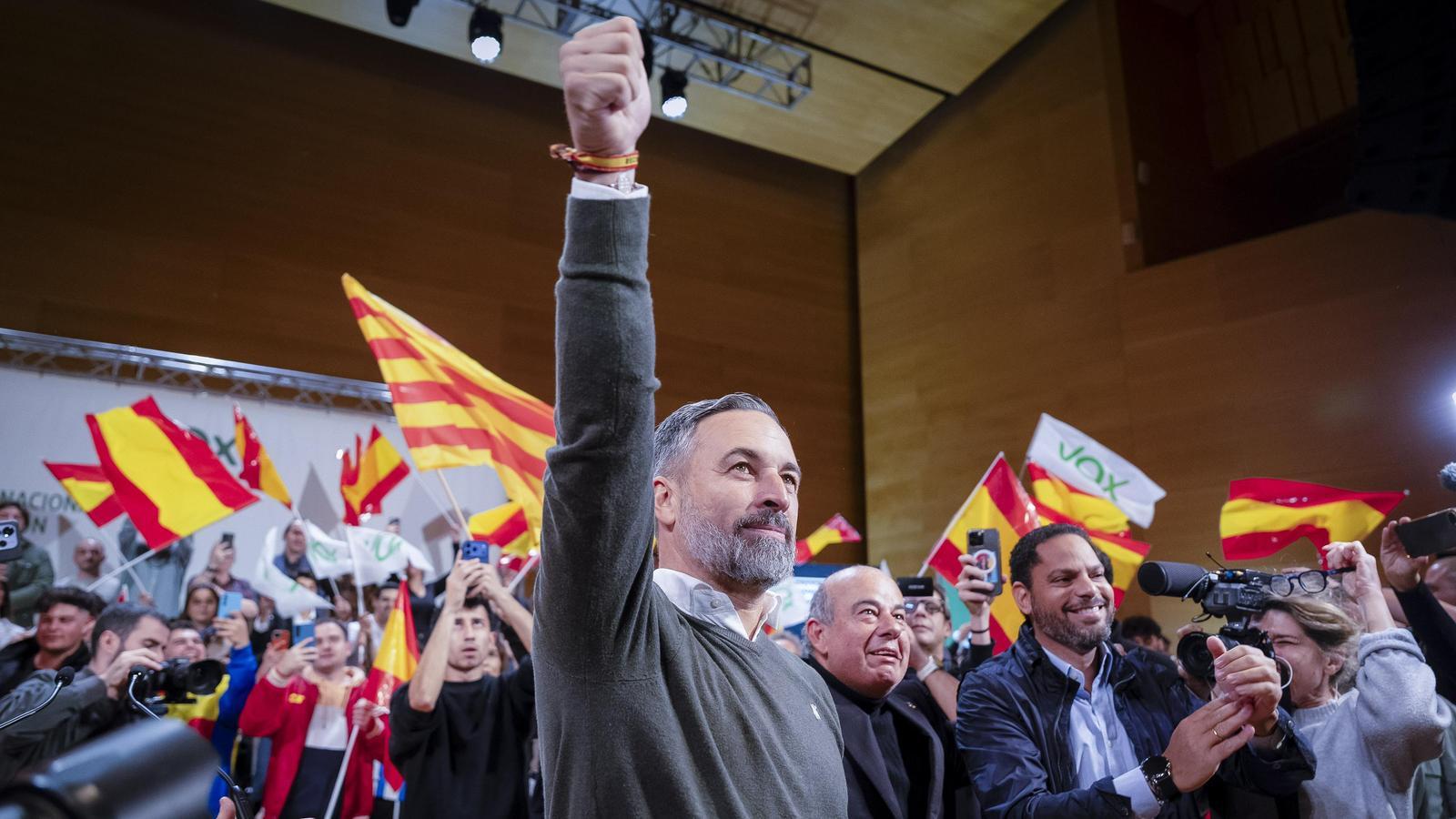

1. The election campaign ended yesterday, today is a day of reflection, and tomorrow we will vote. These are not just any elections. Francoism is knocking at the door. For the first time, and fifty years after the dictator's death, the extreme right could reach the government of Spain. It is not a minor event. If the polls are not wrong, Vox will not only be necessary to invest Núñez Feijóo but will also be part of a coalition government, as is already happening in four autonomous communities. Even though Vox has been in our landscape for years and, democratically, has a handful of seats in Congress and Parliament, suddenly a party would rule in Spain that does not hide its nostalgia for Francoism and that promises policies that put a host of fundamental rights at risk. Pedro Sánchez calls all this “devolution.” That falls very short. What would come starting Monday would have nothing to do with what we have experienced so far in the PP-PSOE alternation at La Moncloa. It would not be Aznar's PP—with the support of CiU or an absolute majority—, nor Rajoy's PP with the application of the 155 included, which we already know how they behaved. We would enter a dimension of cuts to social milestones achieved like never seen before in democracy.

2. Although Abascal, Aizcorbe, and company have wanted to keep a low profile during the campaign, their great ideological successes have long made a mark on a part of society, and their followers repeat them on social networks and in bar conversations. Everyone senses that with neo-Francoism in power, women, immigrants, the LGTBI collective, Catalonia, and the co-official languages—already marginalized as it is—will suffer. In 2026, Catalonia was not mentioned either in the face-to-face debate between Sánchez and Feijóo or in the four-way debate, which they say represented the two Spains. Well, if it represented it, we were not there. We are no longer a problem, not even a nuisance. Independence and the Process are not spoken of. About the language, little. Pedro Sánchez did reproach Feijóo for the fact that the PP did everything in its power to ensure that Catalan—as well as Galician and Basque—could not be official in Europe. In the TV3 debate, García Albiol, who does his own thing, did reproach Junts for being obsessed with whether Catalan can no longer be spoken in the Madrid Congress, and said that he is worried that Catalan is regressing on the streets of Catalonia. And it seemed that he believed it.
3. In this election campaign that Broncano and Jordi Wild have won, many media outlets have conducted some short-question tests with the candidates. For example, the question-and-answer exercise that 3cat.cat conducted with the heads of the lists for Barcelona has gone viral. One of the questions was about language. They were asked: “If someone speaks to you in Spanish in Catalonia, in what language do you reply?” Nogueras said “In Catalan.” Aizcorbe and García Albiol also replied bluntly “In Spanish.” The two former mayors of Barcelona, Hereu and Colau, gave an almost identical formula. The one from the PSC said: “I try to do it in Catalan, but there are times when I reply in Spanish.” Colau: “Initially in Catalan. If I see that they have difficulties, I have no problem switching.” And Rufián? Even though the game asked them to answer with a single word, the ERC-Podem candidate needed to nuance his arguments: “In Catalan. Unless I see that there are really difficulties, because it is a person who has been here for a very short time and really does not understand me, then I do think in Spanish, but otherwise, in Catalan. I, who think and love in Spanish, which is my mother tongue, consider, and it is also the language I speak with my children, that Catalan should be the only recognized language in an independent Catalonia.”
4. And you, who opine without strategies or interests, who sway between militancy and comfort, if someone speaks to you in Spanish in Catalonia, in what language do you reply?

