The other side of the actors
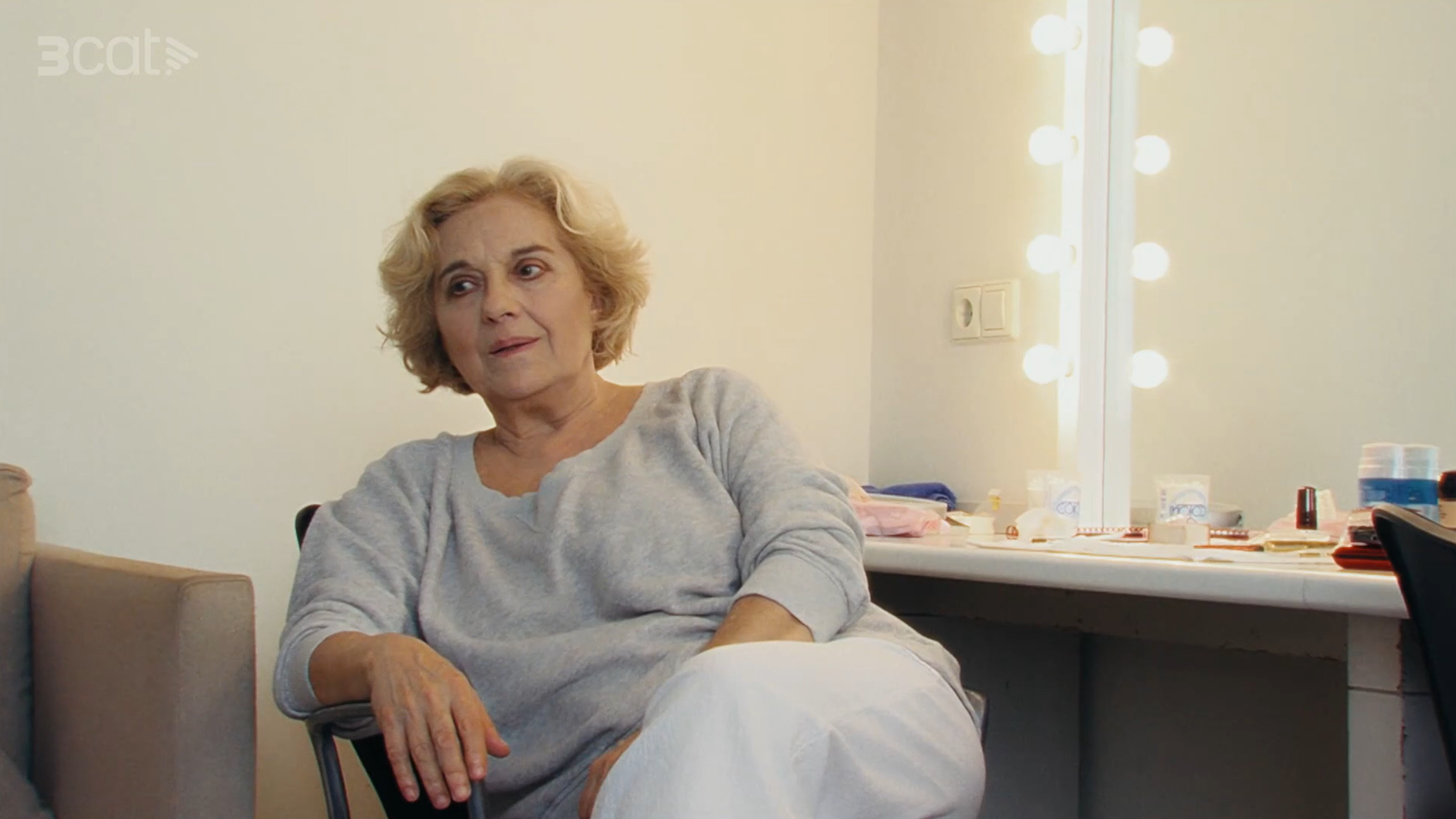

There are television projects that remain in a drawer, sleeping the sleep of the just, until, for some reason, they are reborn. This is the case of Diary of an actor, a documentary miniseries that you will find half-hidden on the 3Cat platform and which is very pleasant to watch. There are five episodes of about twenty minutes in which the camera follows an actor or an actress the hours before performing a show. The star episode is the one dedicated to Anna Lizaran, just when she was playing the matriarch of the Westons in August, at the TNC. It was 2010 and the actress died in 2013. Therefore, the dimension that the story takes on is slightly different from the original intention. It has a posthumous perspective that becomes even more moving.
Lizaran is in top form, funny and uninhibited, and although she makes explicit her reluctance to deal with the media, she shows the backstage of the theater as if, in her words, it were a guide to the Sagrada Família. One can read in her a touch of pride and the desire to show everything that happens beyond the stage. We see her head to the theater, we discover her little corner while she waits to go on stage and we are witnesses to how she manages her superstitions. This chapter is a nostalgia activator.
The rest of the episodes feature Oriol Pla, Eduard Fernández, Elisabet Casanovas and Carlos Cuevas. They are from different eras. Each performer has their own temperament in front of the camera, which tries to interfere as little as possible, letting them interact however they prefer. There are moments of communication and others in which the camera only observes. And it is magnificent because we are witnesses to a process of transformation, of the metamorphosis of the actor, of how little by little they get into the skin of their character.
We discover the importance of music for some when it comes to transporting them to this universe that they will have to build on stage, and it is very exciting, minutes before the performance, to verify the moment in which the actor or actress connects with their inner self, with their other self. This dissociation to transform into their character. It is extraordinary to see Oriol Pla, who was playing the activist Carlo Giuliani in Ragazzo, doing the exercise of going over his monologue at full speed. Also the importance he gives to the preparation and activation of the body.
Elisabet Casanovas reflects on the exposure that this job entails, linked to this external eye watching her: "The more attention I pay to this exposure, the more I disconnect from why I dedicate myself to what I do," says the actress. And while the phrase, taken out of context, may seem a bit abstract, the moment she expresses it and seeing how she works, it makes perfect sense.
Eduard Fernández's relationship with the play's team is endearing. We see how he uses the bond with his mother to build his character. After the performance, we observe how they all recover, more or less quickly, their true selves.
Diary of an actor is a wonder. And if more episodes are made, we hope they don't let them sleep for a decade in another drawer.
