The hands that knew how to heal
The history of the women that fear pointed out as witches
-
CAT -
CAST
When the sun had not yet risen, the chimneys of some houses had already been smoking for a while. Perhaps because a child had a fever, because a birth was complicated, or because a wound would not heal. Before modern medicine took the form we know today, there were women capable of healing. In the middle of the dark night, they received urgent visits in a house with a wild aroma, the table full of herbs, hands weathered by work, and the serenity of experience acquired over the years.
They knew the plants of the groves and forests, they knew how to prepare ointments and potions, they recognized the pain of the body and assisted at births. Their knowledge did not come from manuals or classrooms, it was knowledge inherited from other women. They observed with care, they listened attentively and they repeated gestures that passed from mothers to daughters for generations. They were healers, curers, and midwives. Over time, however, fear began to call them by another name. They were the witches.
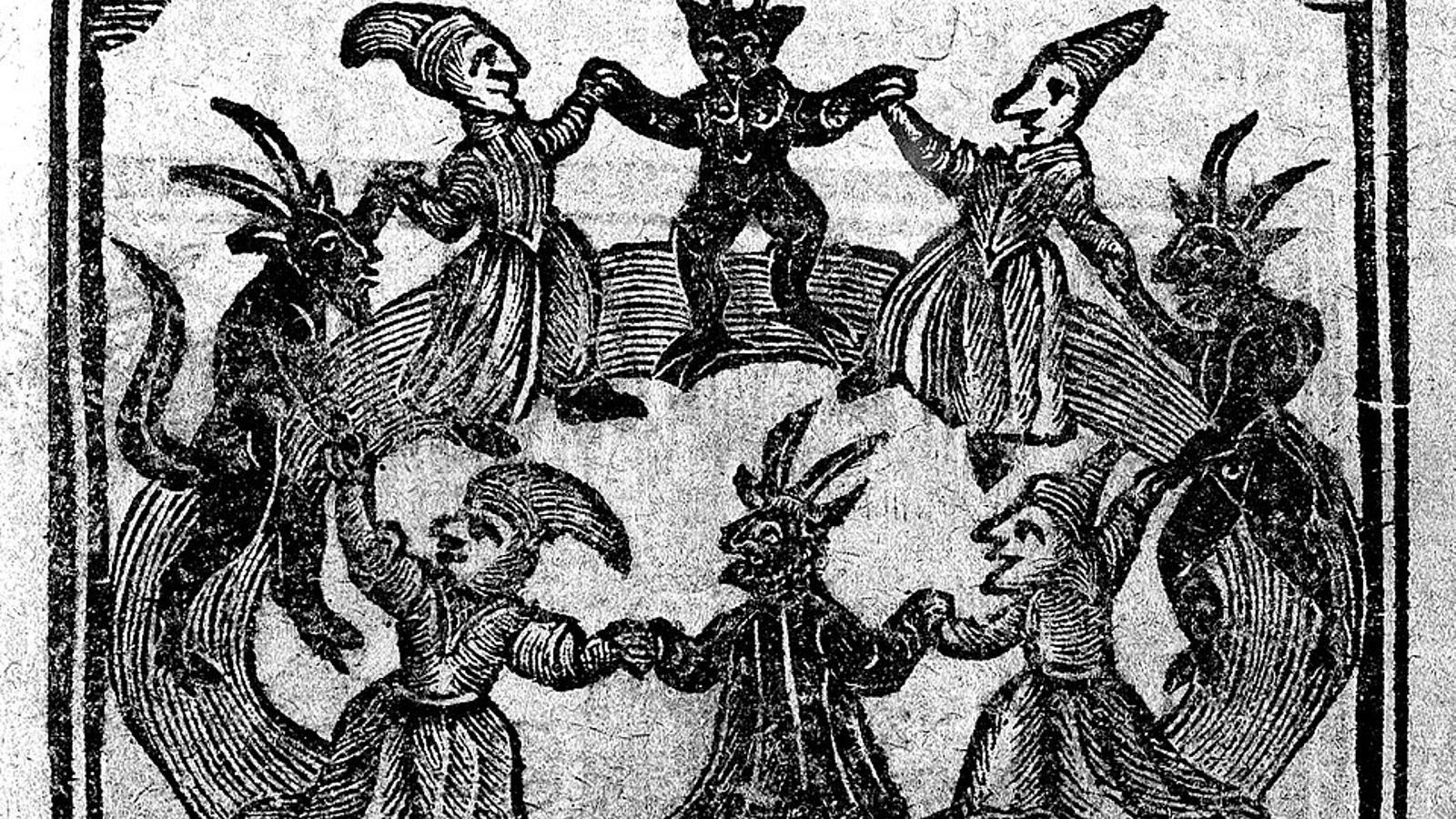
Today, this word evokes a host of images for us: the broomstick, the pointed hat, the wicked laugh, the black cat, and even the nursery rhyme we sing when it rains and the sun shines: "the witches are combing their hair". But before popular culture constructed this figure, this word, loaded with stigma, was marked on the skin and memory of women of flesh and blood. Women with names, homes, and families. Women who one day were sought out to save a life and who, the next day, were accused for the very knowledge that had made them necessary. This is, in large part, the story of the moment when what had been seen as help began to be looked upon with fear.
An unwritten knowledge
Few gestures are as everyday as that of a thyme infusion when our throat hurts. Nobody remembers for sure who taught it to us; perhaps mother, or grandmother in her moments by the fire. It is the last echo of a knowledge that for centuries lived in the gardens, on the edges and in the nearby forests. A wisdom that served to face illnesses, in an era in which resources were limited and experience could make the difference. To understand how that knowledge stopped being looked at as help, it is necessary to return to a world where health, religion and popular beliefs coexisted without the borders that we attribute to them today.
That same thyme, rosemary, rue, or other medicinal plants were part of popular remedies and beliefs. A single plant could have practical uses and, at the same time, be considered protective against certain ailments. Between the remedy and the amulet, between experience and belief, there was a very diffuse boundary. Some plants, however, could also be toxic. Others such as belladonna, mandrake, or datura appear in ancient stories about ointments and practices associated with witchcraft.

Stories of night flights fueled the imagination of the era, but they do not prove what those women were really doing. Nor were all the accused healers, nor can the persecution be explained only as a punishment for medicinal knowledge. Religious beliefs, conflicts between neighbors, and the way local authorities interpreted misfortunes played a role. In that world, knowing remedies, living on the margins of conventions, or dwelling in the shadows of solitude could make you more vulnerable to suspicion.
When fear turned into condemnation
That balance was fragile. As early as 1424, the Ordinances of the Valls d’Àneu had already classified witchcraft as a crime. But the great waves of persecution took almost two centuries to arrive. When they did, they found a world disturbed by lost harvests, epidemics, and meteorological phenomena that seemed to escape all control. Between 1616 and 1622, amidst that uncertainty, accusations between neighbors offered an easy answer to misfortunes that were difficult to explain.
There were men who made a living from pointing out witches, and the profession went back a long way. In 1548, Joan Malet, considered the first witch hunter in Catalonia, traveled the streets of Reus examining women in search of the devil's mark. Like him, the fortune tellers that town councils brought in claimed to know how to recognize them. The accusations turned into trials, often with torture and without guarantees.
Francina Redorta, widow of Menàrguens, puts a face to this persecution. Knowledgeable in remedies, she was tried and condemned to death in 1616 as a witch and poisoner, the term used to refer to women accused of preparing poisonous substances. Her case is exceptional because the transcript of the interrogation and the trial is preserved, as well as a drawing considered the only contemporary representation known of a woman accused of witchcraft in Catalonia.
In Terrassa, between 1602 and 1619 nineteen women were accused of witchcraft, many of them widows, poor or immigrants of French origin, without much support in a town where a conflict between neighbors could end in an accusation. Margarida Tafanera, Joana de Toy and other women were imprisoned and tortured at the Torre del Palau in 1619, until they confessed what their interrogators indicated to them.
Joana de Toy was executed by hanging as a warning to the others. Later, about two hundred neighbors stoned Margarida when she was returning from the hospital, still in pain from the torture. She survived thanks to the priests of the Holy Spirit, but eventually she and three other women were hanged in the Pedra Blanca area. Margarida Tafanera, Joana de Toy, Miquela Casanovas, Joana Savina, Eulàlia Totxa and Guillermina Font: six names from that trial that Terrassa has sought to recover. Since 2022, a plaque in front of the Torre del Palau, the old prison, remembers them, and every October 27th the city commemorates them.

Not everyone, however, accepted those convictions without questioning them. The Jesuit Pere Gil warned that many of the accused could be innocent and that the confessions had been obtained under torture. In 1622, the Royal Audience intervened in pending trials and ordered the release of accused persons. The persecution lost strength, but the fear and the beliefs that had fueled it remained present.
Almost a century and a half later, in 1767, Maria Pujol, known as the Napa witch, was executed in Prats de Lluçanès. Her case, considered the last known execution for witchcraft in Catalonia, reminds us to what extent that fear endured.
Give them back their name
With the arrival of November and the days becoming shorter and shorter, there are names that come back to memory. They are those of the women murdered, assaulted, threatened, or silenced by sexist violence. We pronounce them loudly so they are not lost among the figures, because behind each one there was a life full of light that no one had the right to take.
Those women from another time, for whom a simple rumor could be enough to condemn, thus remain a little closer to us. They are not the same stories, nor the same world. But if we walk through those villages, through their corners and their streets, there are still walls that keep the moment in which a woman stopped being heard because her end was already written. One day, someone would knock on her door because they needed her hands. The next day, condemnation knocked there.
Before they were witches, they had been mothers, daughters and neighbors. Some knew how to heal; others, simply, lived alone and without anyone to look after them. All of them, however, ended up reduced to a single word. Margarida, Joana, Miquela, Joana, Eulàlia, Guillermina, Francina and Maria. Eight women among hundreds of others who have crossed the centuries, even though, when they needed it most, their voices did not find anyone to believe them.
Today, when we once again pronounce the names of the women whom sexist violence has sought to silence, it is our duty to listen to them, believe them, and act. To recognize the voice of those who speak, those who alert, those who ask for help, or those who, at times, only find a way to send a signal. May history not find us, once again, on the side of silence.

