Chronology of the most lethal migration crisis in the State
More than three weeks later, there is no definitive figure of immigrant adults and minors who remain in the city

-
CAT -
CAST
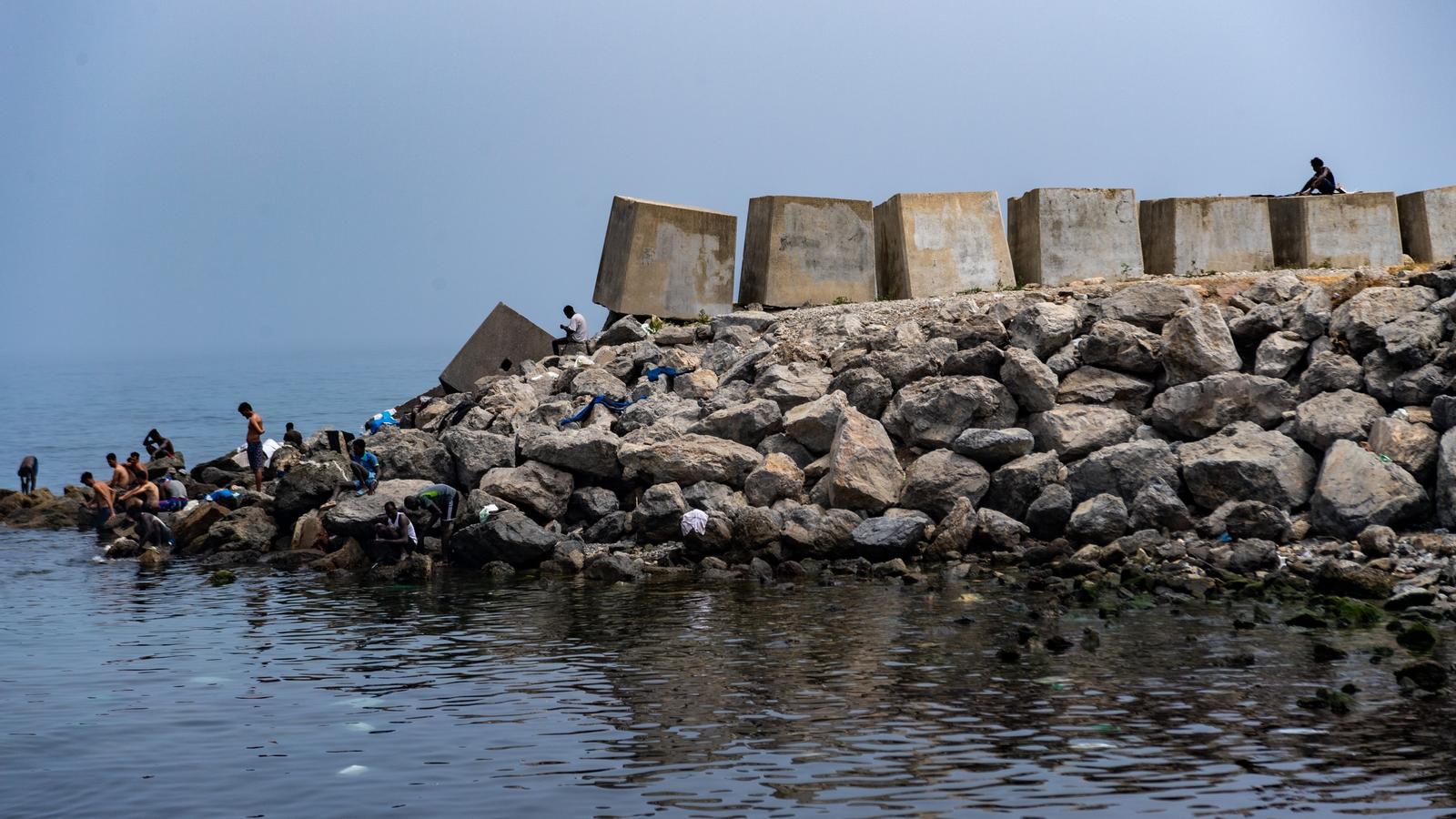
MadridThe border between Morocco and Ceuta has suffered Spain's deadliest migratory tragedy. More than three weeks later, there is no definitive figure for the people who entered swimming; nor for those who continue to survive on the streets. It is not known how many people have disappeared, and only six people have been identified out of a total of 82 bodies recovered in Spanish waters. This is the timeline:
The first warnings
On July 27, the government of Ceuta warned of an increase in immigrant entries to Ceuta by swimming across the El Tarajal border. The president of Ceuta, Juan Jesús Vivas (PP), spoke of an "emergency" and demanded that the Spanish government act.
Unprecedented entry
On July 30, tens of thousands of people entered Ceuta in desperation, circumventing the border between Spain and Morocco. At first, there was talk of 50,000 people, a figure that has risen to a range of between 70,000 and 80,000, depending on the calculations of each authority. The border was closed, the army was activated, and the Civil Guard and National Police were reinforced. An immense majority returned on their own accord imminently, while the security forces also forced their return. The last significant returns occurred before August 15.
Sánchez's only visit
The President of the Spanish government, Pedro Sánchez, travelled there for the first and last time on July 31. Initially, he blamed the mafias for the massive entry into Ceuta. Unlike what he did with the fires in the summer of 2025, he has not interrupted his holidays to visit the city again. The Minister of the Interior, Fernando Grande-Marlaska, also travelled there, and 48 hours later, on August 1, said that "normality" was being achieved.
Border reinforcement
The first response measure to the crisis was the installation on August 1st of a floating barrier of buoys at the El Tarajal breakwater. The aim was to create a physical border, slow down entries, and facilitate the rejection of people from the border.
The role of Felipe VI
Felipe VI spoke about Ceuta on August 1st. He did so through a message sent by sources from the royal household in which he expressed himself "concerned and indignant" about the events. The Spanish monarch received, at the Marivent Palace, the president of Ceuta, Juan Jesús Vivas (PP), on August 6th. Unlike other major crises, the king has not traveled to the autonomous city (he has never been there).
Diplomatic crisis
The entry triggered a diplomatic crisis in the European Union, particularly between the State and countries like Italy, with which border control has been tightened. The European Commission convened an emergency meeting of Interior ministers on August 4 and, despite showing "solidarity" with Spain and applauding the expulsion of individuals, has demanded stricter border control.
Fatalities
Only six of the 82 bodies recovered in Spanish waters have been identified. The first identification was made on August 6. The old Military Hospital of Ceuta has housed the morgue (the city only had four refrigerators) and burials have just begun. The Civil Guard continues to receive reports of missing persons.
Days without food and water
Many immigrants did not eat or drink potable water until four days had passed. NGOs and neighborhood associations, especially from the outskirts of Ceuta, provided an initial response by distributing food and improvising reception spaces for girls and women (the Ministry of Equality said this Friday that the 24-hour crisis center has attended to 5 victims of sexual violence). The few portable toilets were installed on the weekend of August 8, as were the portable showers for those who were on Trampolín beach.

Ten days of visits
Since August 10, and until this Friday the 21st, the presence of ministers in Ceuta has increased with almost a daily visit. First, the focus was placed on border control and reinforcement, as well as the return of people. And then on humanitarian aid with the visits of the ministers of Health and Migrations. The presence of state security forces has also increased, especially on the eve of August 15, when a new entry attempt occurred.Custody of minors
Unaccompanied minors and their reception have marked the political clash between the Spanish government and the PP. A technical meeting was held to begin addressing the distribution of these minors on the Peninsula (a process that will not be imminent) on August 13.
First spaces made available
On August 20, the first temporary spaces are made available to accommodate people who remain on the street. At the same time, the health alert is increased due to the inability of medical services to attend to everyone. Many people continue with injuries from the crossing and are ill due to the conditions in which they have been living these days.
Explanations in Congress
Different members of the Spanish government begin to appear from this Tuesday onwards to explain the crisis. Eight ministers will do so in Congress, after dodging the Senate, as requested by the PP.
