Ceuta, the city forgotten by Spanish presidents
Sánchez is the one who has visited it the most and Aznar and Rajoy only went there for electoral campaigns

-
CAT -
CAST
BarcelonaCeuta is, like Melilla, a Spanish autonomous city located in North Africa that represents a constant thorn in the side of relations between the State and Morocco, with sovereignty in dispute. The Kings of Spain have avoided it as much as they could and only Joan Carles I visited it in 2007, which caused a diplomatic crisis with Morocco. Although it has been talked about for the last month, Felipe VI has not gone there, not even in these moments of crisis. And a very similar dynamic has been followed by the presidents of the Spanish government.
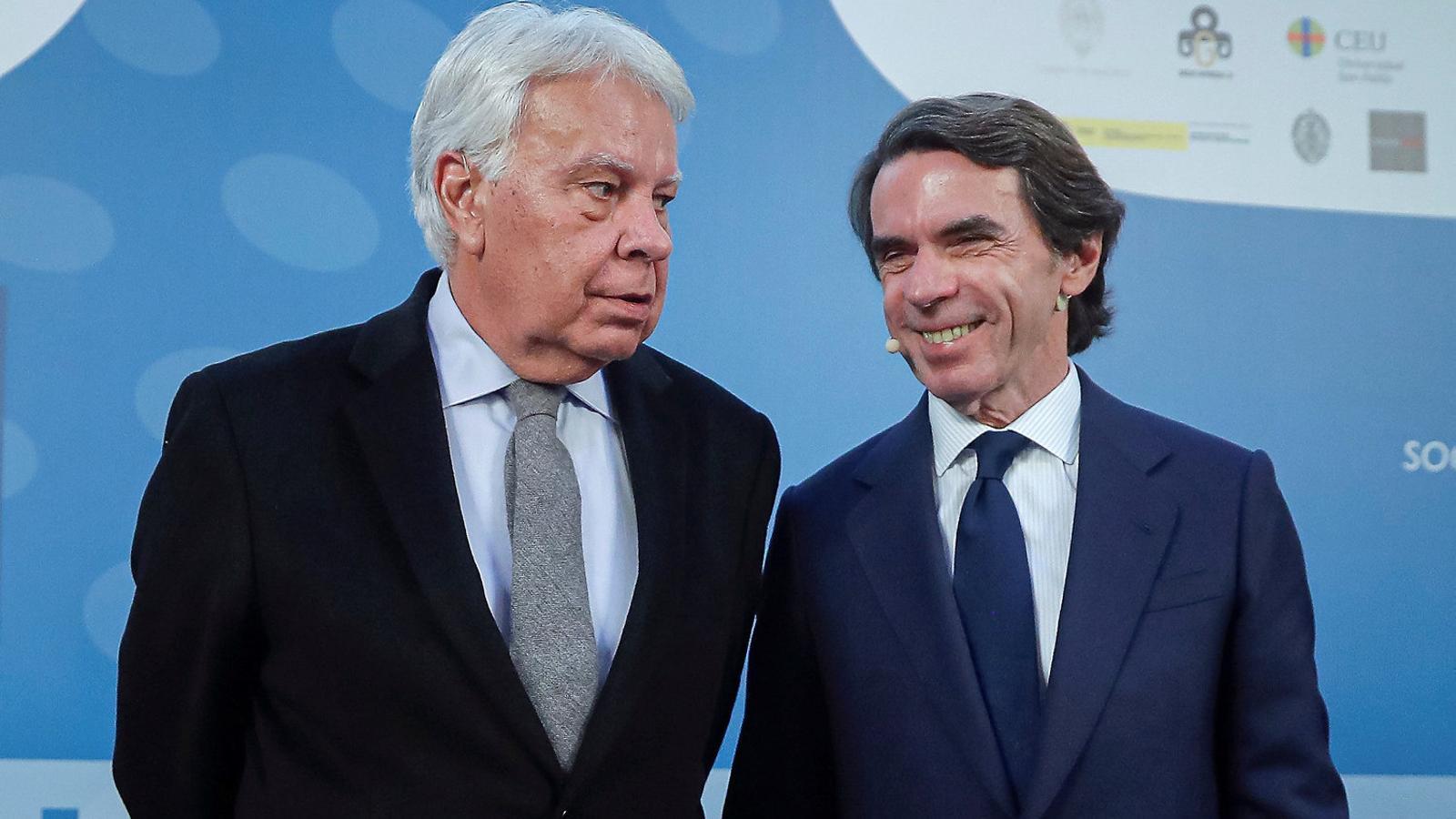
Only socialists José Luis Rodríguez Zapatero, once, and Pedro Sánchez, four times, have visited Ceuta outside of election periods, in addition to the former UCD president Adolfo Suárez, who went once. Felipe González spent fourteen years in Moncloa without setting foot in the autonomous city, and José María Aznar and Mariano Rajoy only did so during election periods.
Zapatero went there in February 2006 and another diplomatic crisis broke out over Morocco's claim to sovereignty of the enclave. Precisely, José María Aznar has done it again this Thursday with its usual anti-Sanchista herrings to claim the recovery of "national sovereignty". When he was president, Aznar only went there in 1996 for an electoral campaign and in 2000 as acting president. For his part, Mariano Rajoy visited the city in June 2016 as acting president – he was not invested after the 2015 elections – within the framework of the electoral campaign. The former president of UCD Leopoldo Calvo-Sotelo also did not go there during his short term, but Adolfo Suárez (UCD) did, in December 1980, when he defined the city as very Spanish, such as did the Minister of Defense, Margarita Robles, a few days ago. In any case, why has Ceuta been the great forgotten one?
In conversation with ARA, Joan Anton Mellón, emeritus professor of political science at the UB, emphasizes the sustained fact of "not wanting to bother Morocco." And he adds that even more so in a context where "Morocco is a protectorate of the United States and now feels very strong." Political scientist Eli Gallardo, from the consultancy Neula, agrees, stating that "the first visits by presidents have been to Morocco since the 1980s to maintain balances and fluid relations" with the Alawite regime. This tradition that she mentions was started by González and has only been broken by Sánchez, who started with a European tour.
In this regard, Mohammad Mustafa, political analyst and deputy of Ceuta Ya, points to an "state agreement between the two parties, the PP and the PSOE, not to bother Morocco", although, in the current context of migratory crisis, "the PP is tearing its clothes". In any case, he comments that "there was a turn after Morocco's declaration in 2021 following the massive entry", when Sánchez made an international turn and recognized Moroccan sovereignty over Western Sahara. But, in his opinion, "the supposed good understanding with Morocco has been shown to be false".
The visits that do not arrive
The Ceuta Ya party and also the president of the autonomous city, the popular Juan Jesús Vivas, have requested the king's visit, to which the royal household has theoretically committed itself for some time. After the pandemic, the Spanish monarchy promised a tour of all the communities in the State to recognize the citizens' effort during confinement: it fulfilled this with the exception of Ceuta and Melilla, without giving any explanation in this regard.
"Spain depends on terrorism issues on Moroccan services, with whom there is very good collaboration," says Anton Mellon. Beyond recalling that Sánchez has not explained why he gave in on the Sahara, he lets slip that there are risks such as cutting off collaboration against jihadism, despite the migratory problems or the threat of suspension of the extradition agreement.
Gallardo concludes that "Morocco has taken the opportunity to create a pull effect" in an enclave that has historically been "forgotten" by the right, but that now "the racist climate and circumstances are perfect to force all parties to position themselves" on frameworks that favor the radical right.
