Ceuta and Melilla, the outstanding issues of Felipe VI
The Spanish Royal House has only set foot in the two autonomous cities once

-
CAT -
CAST
MadridNine years ago, a group of Moroccan citizens was demonstrating in Casablanca. They waved Moroccan flags and held up banners that read down with colonialism. Others were written in Arabic. The scene was captured by Efe photojournalist Karim Selmaoui. And the reason they were protesting was none other than the visit of the Spanish royal family to Ceuta. It was the first time Juan Carlos and Sofia had set foot on the African continent to visit this autonomous city – it took them 32 years from the start of their reign. It was also the last. In fact, since then, there has been no visit from the Spanish monarchy to Ceuta, nor to Melilla. It is Felipe VI's pending trip as king, although as prince he never went either.

The monarch has toured all the autonomous communities and has trodden on them especially when there has been a catastrophe: in the case of the railway accident in Adamuz, the flood in the Valencian Community, the fires in Castile and León... But in what has been the first "violation of Spain's territorial integrity" in democracy, in the words of the Spanish government president, Pedro Sánchez, after the massive entry into Ceuta, Felipe VI has not moved to the scene. He did meet with the president of Ceuta, Juan Vivas (PP), whom he received this Thursday at the Marivent Palace, in Palma de Mallorca, where the monarch is vacationing and participating in the King's Cup regatta, this year with the sailing boat Hispania. In fact, Vivas stated this Thursday after the meeting that Felipe VI had "committed to visiting Ceuta".
This exception of the Spanish monarchy with Ceuta and Melilla is evidence of how everything related to these two autonomous cities not only splashes Spain – and Europe – but also the country with which they share a border: Morocco. Therefore, any gesture must be measured so as not to awaken diplomatic ghosts. The visit of Juan Carlos in the autumn of 2007 triggered a threat from King Mohammed VI, which eventually materialized in calling the Spanish ambassador to the Alawite country for consultations.
The Alawite kingdom has historically claimed that these two enclaves – Ceuta and Melilla – are "occupied cities" in North African territory, while Spain defends its sovereignty by belonging to the Spanish crown since the 15th and 16th centuries. Therefore, the fact that the royal family traveled to Ceuta was interpreted by Morocco as a "provocation". The Alawite regime even threatened "serious consequences". A source who witnessed that clash considers that Mohammed VI's response was "less" than it could have been and links it to the diplomatic work of José Luís Rodríguez Zapatero (PSOE), who paved the way for the visit to the autonomous city. The same source considers it very "unlikely" that Felipe VI will travel to Ceuta.
In Moncloa they have avoided answering whether a visit from Felipe VI has been considered after the entry of thousands of migrants. They pass the ball to the Royal House, where they cling to last weekend's statement in which Felipe VI expressed his "indignation" for the "serious events" in Ceuta and asked that they "not be repeated." A trip by him to the autonomous city, like any other trip he makes, needs to be endorsed by the Spanish government. And in this case, the always delicate bilateral relationship with the Alaouite country does not go unnoticed. The Minister of Digital Transformation and Secretary General of the PSOE of Madrid, Óscar López, has limited himself to saying this Friday that Felipe VI will visit Ceuta "when it is opportune" and that he will do so " in coordination with the Government." "Absolute normality," he replied at a press conference in Ferraz, trying to close an uncomfortable debate.
Visit in 2014
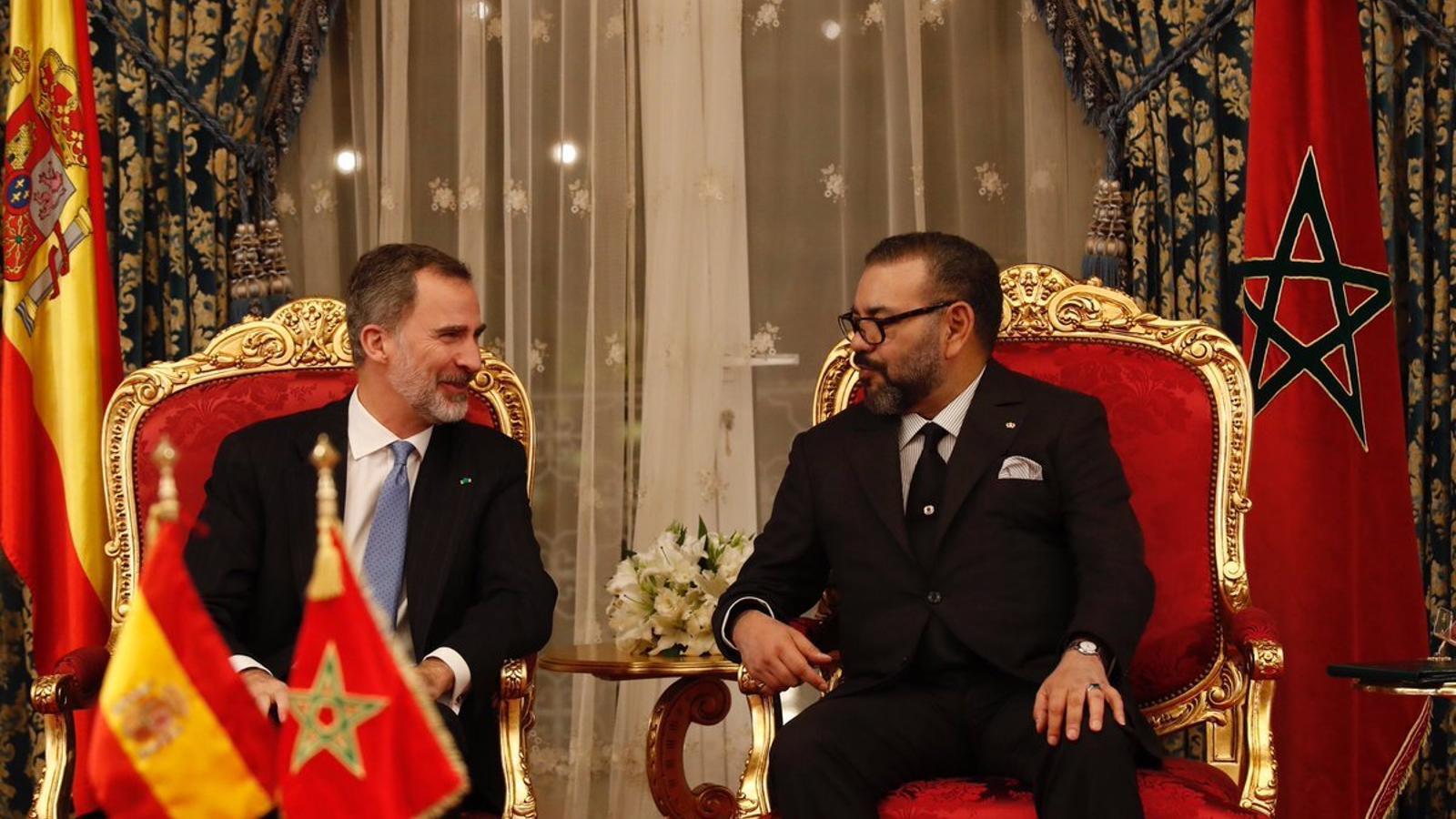
This does not mean that Felipe VI and Mohamed VI have never met. In fact, the harmony of their relationship is good, explain those who follow information linked to the monarchy. The King of Morocco received Felipe VI and Letizia in 2014 as part of their presentation as new monarchs to the State. After that visit, they returned in 2019. Unlike his predecessor, Hassan II, in Mohamed VI's latest major speeches, no reference has been seen to the claim of the two autonomous cities.
However, it is not only the PSOE that looks askance at Morocco, aware that any move will generate unease and reprisals. The PP, although it has used a harsher tone against Morocco with the crisis in Ceuta compared to the Spanish government, has also not entered into direct confrontation. When it governed, this fear that the relationship would be spoiled even led to convincing Ceuta not to apply for its entry into the European Customs Union.

