Catalonia and Euskadi want their slice of the European defense pie
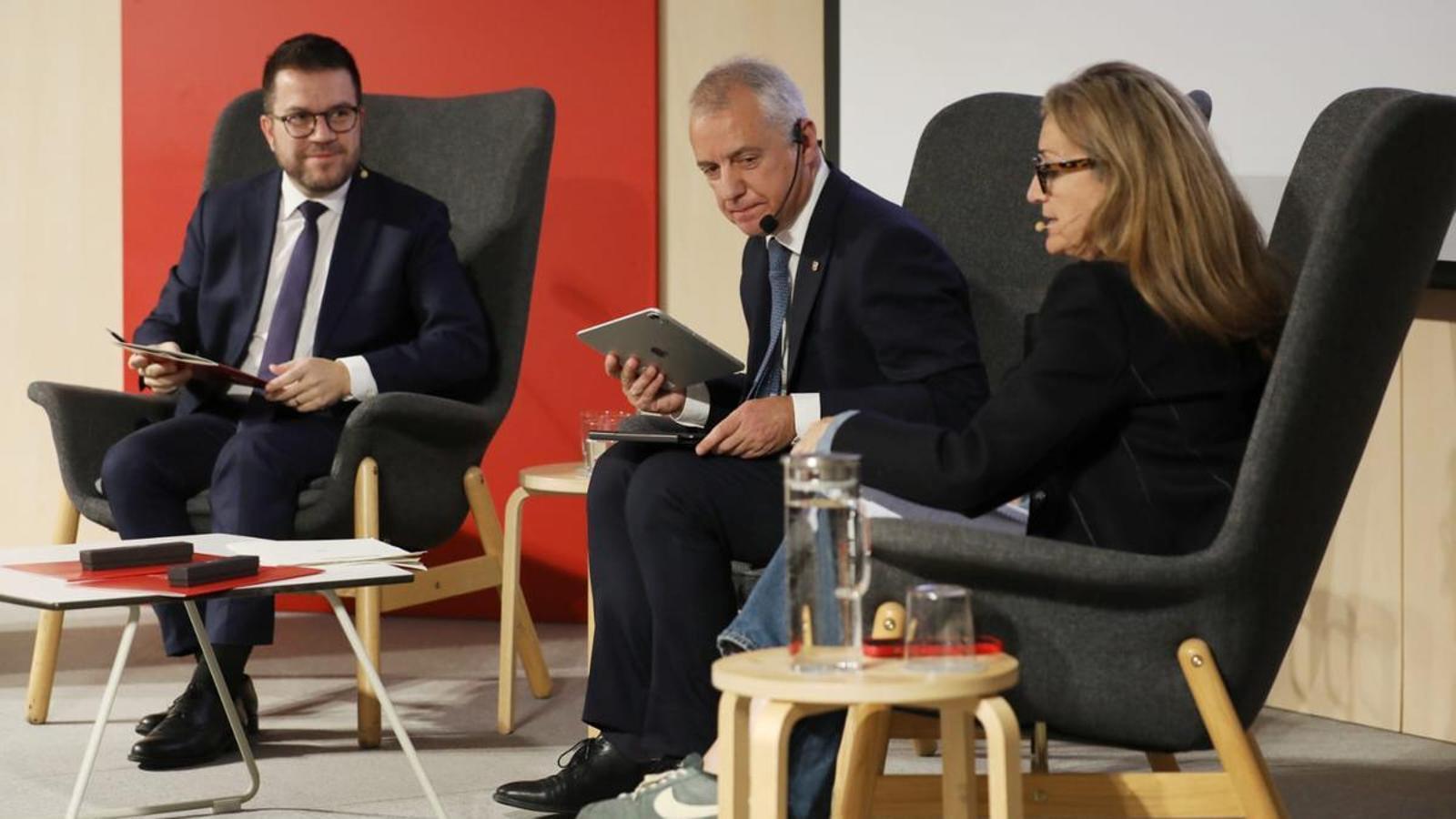
VicThe European Union aims to move towards strategic autonomy in defence matters, and Catalonia and Euskadi cannot be left out. This has been one of the points of agreement between former president Pere Aragonès and former lehendakari Iñigo Urkullu, who starred in the final act of the conferences on economics organised by the University of Vic under the leadership of the former republican leader. The moderator of the conversation was the director of ARA, Esther Vera, who asked both of them to choose a specific area in which Europe should take a step forward. Urkullu's response was immediate: "We need a European industrial policy". Aragonès took up the challenge, doubling down on the proposal: "We must move towards a European army, less of a Spanish and French army. And this is not just about manufacturing tanks, it's more about technology than gunpowder".
Urkullu, in line with his proverbial sense of reality, was sceptical about the possibility of states renouncing their own armies, but he was convinced that taboos about the military industry must be broken. "There is no sin in having a military industry. We are even talking about adapting the automotive industry to defence," he added, referring to the latest figures on falling car sales.
The AstraZeneca case
The example of the military industry has served both to claim both Euskadi and Catalonia as poles of innovation and technology. For Aragonès, Donald Trump must function as an "accelerator of European integration", with the aim of removing the existing barriers that hinder the development of their respective territories. The Catalan president recalled that this is a long-distance race. "AstraZeneca does not place its hub of innovation in Barcelona by chance. It is 25 years of consensus and having built a suitable research and scientific environment".
Urkullu recalled that the crown jewel of the Basque model is dual vocational training and the University of Mondragón, linked to the Gipuzkoan cooperative movement. "We are a world reference in adapting studies almost à la carte to the needs of the company," underlined the former lehendakari. And if vocational training is the crown jewel, the union model is the pebble in the shoe according to Urkullu. "There is a majority union, ELA, which thanks to the capacity given by its resistance fund drags the rest". In fact, Euskadi concentrates 40% of the strikes that occur throughout the State. "We have a problem with that," he concluded.
Aragonès remarked that in Catalonia the majority unions, which are UGT and CCOO, have a dynamic of agreement. "They supported the budgets and we made the FP law with them and the employers' association," he said looking at Jordi Baiget, who was Minister of Business and is now dean of the faculty hosting the conference. "The appearance of sectoral unions [referring to USTEC and the healthcare workers] adds complexity," the former president limited himself to saying, not wanting to directly enter into the current labor conflict in the education system.
However, if Urkullu envies the Catalan union model, Aragonès envies the Basque concert and would already want it for Catalonia. The event ends with a direct question from Vera to Aragonès about the budget agreement between the PSC and ERC. "It is good that budgets are approved and also that the investiture agreement is fulfilled, and from here...", he says, half laughing.
