Will Europe succumb to its borders?
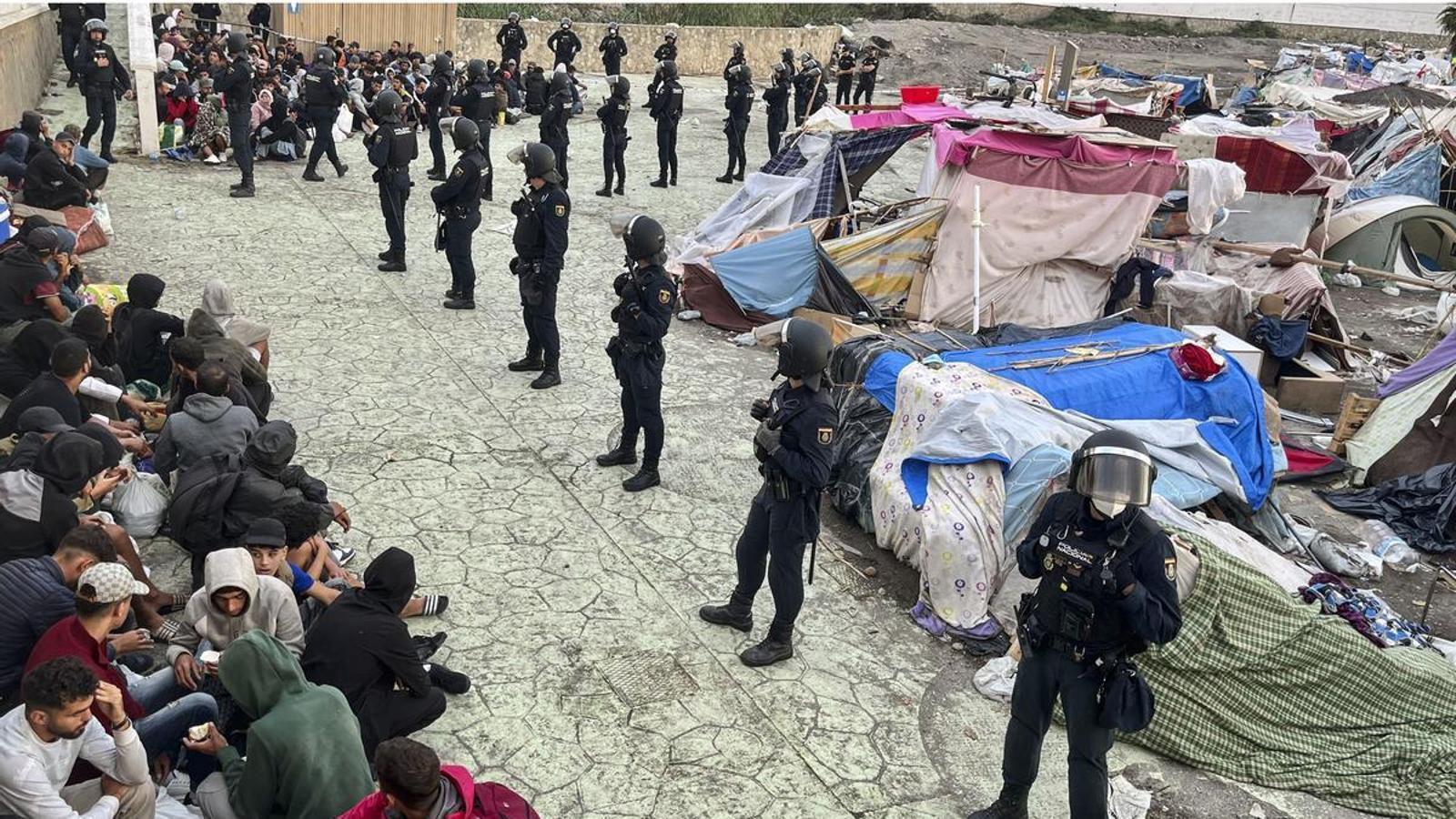

The 2015 refugee reception crisis represented a turning point for Europe. From then on comes the fear of a new migration crisis at its borders. The perception of threat is such that the overreaction is immediate, regardless of how many there are (with the Aquarius there were 630, 106 when the ship arrived in Valencia) and whether they have actually arrived (let us remember that in Ceuta they were still on the African continent).
2015 also highlighted a double evidence, as undeniable as it is contradictory: although the response can only be European, the member states do not know (or do not want) to reach an agreement. This contradiction became clear in the summer of 2015, with those European Councils where they only knew how to agree that they would keep meeting, incapable of making any decision. It has taken ten years to agree on and implement a truly joint response: the European Pact on Migration and Asylum. A few weeks after entering into force, Ceuta shows us that the clamor remains deafening.
Two reactions exemplify this: the letter signed by 22 member states (all except France, Ireland, Portugal, and Luxembourg) in which the Spanish government is implicitly questioned for its control of the external border; and the reintroduction by the Italian government of temporary controls at the borders with Spain. While this time the criticism of the Spanish government has been more striking, the solidarity between member states is the great Achilles' heel of European migration policies. In short, no one has wanted or wants to take charge of what are considered the problems of others.
In this context, the Spanish government has not stopped calling for "more Europe" but has been the first to limit the European presence at its border. It did so in 2020, when it avoided a broad deployment of Frontex in the Canary Islands. And it has done so now in Ceuta, avoiding the activation of the recently approved Crisis and Force Majeure Regulation, which is part of the Pact and is designed precisely to respond to these situations. Why? Because it required a prior assessment by the European Commission and the Council, it implied accusing Morocco of instrumentalizing immigration, and it would have entailed an individualized registration and screening process and, therefore, access to protection procedures, which the Spanish government has bypassed with the "voluntary return" of the majority of migrants, including the thousands from the last few days. Less Europe for more speed and more informality.
But not only has the Spanish government not applied the Crisis and Force Majeure Regulation, but no member state has requested it. Without ever having been applied, the European Commission has proposed a new instrument that, in the words of Ursula von der Leyen, allows for "protecting the borders" in contexts of "instrumentalization of immigration". The Pact, which was supposed to be the great solution, therefore seems to have remained a dead letter. What is wanted now is to go further, suspending the right to asylum and intensifying return operations with the endorsement of pushbacks. It is nothing other than turning into law what is already a reality: in Greece, Poland, Finland and, no matter what is said to the contrary, also in Ceuta this summer.
And in parallel, the new Return Regulation has just been approved, which arises from the demands to go beyond the Pact (once again) with “innovative” policies (among others, return centers in third countries) that allow for the acceleration of deportations. “Send them back!” (Send them back!), they shouted from the right wing of the European Parliament in mid-June. The only member state that voted against it was Spain. The Spanish government criticizes that the regulation risks violating fundamental rights. It also criticizes the lack of ambition to establish a true common European return system, because there will be no mutual recognition of return orders, priority has been given to national legislations over harmonization, and agreements can be closed with third countries without the need to inform or consult other member states. More laissez faire and less Europe.
Behind it all lies the fear of a new migration crisis. In his novel Waiting for the Barbarians, the South African writer J.M. Coetzee describes an empire that, faced with rumors of an invasion, goes mad. Its madness manifests itself in a disproportionate response, because, in fact, the barbarians never actually arrive. It is also expressed in the systematic exercise of violence, justified by a Manichaean discourse that divides the world between good and evil and denies the other any trace of humanity. Coetzee reminds us that empires not only kill at their borders, but, driven mad by the fears they project beyond them, they also end up succumbing to them.
