Playing the grandfather

A few days ago, while preparing a lecture, I realized that there are a series of stories that I keep repeating and that, therefore, say something about my convictions. On the other hand, however, I like to think that a privilege of age is the conquest of the right to repeat oneself, to be the old storyteller who always tells the same thing. So I have established the ranking of my reiterations, which is what I bring to you here today.
First. Benjamin Carson, director of pediatric neurosurgery at the Johns Hopkins Children's Center, explains that his mother was a cleaning lady who realized that the successful people living in the houses where she worked spent more time reading than watching television, so she decided that her children would only watch three television programs a week and would dedicate a part of their time to reading books from the public library. Upon finishing each book, they had to hand her a written report that she would review in silence, while making some indecipherable marks in the margins. Years later, Carson discovered that his mother was illiterate.
Second. At the beginning of World War II, the U.S. Navy decided to occupy the buildings of St. John's College in Annapolis, Maryland, to expand its facilities. This project made university activity completely unfeasible at a time when St. John's intended to launch an ambitious curriculum focused on the great books of humanity. All students would read Plato, Aristotle, Thomas Aquinas, Machiavelli, Cervantes, Hobbes, Descartes, Spinoza, Leibniz, Kant, Hegel, Marx, Nietzsche, etc., in their original language. As a desperate measure, the president sent the professor who had designed the curriculum to Washington to interview James Forrestal, the Secretary of the Navy. He was received in an intimidating manner: “You have exactly one minute to tell me why we should not use your buildings to help the naval academy in wartime.” The professor took out his pipe and tobacco pouch. He packed the tobacco into the bowl and lit it. He took a puff. He checked that it was drawing well. 55 seconds had passed. Then he replied: “Because without what St. John's is trying to do, this country would not be fighting the Nazis now.” This professor was Jacob Klein, a Jewish philosopher specializing in Plato who, fleeing from Nazi madness, had found refuge in the United States. He impressed Forrestal so much that the military decided to change its plans and look for other facilities. St. John's remains faithful to this program. They do not refuse to be modern, but they do not want to be only modern. They realized that to understand the flow of the present, it is essential to observe it from outside current events.
Third. Víctor Alba was a witness to it. Sèneca Pérez was an anarchist condemned to death for being part of the losers of the Spanish Civil War. When he was about to be executed by firing squad and all the prisoners were lined up in front of him, an anonymous, yet friendly hand, threw a bunch of onions at his feet. It seems like a senseless gesture, but if we think about the hunger that was endured in the prisons and that Sèneca was a vegetarian, it is a magnificent gesture of friendship.
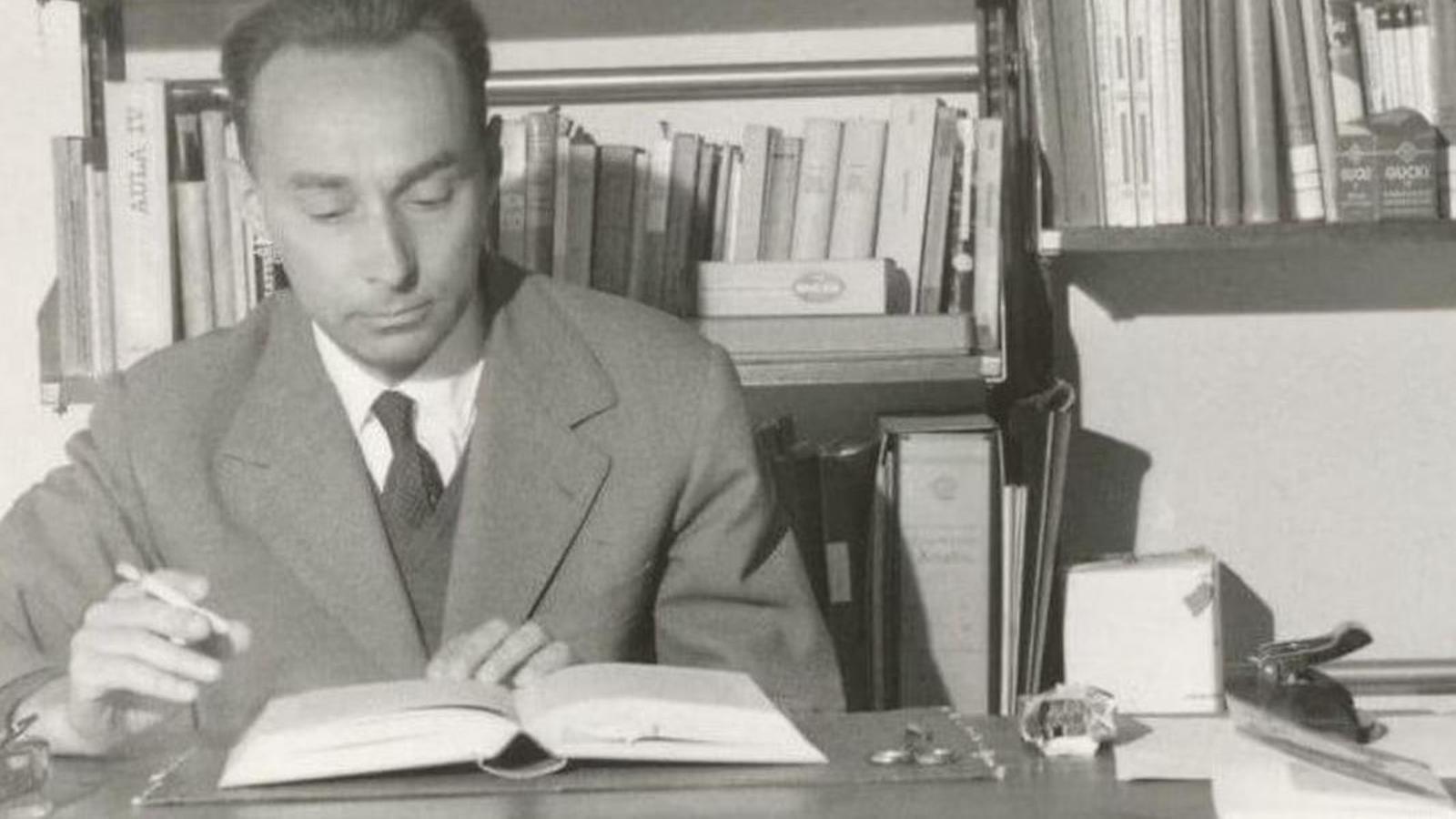
Fourth. Primo Levi remembered with emotion that civilian bricklayer from the Auschwitz concentration camp, whose name was Lorenzo, who brought him a piece of bread every day. "He asked for nothing and accepted nothing in return because he was good and simple and did not think that doing good had to bring him something". In this asking for nothing in return, the bricklayer showed that he was a man, that "his humanity was pure and uncontaminated, it was outside this world of negation". "Thanks to Lorenzo, I did not forget that I myself was a man".
Fifth. After having surrendered with pleasure to exploring the hidden side of life and experiencing what the English call courting disaster, Oscar Wilde was arrested by the police. A crowd of people gathered in front of his house to behold the fallen man humiliated. When he left the house accompanied by the police, they began to insult him. Nevertheless, one of those present took off his hat and respectfully bowed as Wilde passed by him. “Sir, there are people who have entered paradise for less than this,” Wilde said to him.
Sixth. These verses by Andrés Laguna (Viaje de Turquía, 1557): “The blind wish to see, / the deaf wish to hear, / and the fat to grow thin, / and the lame also to run; / only the fool I see to be / in whom no remedy fits, / because thinking he knows / he does not care to know more”.
