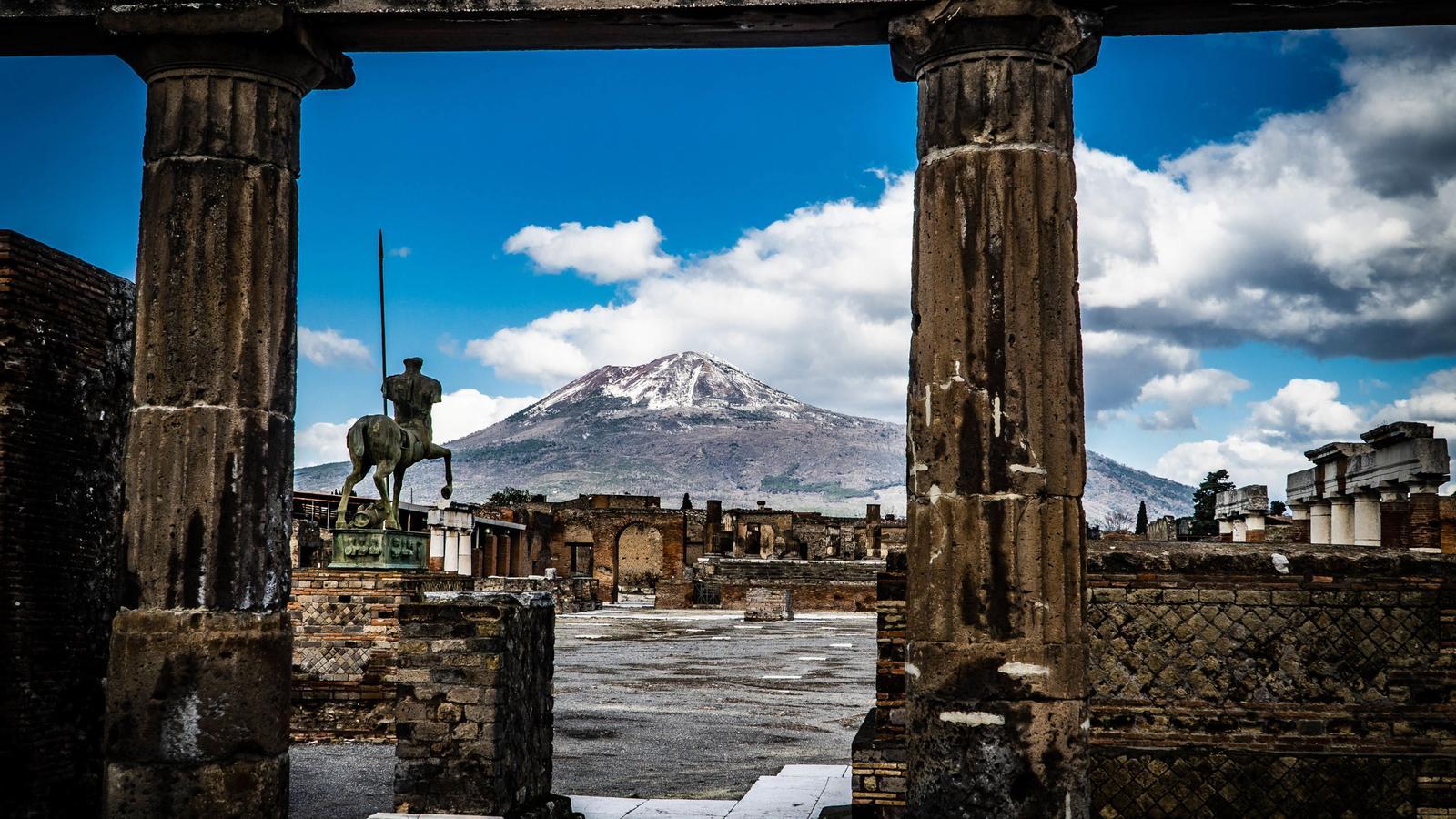

Atop the Vesuvius, I addressed the man who ran the drink kiosk and, overcome with wonder, I exclaimed, in my best broken Italian and with those knowing eyes that appear on me without intending to: “Dov'è Pompei?” The man pointed into the distance and said: “È lì”. I was happy. I had asked an interesting question, like a traveler, not a spoiled tourist; I had done it by trying to use his language and I had succeeded. When I was leaving (everything was already clear), I heard other tourists – my gut feeling told me they were Catalan – ask him: “Dov'è Pompei?”, and he, automatically, pointed to a spot in the distance (in another direction) and repeated: “È lì”.
Today I think about it, when the gentleman who walks past my house, on the rural path leading to the Prepuci spring, which is very popular on Instagram, wearing a cap with a visor, sunglasses, walking sticks, accompanied by a group of friends, all with caps, shorts, Decathlon shoes (still with the white plastic tag attached), stops for a moment and asks me: “Excuse me, what tree is this?” I stop the brushcutter and say: “A medlar tree.” The man breaks into a smile and exclaims: “Oh, of course, of course, a medlar, in my village we call it nespro”. And all the others nod their heads with fruity happiness. “You didn't know, that it's also called nespro?”, he asks, hoping I'll say no, that I didn't know. I turn the machine back on so as not to hear them ask if they can taste one (they all want one). They feign a rural accent that I consider, practically, cultural appropriation.
Before long, new walkers appear. They also stop (at least they don't have children, or they would stay much longer) and ask, with a Manelic accent, what kind of fruit that is. “They are pears”, I say, this time.
