On the death of Jaume Pont
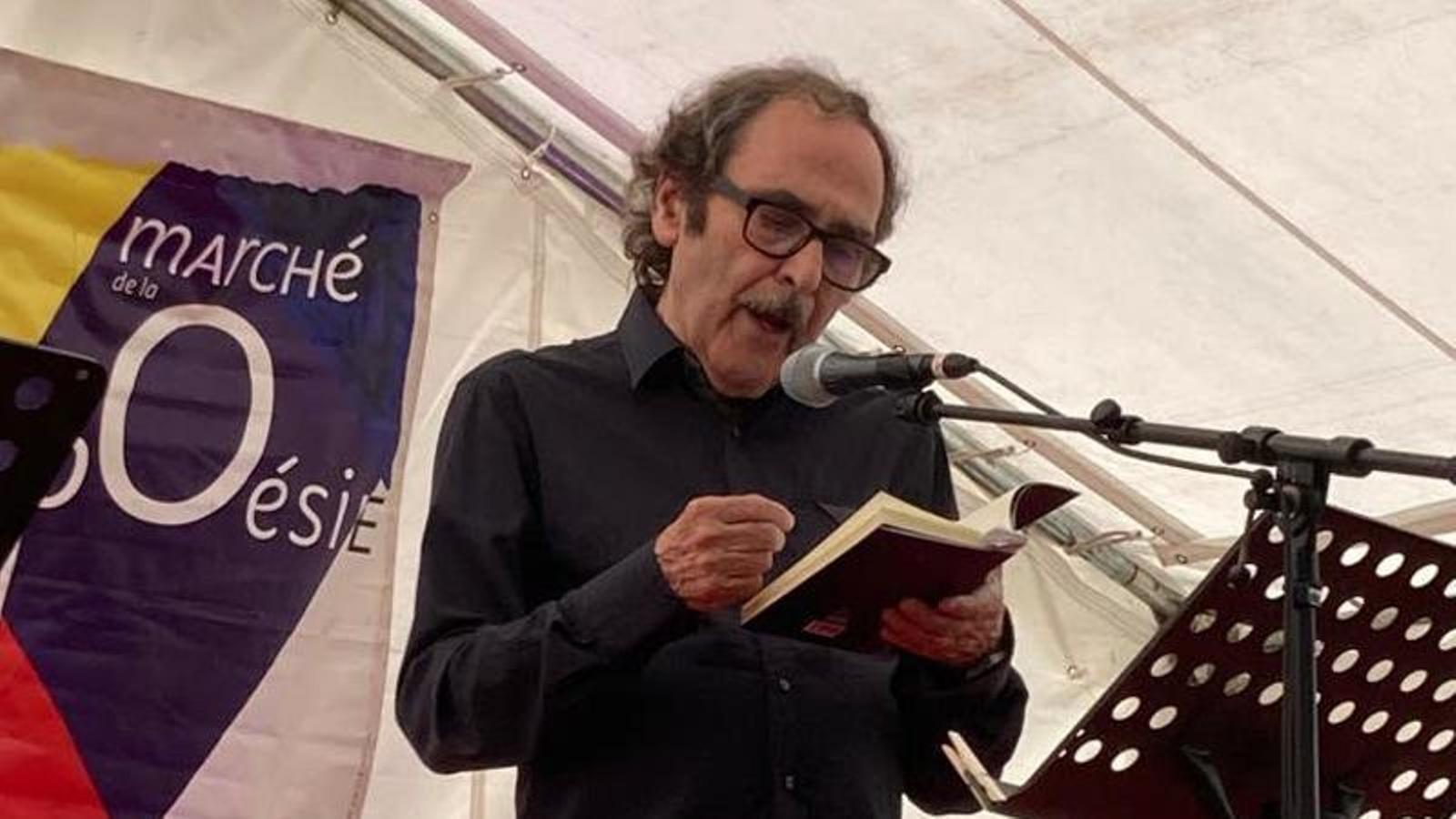

There is consternation among readers and writers in the Catalan language over the death, a few days ago, of Jaume Pont, one of the most prominent poets of his generation. Pont was born in 1947, like Josep Piera, another of the great poets in the Catalan language of the last decades: because of these two deaths, it is appropriate to think of 2026 as a disastrous year. A beautiful photo circulates on social media in which both appear, Piera and Pont, at the former's house in La Drova, about to embrace, happy to enjoy the pleasure of true friendship. They were masters in the art of writing verses and in the art of living, and they made this clear, without even setting out to do so, in everything they did. Their condition as “peripheral” (Jaume Pont was from Lleida and Josep Piera from Beniopa, in the very fertile region of La Safor) was not just a fact about their respective places of birth: poetry, high poetry, is always a peripheral matter, and this does not mean that it does not interest anyone (quite the contrary: it interests a multitude, it interests the crowds) but rather that it is not monetized, it is not venal, it is not exchanged in euros or dollars, and, for that reason, those who need to quantify everything and put a price on everything find it suspicious.
Jaume Pont was (he is, now he will be forever more) a meticulous, demanding, and profound poet. Like many of his age, he was formed amidst the experimentation, culturalism, and pop abrasions of the sixties and early seventies, which bore a British and North American stamp, but also French, German, Italian, Spanish, Czech, Polish... There was also a genuine interest in popular culture of oral tradition, and in the Arab substrates (“the little Moors,” as Piera called them) that persist in a good part of the Catalan Countries. With all this baggage, Jaume Pont raised temples to the meditation on being and time that bear titles such as Divan, Vol de cendres, Mirall de negra nit or Enlloc, a book that—not only due to the sonority of the title—dialogues with the Joan Maragall of Enllà, and also with that of the Cant espiritual. It will remain, unfortunately, as the last book published by Jaume Pont, when he was still far from having exhausted his voice and had so much left to write. He received awards and distinctions, among which the Prix Mallarmé for the French translation—by François-Michel Durazzo—of Mirall de negra nit. But with or without awards, the poetry of Jaume Pont stands upright, tall, as one of the most valuable contributions that Catalan literature has received from the seventies to the present.
The cordial and friendly temperament of Jaume Pont also serves to remind us that culture is not made by pedants, impostors, divas, or scoundrels, but by those who are brave enough not to be any of those things and to present themselves before the community with the sole endorsement of a serious body of work, done conscientiously, on matters that matter, to begin with, to their own author. That culture is made by brilliant minds, but above all by honest ones. Jaume Pont knew how to be both, and we will never thank him enough.
