Strategic autonomy: what it is and what it is not

On election day, I allow myself to express, from a position of non-equidistance, a wish, improbable but intense: that detente finds its way. If polarization continues, we are heading towards a collective disaster.
Having said that, I insist once again (see 'Strategic autonomy as a competitive opportunity') on the subject of the European agenda of strategic autonomy (or sovereignty). I present eight observations on what it is and what it is not.
1. The agenda does not derive from economic considerations but from political security imperatives that limit economic options. However, in the new framework, the efficient use of resources remains a necessity.
2. The security imperative should only be at a European level. That a European state or region seeks security against another is an imperfection of the European project that must be overcome.
3. The withdrawal of production induced by increases in transport costs or supply disruptions does not typically derive from the policy of autonomy, but from the natural adjustment to changes in the environment. There are, however, mixed situations. The desire for a closer provision of digital services or energy can be due both to seeking insurance against risk in habitual use (think of the hacking episodes, or the disruption in Hormuz) and to the political concern over the dependence on multinationals susceptible to being influenced by hostile (Moscow) or problematic (Washington) powers.
4. The agenda must not drift into a 21st-century version of classic protectionism but rather towards establishing good starting conditions for the negotiations, formal or informal, that determine international economic flows. Relevant factors will be the capacity, in a crisis situation, to depend little on the trading partner, and, in the other direction, the effective dependence (not replaceable at a low cost) of the partner regarding one's own products. Perhaps Russia provided gas to Europe at a very good price to generate dependence and perhaps renewables have made disconnection possible at a high, but feasible, price. Likewise, the position of Silicon Valley, favorable to providing China with Nvidia's most advanced chips, is based on the belief that it would induce dependence on the USA.
5. The agenda offers one more reason for the convenience of large European companies. The concern is whether this might undermine competition in the internal market. But, as Philippe Aghion has noted, competition can be very present if the economy is easily accessible from external companies. The situation to avoid is a world of “European champions” that, in practice, are monopolies highly protected from international competition.
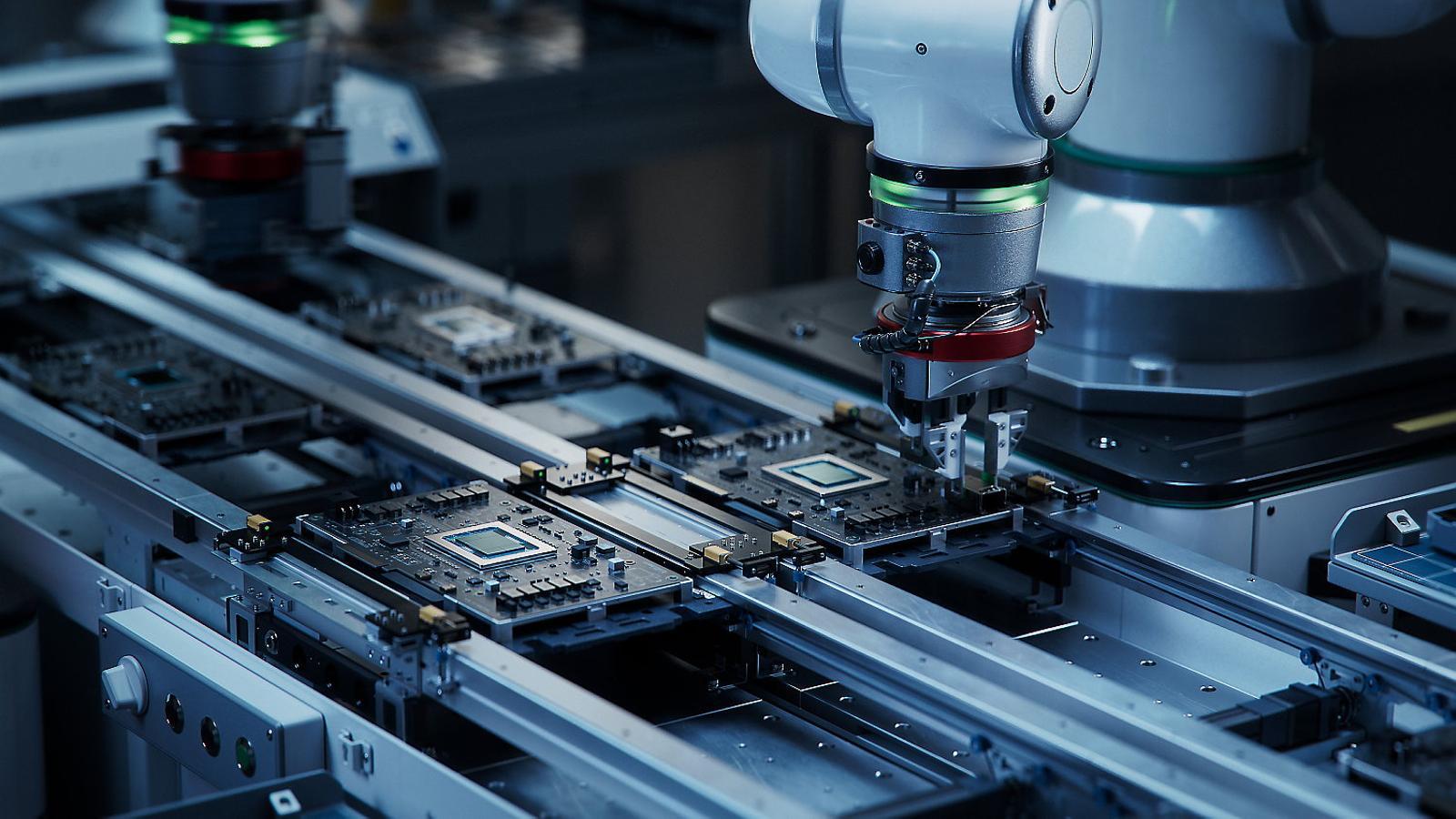
6. The agenda is not competition policy, but it affects it because it alters the economic environment. The defense, cybersecurity, data, etc., industries are growing in Europe, strengthening existing clusters and driving new ones. In this productive reconfiguration, Catalonia starts from a position of weakness. All the more reason to promote those areas where we have comparative advantages and which are sufficiently valuable, such as those closest to the sources and the valorization of knowledge. For example: in the chip value chain we have real possibilities in chip design (Openchip is a key company that must be secured).
7. The agenda reinforces the role of the public business sector. For a habitual reason (a strategically necessary company may not be profitable) and for one that is not so much: a company with public participation will be less easily acquired from outside of Europe. In Catalonia, the public sector of universities and research is also key because it provides the knowledge that makes autonomy possible and because it cannot be uprooted. It is vital that Europe possesses a frontier public knowledge system. If not, when negotiating and regulating it will find itself at a serious disadvantage towards companies well endowed with expertise. Problematic, in any case, but especially when it comes to issues where autonomy is desirable and the companies are not European. A case with a real danger of loss of intellectual substance from the public sector in favor of the private is AI.
8. The strategic role of public knowledge institutions requires that they guarantee a high degree of freedom to their professors and researchers. It is the reason why many resist the attraction of companies. But it is also convenient that their administrative structures allow the necessary flexibility so that knowledge is valued and reaches the economy with a speed and efficiency that boosts Europe's competitiveness.
