Spain, return to the past

-
CAT -
CAST
It is already a common place to draw a parallel between the 1920s and 1930s of the 20th century and what we are living through today. Those were the times of the rise of totalitarianisms, with fascism taking hold of Western democracies. The impoverished middle classes signed up en masse —we will not say cheerfully, above all there was a lot of bitterness— for authoritarian solutions, for ultranationalist leaderships that promised the rebirth of the fatherland and invented demonic enemies (the Jews) or magnified the strength of ideological rivals (communists). Hitler and Mussolini came to power, the former through elections (he achieved 37.2% of the votes in 1932), the latter with a march on Rome (1922), and they stayed there. What came next in Europe is perfectly well known: hell. What we have today are far-right populisms weakening democracies from within and gaining positions everywhere. Once again, the middle classes trust their siren songs and embrace xenophobic fears, now concentrated on the Muslim invader who will destroy Western society.
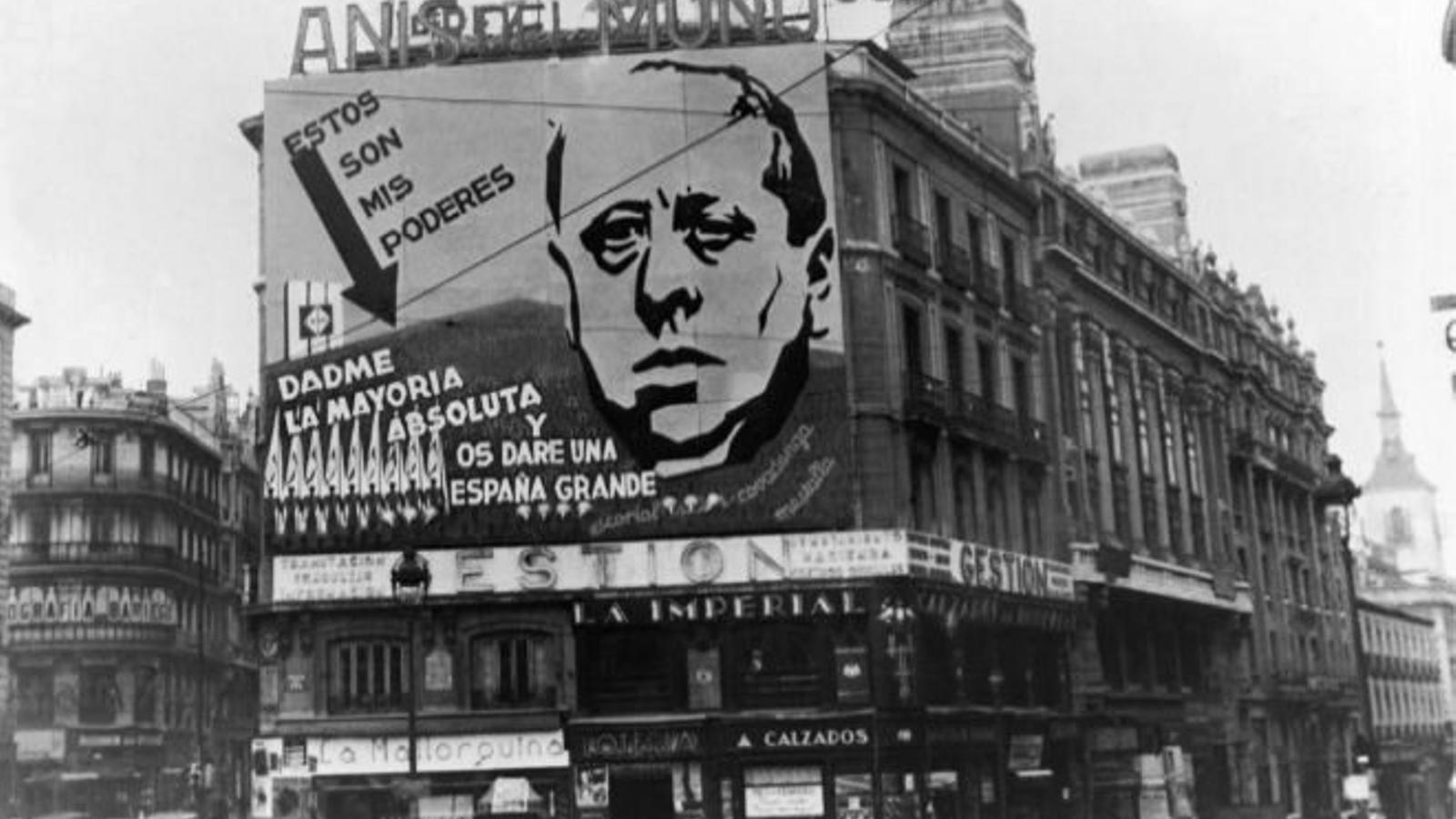
How did things go in Spain a century ago? Well, once the dictatorship of Primo de Rivera fell, the king had fled, and the Republic had been won, after the initial euphoria of the left, the involution began with general elections, also held, like now, in the autumn. On November 19, 1933, the right-wing parties presented themselves as a coalition within the Spanish Confederation of Autonomous Rights (CEDA) and won, albeit with a simple majority. The mandate to govern went to the party that had come in second place, the centrist formation of Alejandro Lerroux, son of a military man. An anticlerical and anti-Catalan populist, an agitator of the working masses known as the Emperor of the Parallel, over the years he had gradually moderated himself. Lerroux and his Radical Party, by then already integrated into the system, formed a government including members of the CEDA, whose leader, José María Gil Robles, would end up being appointed (May 1935) Minister of Defense. In this position, he gave wings to the coup-plotting sector within the army, placing General Franco in charge of the Central General Staff and returning General Mola to active service, placing him at the head of the forces of the Spanish protectorate of Morocco.
During that November election campaign, Gil Robles went so far as to say that his intention was to “give Spain a true unity, a new spirit, a totalitarian policy” and that “democracy is not an end, but a means for the conquest of the new State: when the moment arrives, whether through Parliament, we will eliminate democracy”. In September of that year, Gil Robles had gone as an observer to the Nuremberg congress of the Nazi party, where he must have been impressed by those displays of thousands of young people militarily regimented before the hypnotic Hitler. In the end, the dirty work was done by the military to whom he had given key positions. Gil Robles was left politically half-displaced. Over the years, he would end up engaging in monarchist opposition and even participated in the so-called “Munich conspiracy” (Munich conspiracy) of the anti-Franco forces.
Globally, today liberal democracies are once again threatened from within, with Trumpism as a battering ram and the infinite echo of the reactionary anarcho-capitalism of the Big Tech ideologues. This is the spirit of the times. This is the global context. The double Spanish right wing acts in perfect harmony and is much better prepared than Gil Robles' coalition of 1933. The PP-Vox bloc is on a roll, the winds are blowing in its favor, and the wear and tear on the PSOE is as great or greater than that suffered by the divided left of the young and chaotic Second Republic. The middle classes also feel helpless, especially for their children lacking horizons. The housing crisis, the loss of purchasing power, the acceleration of technological change, cultural change (family model, feminists, genders...) and social globalization (new immigrants) are very difficult to digest.
Those who call for a return to order take advantage of all this. And this is the key difference from the 20s and 30s of the 20th century. Back then there was a (maddened) promise of the future; today there is an (absurd) promise of a return to the past.
