Nobody guessed the second question
A few days ago, at a conference on gender and science, I asked the audience two questions from a questionnaire published by the journal Nature. What percentage of Nobel science prizes have gone to women since 1901? Everyone got it right, 4% (only 27 out of the 660 Nobel prizes in physics, chemistry, and medicine). And in the last decade? No one got it right, because everyone bet on higher figures. It is 12%, 9 women among 78 winners. We have well learned the injustice of the past, but we think the present has changed more than it actually has. This October has not helped at all. The six winners in physics, chemistry, and medicine in 2026 are men.
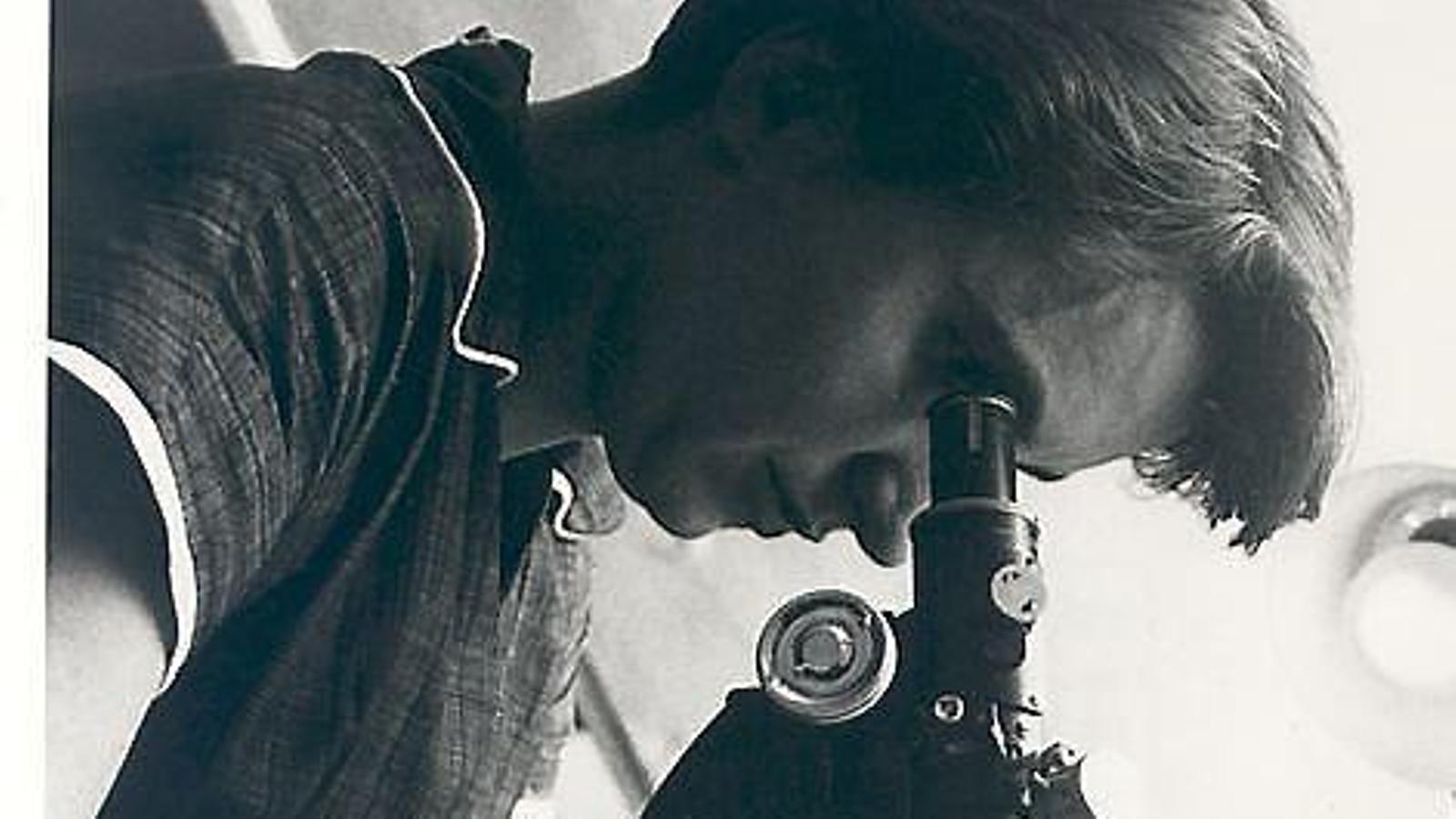
It is worth mentioning that Marie Curie remains the only person with two scientific Nobel Prizes, and that medicine accounts for more than half of the awards that have gone to women. But none of these is Rosalind Franklin.
Watson, Crick and Wilkins shared the 1962 medicine prize for the structure of DNA. Franklin had died in 1958, at 37 years of age. It is often said that she was left out because she was dead, but until 1974, the Nobel statutes did not prohibit posthumous awards. Her photograph 51, the X-ray image that Wilkins showed to Watson in early 1953, was decisive. Watson wrote that upon seeing it, his mouth fell open and his pulse began to race. And he constructed the narrative of a meticulous scientist incapable of seeing what was right in front of her. The journalist Horace Judson, author of the best-known account of the discovery, summarized it by saying that the pattern “screamed helix” and that she turned her back on her own discovery.
However, an article published this month in the Journal of the History of Biology dismantles this account based on Franklin's notebooks. Historian Alistair Sponsel and crystallographer Brian Sutton show that on May 2, 1952, Franklin revealed photograph 49, taken with the same sample. That same day she calculated that the molecule repeated every 34 angstroms and that there were ten base layers per helix turn, the parameters upon which Watson and Crick built their model. The image had come out off-center and was missing one of the arcs. That evening she decided to repeat it with the support properly aligned. The 51 was not an experiment she did not know how to interpret. It was the polished version, intended for publication, of calculations she had already made.
To say that a photograph "spoke for itself" erases the work and judgment of the person who made it possible. It is a well-known mechanism, in fact. The historian Margaret Rossiter called it the “Matilda effect”: the tendency to give less credit to women than to men for equivalent contributions.
The Nobel figures are not just a matter for Stockholm. They are the final link in a chain that begins much earlier, with who receives funding, who signs first, who is cited, and who is nominated. Seventy-four years later, we still have to go into the archives to return to Franklin what was hers. Perhaps one day the second question on the questionnaire will no longer surprise anyone.
