Good and bad in school segregation
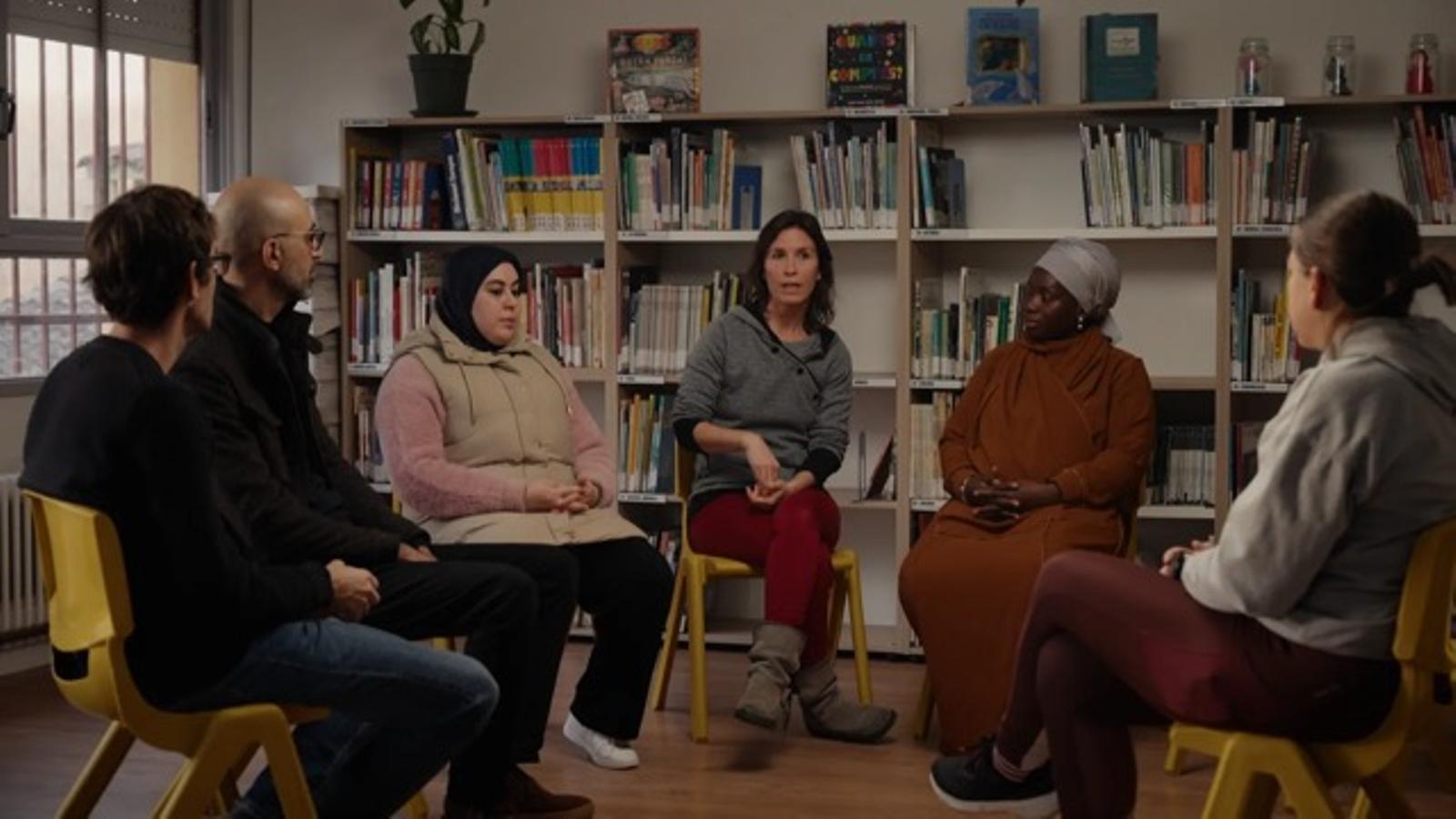

On Sunday, 30 minuts broadcast The schools of the “others”. The quotation marks highlight this critical distance with the classic pejorative euphemism that refers to the immigrant population. A far from innocent detail, but practical for accentuating this idea of otherness with the desire to denounce it.
Addressing school segregation on public television is brave and, in a context of a pre-election campaign, turbulent current events, and high social polarization, it is a gesture that demonstrates commitment. The report used graphics designed on a typical school blackboard to explain very well the severity and figures of school segregation in Catalonia. It highlighted that the phenomenon not only harmed the most disadvantaged students, but was also an obstacle to good social coexistence.
However, the narrative approach of Les escoles dels “altres” creaked due to the elementary structure of a story of good guys and bad guys. It was claimed that, while “throughout Catalonia people live in a more or less mixed way [...], their children are schooled above all so that they find themselves almost only with their own kind.” That is to say, a large part of the cause of school segregation was placed on the will of the native population. It was also claimed that it was due to “decisions made by Catalans and Spaniards who do not want to relate to racialized families in general.” A racist Catalonia was depicted in front of an immigrant population that struggles to integrate and fails to do so. It is obvious that these two realities exist, but perhaps nuances are missing. The 30 Minuts focused on the racism of Catalan society and not so much on the difficulties of managing immigration by the institutions. The story centered on prejudice. The witnesses were very reasonable and eloquent, but you had the feeling that many of them did not represent the profile that, precisely, offers more school complexity. Unfortunately, not all families in segregated schools are like Mounya's, nor can non-segregated schools solve the integration of the immigrant population. Three students who had dropped out of their studies lamented that, if they had gone to another type of center, things would have gone better for them. And this cannot be known. The participants of an AFA (Parents' Association) of a segregated school lamented the racism of the natives. And directors of schools of the so-called “high complexity” showed their frustration at the fact that during open house days they have no audience and no one goes to see them. It was not understood if the native families do not go or if the newcomers do not go either.
If the narrative is built around families who reject diversity and families who suffer the consequences, what is being done is to moralize a social problem that is structural. Surely, the approach of confronting victims and those responsible makes it easier to build a report, but it is obvious that the analysis is manichean and superficial, which is also a way of diluting the causes and perpetuating segregation.
