Catalonia before the 29-N
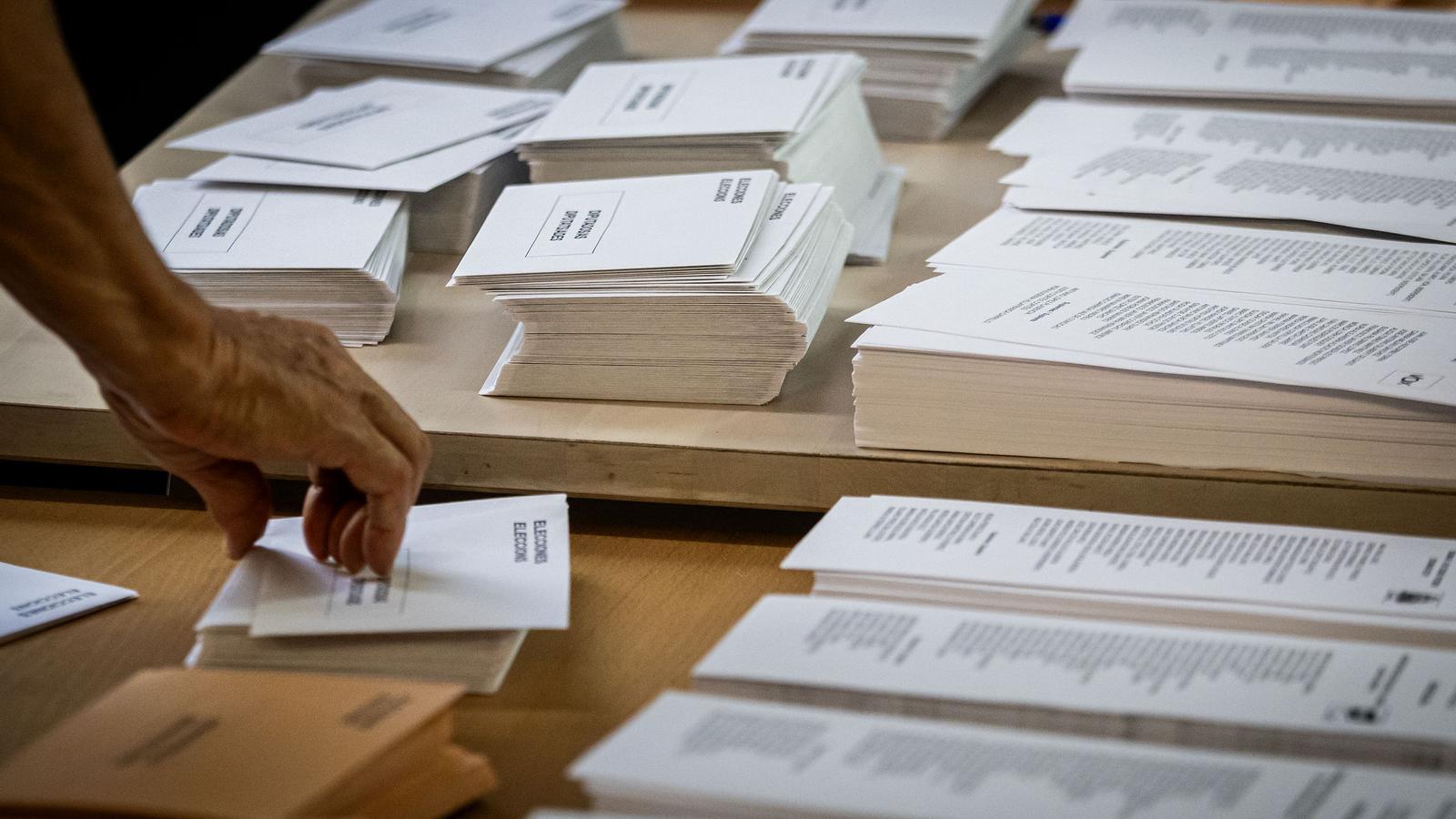

The elections of November 29th will not be conventional elections. At this point, almost everyone is clear about that. They are poisoned, complex elections, full of contradictions and that require a long-term perspective so as not to get lost amidst so much noise and tactical interests. November 29th is about democracy and rights. What is at stake is the model, the essence of the democratic system. And in this situation, Catalonia cannot remain indifferent.
The history and struggles of democratic Catalanism over the last 150 years have had a common thread: the defense of Catalonia's sovereignty has always gone hand in hand with the deepening of democracy. These are inseparable struggles. Catalan parties, when they have played a key role in the governability of the State, have not only demanded more self-government and more resources, but also more rights, more freedoms, and more democracy for everyone.
Here, as in the United States, Brazil, and the rest of the world, the growth of the far right and populisms has occurred in a context of weak liberal democracies, incapable of channeling the needs of a large part of the population. This disconnection from the people has given wings to authoritarianism and to groups that seek to erode institutions, parties, and the democratic system.
In the Spanish state, the global reactionary wave has had a unique effect. On one hand, it has crystallized into an extreme right-wing party with Francoist ideology and roots, uninhibited and with close ties to Trumpism, such as Vox. And, on the other hand, it has swept over the PP, now reconverted into an extreme right-wing party with a soul just as Francoist as before, but which has embraced a recentralizing agenda with authoritarian traits that distance it from the majority of European conservatives and, even, from Rajoy's PP, which is saying something.
If the PP were truly a conservative right-wing party comparable to its European family, it would have been the first to be interested in distancing itself from the far right. But not only has it not done so, it has governed with Vox whenever it has had the opportunity. And we have seen what they have been capable of in the Valencian Community, the Balearic Islands, and the Franja.
On November 29th, a lot is at stake. We will not tire of repeating it. An absolute majority for the PP and Vox is a direct threat to our national identity, our self-government, our language, and our freedoms as a people, but also to our rights as citizens. A government of the extreme right and the far-right will cut rights for workers, for women, for migrants, and for young people. For everyone, regardless of where they live and what they have voted for.
The French-Lithuanian philosopher Emmanuel Lévinas already said in 1934, almost a century ago, that the extreme right is not just another option within the democratic electoral offer because it is against the framework of democracy, its principles, and its values.
In Catalonia, the dilemma between democracy and liberties or authoritarianism and autocracy is resolved even before going to vote. Whatever happens in the Spanish state, in Catalonia the PP-Vox bloc will be defeated. And this must be said more and must be said louder. The extreme right and the far right are growing, yes, but in Catalonia they will continue to be a minority option, very far from the central lane, because the great consensuses of the country draw from the democratic radicality of Catalanism. All surveys and polls point out that on November 29th, while Spain is stained with blue and green, Catalonia will stop the far right. Just like the Basque Country.
This does not mean, in any case, that the work is already done. In Catalonia, the mobilization of civil society and the citizenry must be the engine for the defense of democracy, rights, and freedoms in the coming months and years. If eventually the PP and Vox obtain an absolute majority in the Spanish state, Catalonia and the Basque Country will be the great bastions of democratic resistance to confront their steamroller of rights.
But if, against all odds, the reactionary wave does not sweep through as the polls predict –it wouldn't be the first time they are wrong either–, then the Catalan votes will once again be decisive and it will be the moment to move forward, to put on the table those demands that the Spanish state resists negotiating and to fight to achieve the recognition of the right to self-determination as a way to democratically resolve the political conflict.
For Catalonia, today, tomorrow and always, defending democracy is defending the country, its sovereignty and its people. We would do well not to forget it on 11-29.
