Whoever can vote, let them vote
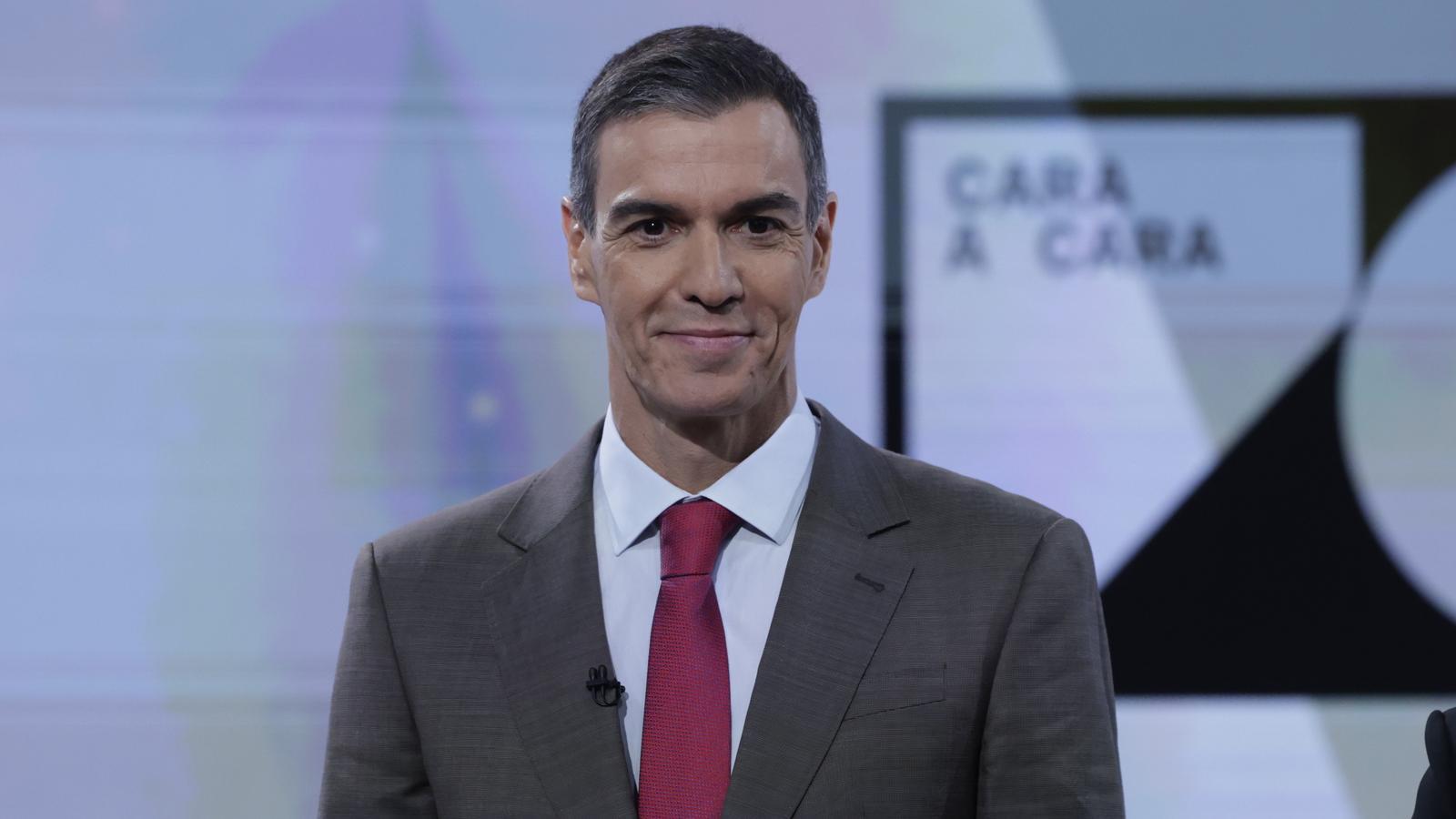

1. The face-to-face between Sánchez and Núñez Feijóo started and ended with two proper names that appeared like two ghosts on the white table of the television show. The Popular Party candidate—five seconds into the debate—cited Puigdemont. The still-socialist president—at the last gasp of the alleged golden minute, which was not even a bronze minute—cited Aznar. The world upside down.
2. Pedro Sánchez paraphrased Aznar with that "el que pueda hacer, que haga" (whoever can do, let them do), which was the effective order from the most resentful right wing to set in motion the entire judicial, political, and media machinery to destroy the 'Procés,' crush the independence movement, and strive to remove the left from Moncloa. Faced with Aznar's call, Sánchez looked at the camera to say "el que pueda votar, que vote" (whoever can vote, let them vote). The formula is ingenious and contrasts Aznar's sewers with the democratic force of the ballot boxes. But vote for whom? That is the problem. Who do we vote for if the party of the pinched nose has not yet been founded? As much as Sánchez appeals for a record turnout because he believes that the right and the far-right have a ceiling, these elections seem fixed and blessed. As much as the polls cooked up by the CIS and the socialist chief analysts, such as Iván Redondo, make people believe that the PSOE can be the most voted force, and that the miracle of 2023 can be repeated, the November 29 elections reek of an absolute majority for PP and Vox that knocks you backward.
3. Let's vote, of course. But how can you be enthusiastic about voting for Sánchez if he is the first one who seems to have surrendered, buried by the corruption of the PSOE and the tragedies of the AVE. He was only missing, on the morning of the face-to-face, finding Puigdemont's interview in El Mundo, which he must not have had the guts to read. Ten days before the polls, it was the final blow. It will be impossible for us to ever know what influence these statements will have on the results, but they have indeed served to reveal the truth. And the reality, explained now by Puigdemont with calculated vengeance, is very similar to what the political and journalistic right has denounced for many months: that the amnesty was achieved quite easily because Sánchez needed the support of the pro-independence parties to remain as president. The PSOE sold it to them cheaply, and now Puigdemont, about to return to Catalonia, boasts about it. In a State where 60% of Spaniards reject the amnesty and where 72% consider that Puigdemont's return from exile is bad news, it is all said.
4. And, yet, politics makes for strange bedfellows. That, all of a sudden, the PP of Feijóo and Ayuso, after so many years of shouting “Puigdemont to prison”, should embrace the statements of the president they expelled with article 155, and give him credibility and cite him as if he were their point of reference, is even funny. Where they aren't laughing as much since Thursday is at the Junts headquarters. If Míriam Nogueras was running an orderly campaign to try to maintain the seven seats in Madrid (polls predict four for her), if she was juggling to sell political centrality, if she had to endure the daily onslaughts from Rufián, she could little imagine that her strategy would be sabotaged from within. The leaders of Junts were not hurt so much by what Puigdemont said, which they already knew, but by the moment in which he expressed it and, above all, the place where he said it. It is not at all innocent to have blown up the campaign with the interview in El Mundo. A journalist like Puigdemont has made good on McLuhan's maxim that “the medium is the message”. We could not find a better example. From the words of the former president, only one thing is surprising. Just as Toni Comín said, Puigdemont insists that they have defeated Spain. For having achieved the amnesty? For not having gone to prison? To put it the other way around, the victory of the independence movement, as much as it pains me to say it, I do not see it anywhere.
