Housing: ask the candidates
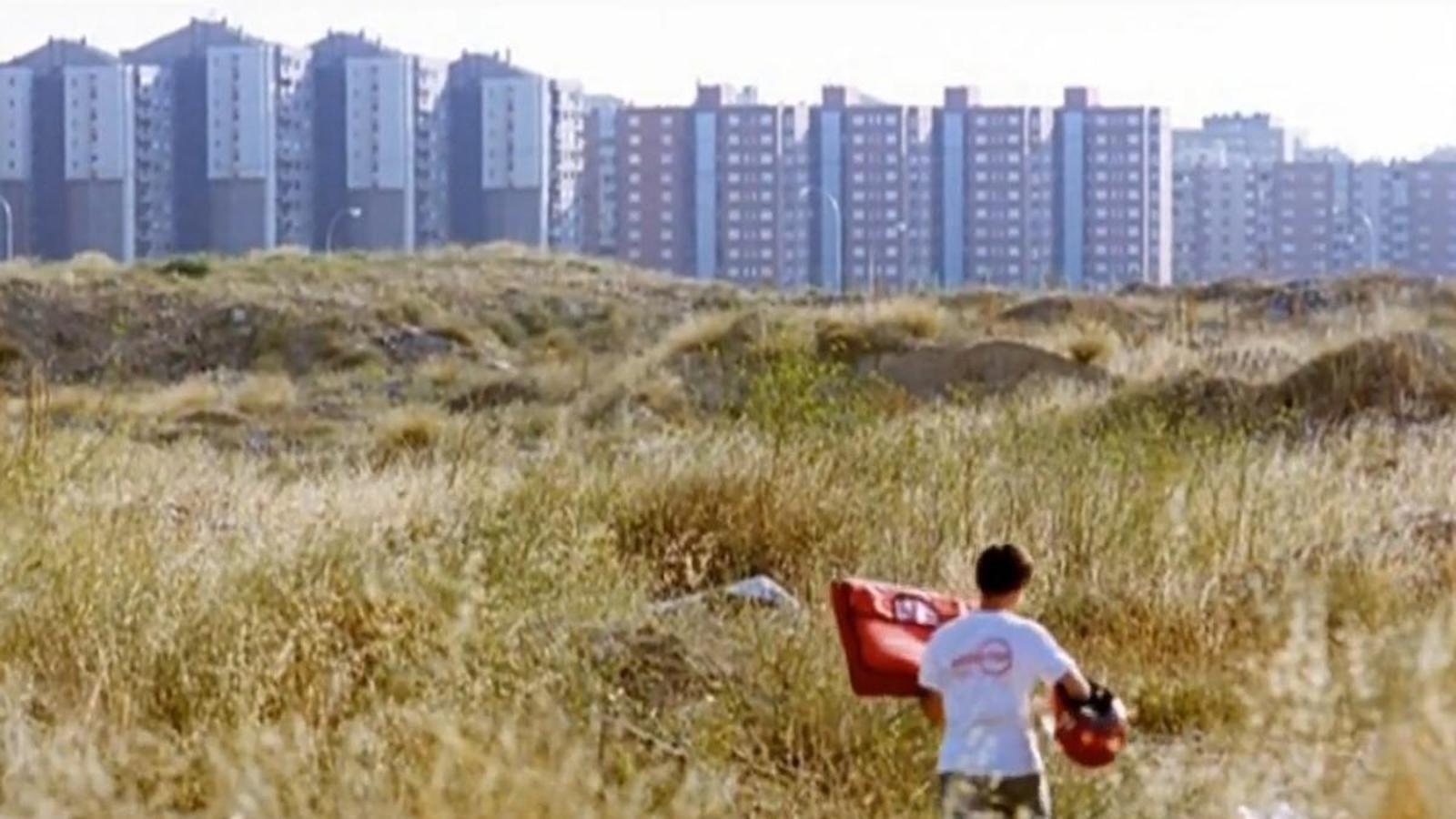

The issue of housing constantly reminds us that Spain is a different country, and in some senses, very immature. In Europe, they are shocked that since the Franco regime there has not been a sustained policy in Spain for the maintenance of public rental housing, capable of providing healthy competition for the private sector. When my foreign friends ask me how it is that until now it was still possible to declassify housing paid for with public money, I answer that it is a structural deficiency; the inability to govern while thinking in the long term.
That said, I think that the mobilizations of recent years have been creating an unstoppable movement. Even if the right wins, they will find it very difficult to return to certain postulates. For all intents and purposes, it is necessary to promote (rehabilitate and build), above all, affordable housing. A certain financial sector has rushed to capture clients trapped by the wheel of consumption, who spend more than they earn, with loans associated with credit cards, which are very profitable. This does not create shared wealth, just as a mortgage system based on unreal appraisals did not, because they did not even go to see the apartments they were financing. In contrast, investing in the creation of social housing creates jobs in construction and generates affordable rents that will mean asset income in the medium term.
It is not free-market housing that needs to be accelerated now; the promotion of affordable housing will also generate free competition with the private sector, which will have to build higher quality housing, be more efficient, and above all, more competitive. Even for a market economy, it is good to have the counterpoint of public supply, because this also prevents demand from being channeled only towards the private sector; then, they can sell anything, of poor quality or poorly integrated into the neighborhood.
The CNMV has published an interesting report: it describes, from an economic perspective, the barriers that urban planning places on the production of affordable housing. It has made me think about how we are viewed from other professions: it is clear that planning and urbanism bother those who seek to optimize their businesses. Among all the recommendations, there is one that worries me: it proposes a model in which all land not protected by public interest could be considered suitable for urban transformation. It is argued that having more developable land will reduce speculation. But experience shows that this has never worked: since the ownership of developable land is mostly in private hands, many do not develop it or hold onto it waiting for better times to come. It is a theoretical idea that may work if you are selling telephones or refrigerators, but in cities, not everything goes. Spain grew very badly during the sixties, and it created authentic urban borders. You have to see Barrio, by Fernando León.
And it is exactly the opposite direction to the one Europe is following, where two types of land are distinguished: greenfields (fields or rural spaces) and brownfields (abandoned or degraded lots). Developing the former is cheaper for the developer, because there is no need to decontaminate or carry out costly demolitions. But European cities provide aid to rehabilitate degraded pieces of land precisely to avoid the consumption of natural lands around the cities. In France, they have approved the Zero Net Artificialization policy, which precisely aims to reduce the consumption of green and natural lands throughout the country.
The need for a “supra-municipal planning” of buildable land is also mentioned. I share the view that territorial plans are extremely important for connecting trains and cities, and ensuring that the country's development is not exclusively the metropolization around Barcelona. But I tremble when someone mentions “supra-municipal planning,” because conflict is inevitable. If a city votes against a certain plan, the imposition by a superior body creates even more conflict. Urban planning must be explained, agreed upon, and redrawn many times; impositions only generate blocks.
After the general elections, the municipal ones will come, and completely opposite results could emerge. Then, even if right-wing parties promise a shortcut to approve urban plans, they would find it very complicated to put it into practice by violating municipal autonomy. It is a good question to ask the candidates: what territorial model do they propose and where exactly would they locate these new homes on liberalized land. And what neighborhoods and urban reference places do they have in mind. For now, the best protection of the built environment will be done by voting: ignoring the compatibility between housing and land protection can have devastating consequences for entire generations.
