Can Brexit be undone?
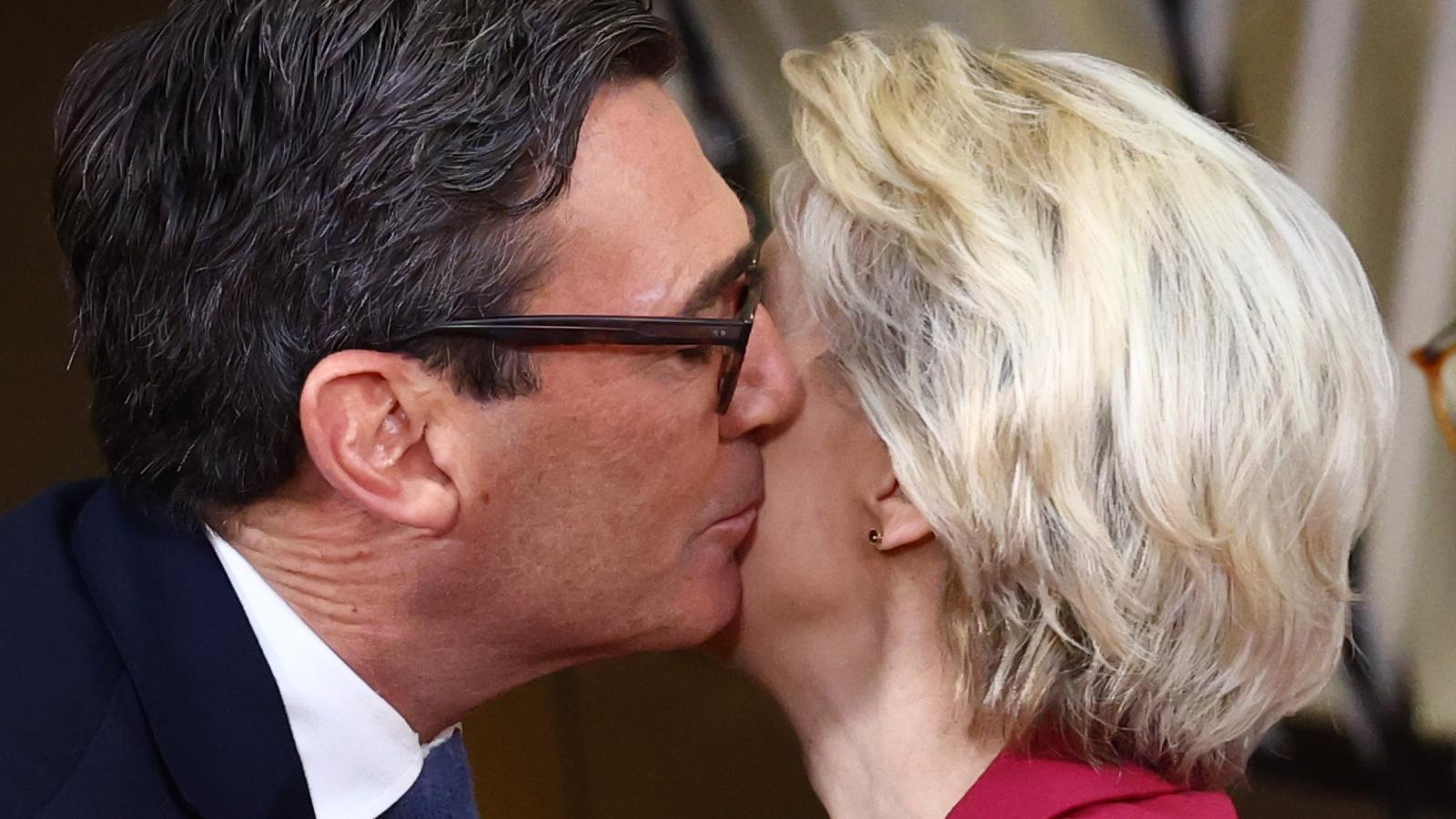

Ten years after the Brexit referendum, the United Kingdom has reopened the debate on the possibility of returning to the European Union. For now, on November 20 in Brussels, the United Kingdom and the EU concluded negotiations on three agreements that facilitate, above all, the export of food from the island to the community market, the connection of their carbon markets and a program for 100,000 young people on each side of the English Channel to be able to reside for up to three years on the other side. The door was also opened to strengthening collaboration on defense and migration. It is the most ambitious approach that has taken place since Brexit and the confirmation of a strategy that had already begun to be negotiated with the former Prime Minister Keir Starmer and which has been signed by his successor, Andy Burnham.
With a European Union determined to strengthen alliances with any reliable partner that contributes to joining efforts to contain the impact of the current global disorder – whether it be Canada, Japan, Chile, India or Australia – the agreement with the British is "a turning point", in the words of Ursula von der Leyen. For Brussels, the return of the United Kingdom would mean recovering the second largest economy of the EU and the main military and intelligence force – essential for the Union that wants to have its own role in the end of the war in Ukraine.
But it is hard to believe that one side or the other has forgotten the trauma of a bitter and painful divorce. One only has to see the political and media outrage of the protagonists of the breakup. Former Prime Minister Theresa May confessed she was "astonished" by Andy Burnham's decision and stated: "Brexit is done. Just accept it and move on". TheDaily Mail spoke of the agreements signed in Brussels as a "betrayal of Brexit", and the Conservatives consider it an "unfair deal". All this shows that the wounds are still open. The EU continues to be a divisive element for the British.
The Prime Minister acknowledged this Monday that it would be "unthinkable" to return to the European Union without a referendum.
In fact, this is what a majority of the British also say, according to a recent poll published by YouGov. The referendum is the preferred option among all voter groups (54%), including among those who are in favor of rejoining the EU. The poll, however, once again draws an uncertain landscape, with 52% of Britons in favor of returning, 27% in favor of staying out of the bloc and a significant pool of undecided voters.
For the moment, Burnham –a supporter of rejoin– would be satisfied with a good, expanded association agreement that provides more flexibility to continue building the rapprochement. Meanwhile, the Labour Party hopes to be able to mobilize, in this way, the vote of pro-European youth, and recover voters lost to the Greens and the Liberal Democrats ahead of the next local elections, especially when the polls had been so favorable, until recently, to Nigel Farage and his party Reform UK.
There are also economic arguments in favor. Brexit added more uncertainty to an already volatile global geopolitical moment, and the British accounts have suffered as a result. According to the British think tank Centre for European Reform, which has quantified the costs, Brexit has reduced trade in almost all sectors of the UK economy. Among exports of goods to the EU, the losses were led by agri-food, with a 29% drop, and chemical and pharmaceutical products, with a 21% drop. Exports of machinery from Great Britain, on the other hand, have not decreased, which perhaps reflects the deep production niches of the UK's manufacturing industry, which maintain strong demand from the EU despite the fact that trade barriers have made prices more expensive.
The agreement signed in Brussels is beginning to reverse some of these situations; not only economic, but also political, because until now Brexit had become the great accelerator of the leadership crisis that has shaken the two major parties and has caused the fall of six prime ministers in ten years. But, beyond the hugs and the staging of the reunion displayed at the summit, it is impossible to think that the relationship between the United Kingdom and the European Union can return to where it was before the referendum called by David Cameron in 2016. No EU government would accept today to grant the United Kingdom again anything that resembles the conditions it had before Brexit, especially its famous British rebate, which returned part of the contribution made to the coffers of Brussels.
In an EU where Marine Le Pen has climbed to the top position in voting intentions for the next French presidential election, the possibility of a return of British Euroscepticism to the heart of the institutions deactivates any illusion of reintegration. The process of reconnection is underway. But the EU knows very well that the first crisis of confidence in the community project that it must resolve does not come from London but from its own capitals.
