The return of Puigdemont
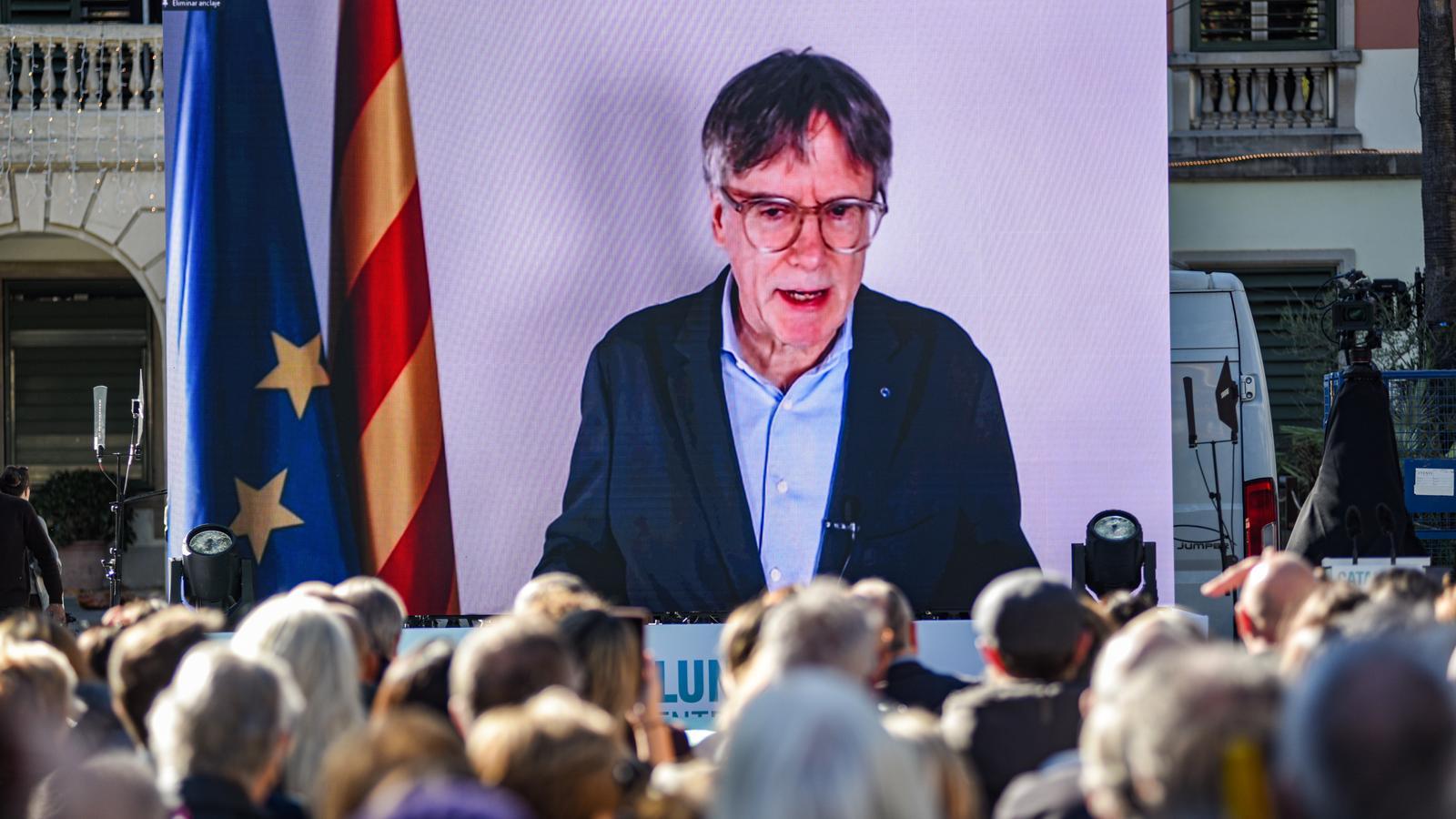

-
CAT -
CAST
End point to nine years of exile, prison and judicial persecution. The ratification, by the Supreme Court, of the amnesty for former president Carles Puigdemont, now finally complete, closes a convulsive episode in the contemporary history of Catalonia, marked by the pro-independence push and the repressive response of the State. It has been more than three decades of democratic anomaly, with the failed attempt by Catalanism to force Spanish legality to exercise the right to self-determination, the implacable frontal reply led by the PP government (with the support of the socialist opposition) and executed by the high judiciary, and the subsequent negotiation by the PSOE government (needing the pro-independence parliamentary support) to turn the page on the repression.
These events, both the Process and the post-Process, a period that can now finally be considered finished, have been experienced with much emotionality and have entailed a high personal cost for many of their protagonists. They have also meant a collective upheaval. And, of course, they have had political consequences. While the pro-independence movement, divided, has been weakening and in part has fallen into the hands of xenophobic discourses (Aliança Catalana), the Spanish nationalist right has strengthened, to the point that it could now return to the Moncloa more radicalized, embracing a Vox with undisguised neo-Francoist airs. The possible PP-Vox coalition, encouraged by a global Trumpist environment, is also nothing less than an involutionary response to the willingness of the Spanish socialists to dialogue with Catalan sovereignism. Without a doubt, Sánchez has also paid a price for it in the form of the same lawfare judicial that has besieged the pro-independence movement for so many years.
In Catalonia, with the government of the socialist Salvador Illa sustained by the decisive support of ERC, the frontism has been broken. The national tension of the peak moments has been lowering. As a result, the very real and successive crises (pandemic, trains, education, housing, healthcare, climate change, lack of investment, unresolved financing, the Catalan language in retreat...) have taken on all the prominence that the Procés and the early times of the post-Procés had left in the background. This is the tangible problematic reality of the Catalonia that former President Puigdemont will find, whose return was an essential step to normalize democratic political disagreement.
Without anyone having to renounce their national and ideological horizons, it is important that Catalan society can face these important urgent challenges that grip it with a capacity for dialogue and, as far as possible, consensus. They are huge challenges whose solution depends as much on a climate of understanding and concord in the country as on the need to carry out effective politics in Madrid and Brussels. Everywhere, good doses of pressure and negotiation will be needed. Until today, for years, this has had to be done from the anomaly of repression. Now this phase is overcome and it is time to open new paths to move the country towards shared social and economic progress.
