Puigdemont, without simultaneous translation
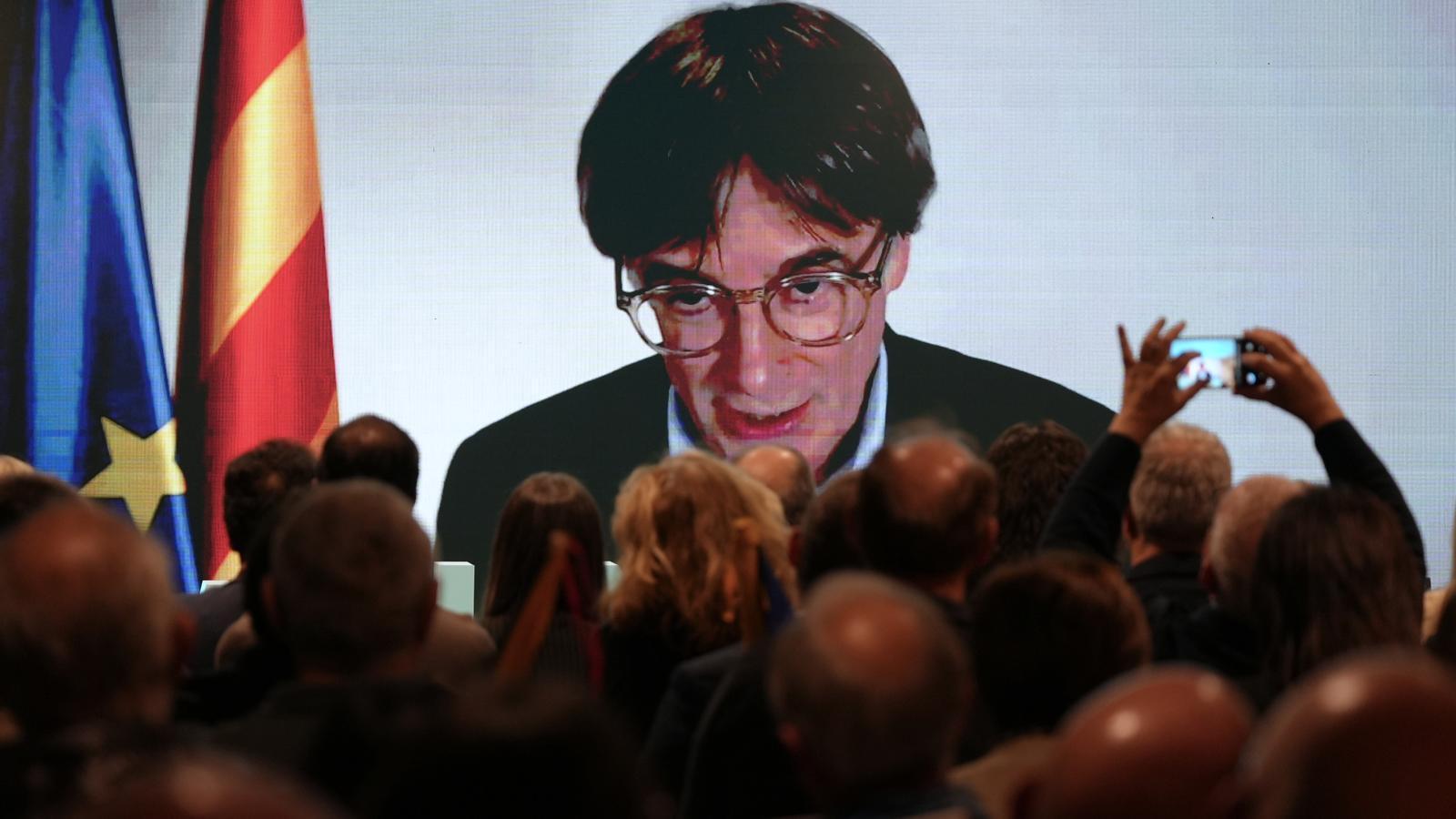

Carles Puigdemont does not need much interpretation, and even less so these days. After months of self-imposed public silence and nine years of exile, he has decided to remind each and every one of his enemies with harsh words, first in the interview with the newspaper El Mundo and then with the poem by Jaume Pons Alorda. It has been his forceful way of returning, saying that there is neither forgetting nor forgiveness.
These are not suitable words for the president who has sought to preserve the dignity of the institution, but rather those of the human being who has suffered and seen his family suffer, who has managed to avoid Spanish judges and prisons, and who now, at last, feels liberated. They are also typical of the activist within him, who seeks to multiply the anticipation for tomorrow's press conference in Brussels. The journalist Puigdemont knew perfectly well what the headline resulting from the chosen poem would be, and he was fine with that.
But just as it happened with the adjectives he dedicated to Sánchez, the forcefulness of the poem gives us a clue about the Puigdemont who will lead the return from exile. The now definitively amnestied president believes that the democratic struggle with Spain has not ended, that the Socialists are only playing the "good cop," but are "cops" nonetheless, and even more so at a time when the PSOE's strategy may be to resist in Catalonia just as it resisted in Andalusia for decades. And that during a conflict, one cannot show weaknesses or engage in self-flagellation with a list of mistakes made. He could not have lived any more marked than he already has, and he probably never will. So this is his beginning of a return. And, for the moment, he has no other. Until he smells and touches the reality of the country he is about to set foot in again.
