Towards global climate failure
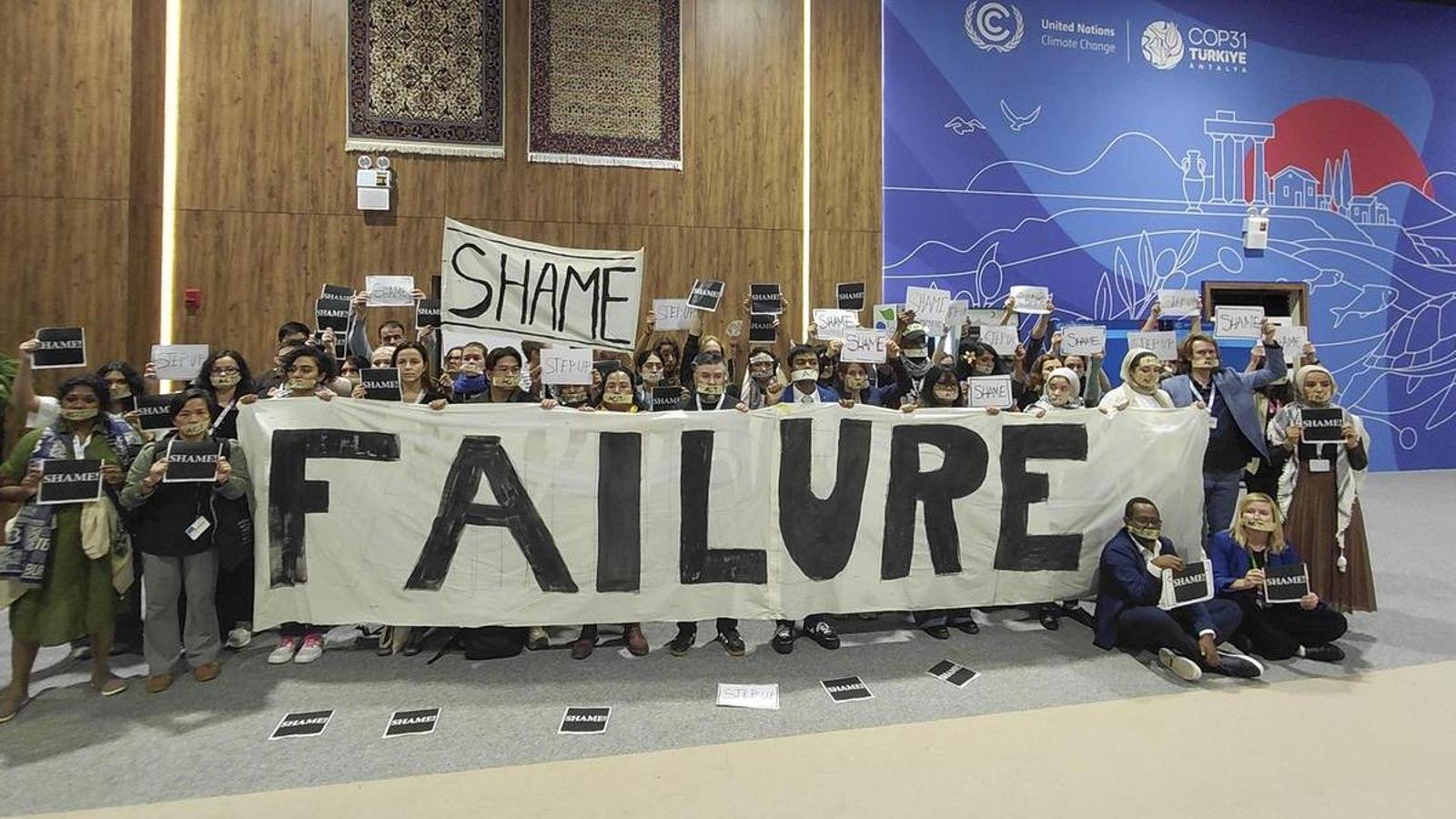

The UN Secretary-General, António Guterres, wanted to let the world know of his “profound disappointment” that COP31, held (if one can call it that) in the Turkish city of Antalya, ended without any agreement, a fact that had not happened since the sixth edition of this global climate summit, which took place in the year 2000. Guterres is disappointed, and so are we. The whole world should be disappointed seeing how, edition after edition, the influence (not to mention the prescriptive power) of the United Nations and the global scientific community diminishes over oil-producing and/or CO₂-emitting states, and over the interests of their governments and large corporations, so deeply intertwined that they are often, simply, the same.
COP31, in fact, has dramatically put a classic dilemma on the table: what is better (or less bad, or worse), a bad agreement or no agreement? As you can read in Sònia Sánchez’s report in this newspaper, the agreement that had finally reached a vote, conditioned by oil-producing countries (and with Russia and China simultaneously holding a parallel summit with the US; once again the Trump administration was absent from the COP and did everything possible to boycott it), was blocked in extremis by a whole series of countries from five continents, with the European Union in the lead. They argued, with good reason, that a COP agreement that does not even include any mention of fossil fuels and the need to put an end to them is inconceivable, as was the case with this year’s final agreement document. It would have been, certainly, a scandal, and in a way, a mockery. But closing the summit without any agreement at all is also one: perhaps what needs to be reconsidered is the approach and the role of the COPs, and to think about another, more effective instrument. This should mean one with effective coercive and sanctioning power.
Of course, building such an instrument is so difficult that today it seems unthinkable. But the Paris Agreement was also unthinkable at the time and it was achieved: ever since, however, it is not that we are further and further away from that agreement, but rather that we have never been close to it. The Antalya COP has been a resounding failure, but previous editions languished in less flashy, poorly and thinly disguised failures, but failures nonetheless, with makeshift agreements and so minimal that everyone knew they were never meant to be respected. Meanwhile, we are facing or are inside a super-El Niño, we come from a summer that warned us of the process of warming and drying that awaits us in the Mediterranean, and every day alarming local phenomena occur: this weekend, at the end of November and without going any further, a large fire in Formentor. On Sunday there are general elections that have every chance of being won by reactionaries who deny that any of this matters. Paraphrasing a cliché, there are only two infinite natural resources, and they are human greed and stupidity. Combined, they are lethal.
