Beyond incompetence
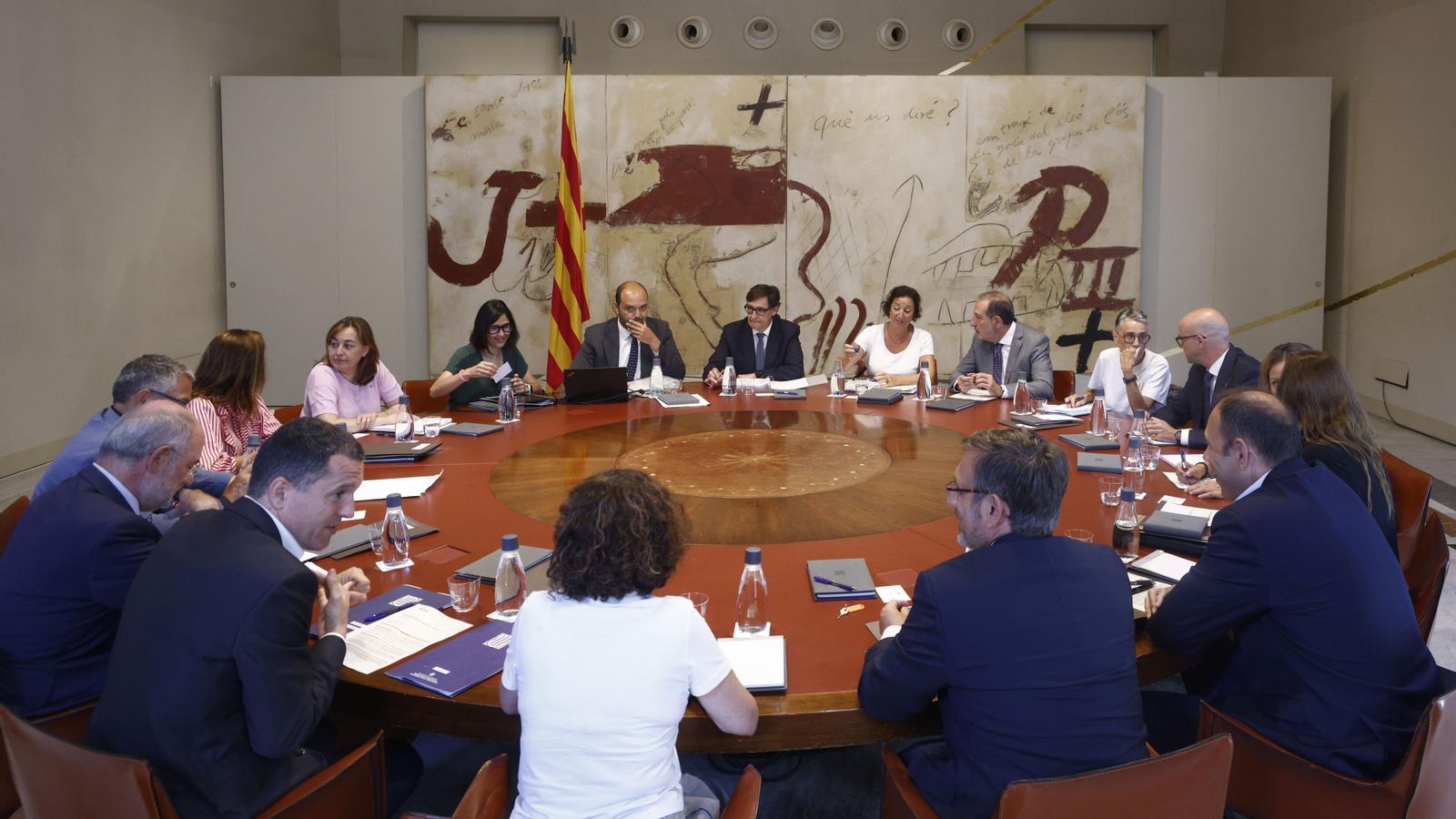

The government of Salvador Illa has been in power for two years, and it is a good time to take a provisional assessment. The PSC won the elections mainly because it instilled the belief that the pro-independence governments of recent years had been incapable of properly managing the Generalitat, either due to incompetence or because they were occupied with other ventures. The PSC's good connections with the country's business, media, and trade union establishment helped it to be projected as an option of rigor and professionalism, in contrast to the adventurers and apprentices (sic) who had preceded it. The operation to construct the narrative was a complete success, to the point that it managed to make a part of the pro-independence movement feel insecure. In the ERC environment, for instance, there were those who accepted the PSC's narrative about the management incapacity of their own government.
Illa came to the presidency with a double promise: to set aside any federalist agenda or expansion of self-government, and to dedicate himself to the effective management of autonomy. He has fulfilled the first part of the promise to the letter. The only exceptions are the concessions that could not be avoided to secure investitures in Catalonia and Madrid. However, the majority of the most relevant agreements, for now, have been broken.
Regarding the second part of the foundational promise, that of good management, the balance sheet is more discreet. It is easy to make a list by way of illustration. Problems with the railway network have significantly worsened. Tension in the education system has been dragging on for months, falsely resolved with a surprising Schrödinger's agreement with the unions, which will hardly go down in the annals of brilliant negotiations. The mess with the PISA tests, invalidated by the OECD due to an attempt – we still don't know by whom – to skew the sample. Delays and blockages in ordinary public procurement processes and in the appointment of interim and substitute staff in various departments. The management of African swine fever, "solved" by the indefinite closure of natural spaces in one of Europe's densest metropolitan areas. The management of Plater for the deployment of renewable energies has not been particularly brilliant either. And tension is rising in sectors such as health and agriculture. In housing, the loopholes introduced by the PSOE in regulation (seasonal rentals) have absorbed a large part of the ordinary rental market and, despite promises, the construction of new homes is slow, as could be expected.
The list is partial, because the things that work are less visible than those that do not. But it is long enough, at least, to critically review the narrative of the PSC's management competence. Especially if we consider that it is a government that has everything in its favor: the socialists govern alone (or almost) at all institutional levels, they have great media protection in Catalonia, and they have received parliamentary support for the budgets at a very low political cost, unlike what Illa did with the previous government, to which he imposed impossible conditions.
Faced with this balance sheet, it would be easy to say that the current rulers are incompetent, perhaps even more so than those before. But reality, I find, is more complex. Certainly, parties often prioritize loyalty over competence in recruiting cadres. And when they try to recruit professionals, they often encounter difficulties. Despite high salaries, personal and reputational costs are high. Furthermore, reintegration into the workforce after a political career is difficult. And everyone is aware that the administration will not make it easy to launch and run ambitious and innovative projects.
In any case, the quality of political cadres is by no means the main problem. The Catalan administration suffers from a series of structural tensions that often paralyze it. The Generalitat has been suffering from structural and deliberate underfunding for decades, and has never recovered from the effects of the 2010-15 cuts. Moreover, the Catalan population has been growing in quantity and complexity, mainly due to aging and significant inequalities.
But, in addition, the Generalitat administration has been degrading endogenously. What was once a young and dynamic institution, with ambition and its own ideas, has become ossified and is drowning in a poorly understood civil service model, incapable of modernizing recruitment and promotion processes, with obsolete, aging, and unmotivated profiles. And it suffers from an unstoppable expansion of the most dysfunctional version of administrative law, with the infinite proliferation of ever slower and more convoluted protocols and procedures, always conceived from a distrust of public managers.
Although they are fully aware of this, for parties – old and new – it is much more tempting to attribute problems to the incompetence of those in power and try to convince people that they will be better managers. But time and again these promises clash with a much more complex reality. The reform of the administration and its funding that would be needed is several orders of magnitude deeper than the civil service apparatus, the legislative framework, public sector labor relations, and political incentives in Catalonia and Spain allow and will allow.
