Before the darkness comes
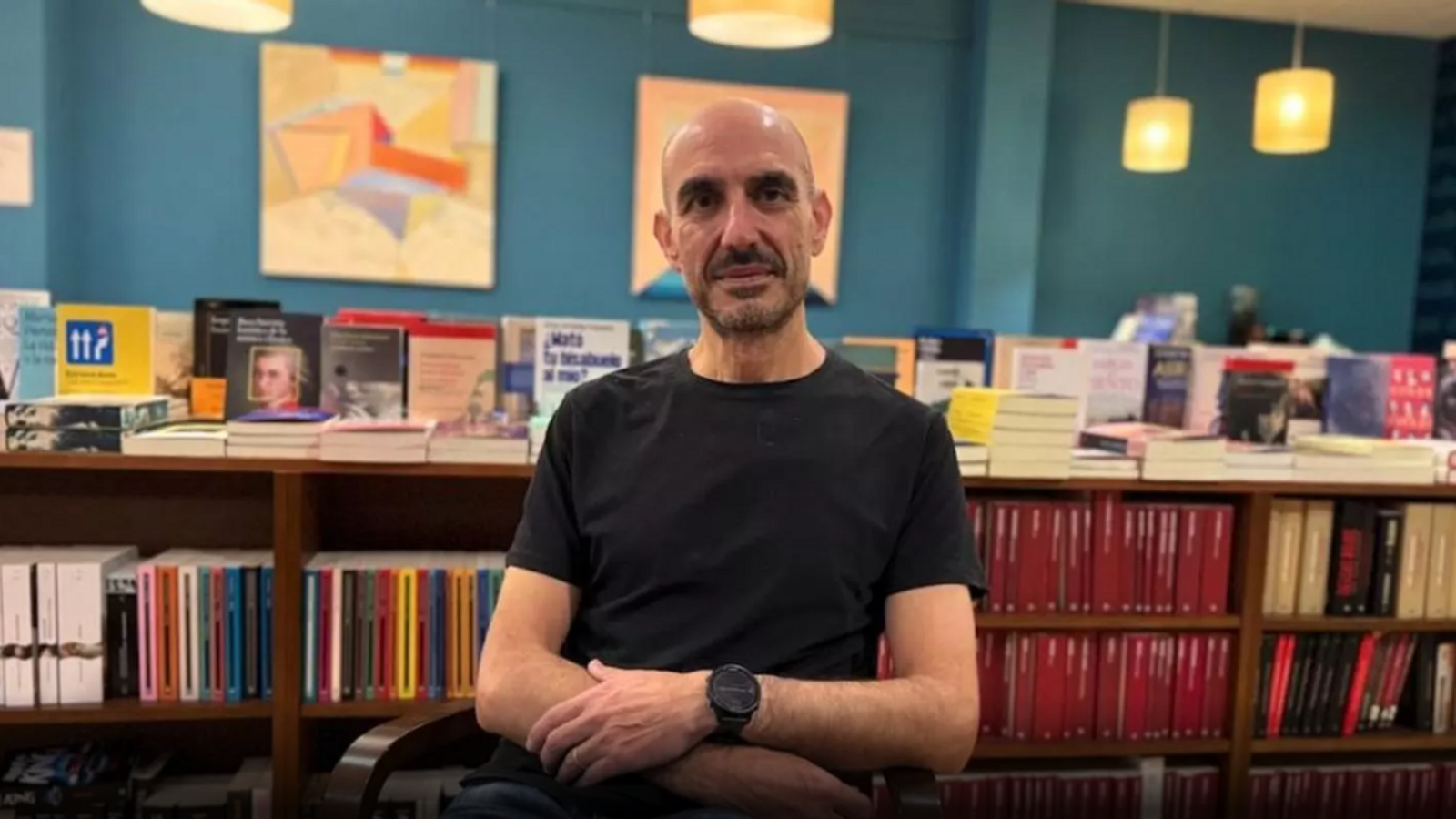

It rarely happens that a novel literally subjugates its readers; I mean, that for a few days life revolves around the attention we dedicate to reading a work of fiction. And that afterwards, once the reading is finished, it revolves around the impact the novel has left on us, the emotions it has made us feel, or the ideas it has summoned, or brought to life, within our thoughts. This recently happened to me with Abans que vingui la fosca, by Fausto Puerto Quetglas, which Angle Editorial has just published. It happened to me, moreover, twice: when I read it in its original form, about a year ago, and now that I have reread it as a published book. The author, I will not hide it, is a good friend of mine, but believe me that this is entirely irrelevant: the novel would be magnificent regardless of whether Fausto Puerto Quetglas and I did not know each other at all, as may possibly be the case for many of you, unless you are customers of the bookstore Món de Llibres, in Manacor, which the author has been running for more than twenty years.
Fausto Puerto Quetglas, therefore, makes his debut as a novelist at fifty-one years old and does so with a work of splendid maturity that has surprised those of us who knew he was an extremely solvent reader and recommender, but were unaware that he was also an equally demanding and refined writer. It will also surprise all readers who approach it with a hunger and thirst for good literature, because they will be satisfied. The less prior information they have, perhaps the better. Let us say, if anything, by way of orientation, that the story starts from the search the protagonist makes regarding Philipp Mainländer, a forgotten German philosopher considered a precursor of nihilism and an antecedent to Nietzsche. But that is only one side of the prism through which Fausto Puerto Quetglas invites us to contemplate the human condition.
Abans que vingui la fosca tells the story of an investigation, a flight, and a reunion. The writing is precise, rhythmic, and well-measured, and it welcomes and envelops us like a Bill Evans record, perhaps the Sunday at the Village Vanguard. It is difficult to escape the charm of the protagonist and that of Mathieu Renard, who will seduce you without remedy. It is a novel that will be considered “philosophical,” or “of ideas,” but that should not hold any reader back, because—as happens in the best novels—, simultaneously with the silence of thought, we perceive the bustle of life, the emotional, intellectual, and spiritual disorder that ultimately gives us the strength to live. And it is a novel that confronts us with dilemmas and questions that are difficult to answer. For example: are we humans flawed and disappointing creatures who—as the aforementioned Philipp Mainländer opined—should abstain from sexual relations so as not to perpetuate our failed species? Or, on the contrary, are we beings who are perhaps lost and helpless, but endowed with a dignity that can be saved by a force called love? This, among other things, is what this novel is about. And, believe me, it is prodigious.
