29-N: from decadence to modernization
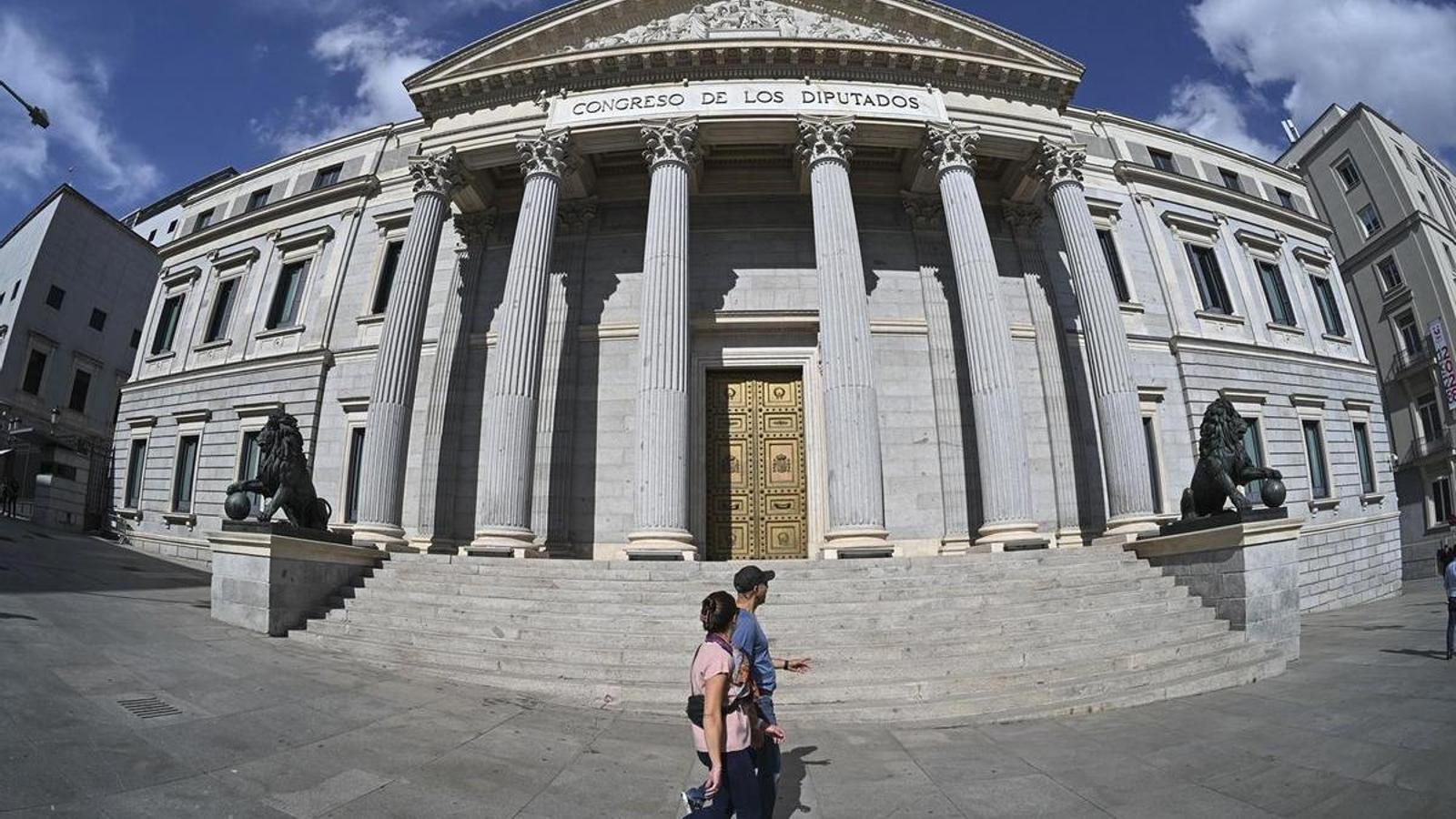

In a few weeks there will be a new appointment with the ballot boxes, specifically the elections to the general courts. Although the very harsh tragedy of the high-speed rail accident has turned many things upside down and caused an enormous emotional impact, the elections will be held anyway and, therefore, it is worth reflecting on what is at stake.
We are usually told, and pushed to think, that the electoral dilemma involves choosing between two blocs: the right and the left. On one side, the PP-Vox bloc; on the other, PSOE-Broad Front. The agreements that both sides have formalized to run for the Senate go in this direction. Some will say that it is necessary to remove Pedro Sánchez from the Moncloa at any price, and others will reply that it is necessary to avoid at all costs the arrival of Feijóo to the government. This well-known scheme responds to the interest of the leadership of some parties, but not necessarily to the general interest. And, in any case, it does not respond at all to what is convenient for Catalonia.
Let me explain. Catalonia, as a whole, must face four highly complex challenges: transforming its economic model, guaranteeing its welfare state, controlling its demography, and strengthening its identity. They are not antagonistic challenges, quite the opposite, they are intimately intertwined. To overcome these challenges, the recipe cannot consist, in a reductionist way, of choosing between right and left. A project is needed that contains the seed of the modernizing spirit. In my opinion, this point is where the main mission of Catalanism lies: turning the page on decadence and opening the doors to regeneration and modernization.
Decadence is what we experienced in the summer with the Ceuta crisis. A state incapable of minimally controlling its borders. A state overwhelmed and without a compass. If we take into account that the world's great demographic growth will come in the coming decades from the African continent, our south, imagine what scenarios we might find ourselves in if we are not able to foresee this type of phenomenon, which I very much fear will not be isolated.
Decadence is the attitude of high judicial instances of the Spanish state consisting of not wanting to apply a law, the amnesty law, approved by the Spanish Parliament as well. The leadership of the judicial system publicly confronted with the leadership of the constitutional arbiter. Quite a spectacle, performed in the public eye, that projects the degradation of a basic pillar of any state, and much more if it defines itself as democratic.
And decadence, needless to say, is having turned high-speed rail in Spain into a true nightmare. It is impossible to accept that with very few months of difference the management of high-speed rail has caused two tragedies of the magnitude of those we have suffered. This is not a accumulation of bad luck, or misunderstandings, it is the evident sign of the degradation. Enormous amounts of resources have been invested in high-speed rail, Spain has equipped itself with one of the most extensive networks in the world, much of this investment has been made in exchange for seriously deteriorating commuter mobility, and now it turns out that the giant had feet of clay because the most elementary maintenance and management are failing. The reputational damage is colossal.
And, nevertheless, as much as all these burdens weigh, the great challenge is how to move from indignation, frustration, and rage to a current of regeneration and modernization. The elections at the end of November are also about this. We have become too accustomed to valuing political options and especially leaderships by their ability to be witty on social networks, likable on certain television programs, or by supposedly speaking clearly, often by shouting a lot, gesticulating more, and promising without limit and without foundation. And we forget, also too often, that we cannot leave our lives, and our future, in the hands of the insolvent. Public affairs are too transcendent to leave them in the hands of those who want to look good but do not seek the good.
It is precisely in this landscape that, in my opinion, Catalanism has an opportunity and at the same time a responsibility. By definition, and by empirical contrast, the best versions of Catalanism have always carried the seed of modernization. In this sense, it is necessary to rediscover the taste, and the pride, of a job well done. When this happens, spirits soar. A few months ago it happened, at home, with the inauguration of the Tower of Jesus of the Sagrada Família. More than three decades ago it happened with the Olympic Games. And, in a more diffuse way, we have felt this pride of Catalan identity in many moments when being Catalan was a sign of differential quality.
The upcoming elections are not just a fight between right and left. They are also a struggle between modernity and decay, between quality and mediocrity. Just the space where Catalonia and Catalanism could make a difference.
