The museum of the sixth extinction
Carles Lalueza, director of the Natural Sciences Museum of Barcelona, accompanies us to 'Planet Life'.

-
CAT -
CAST
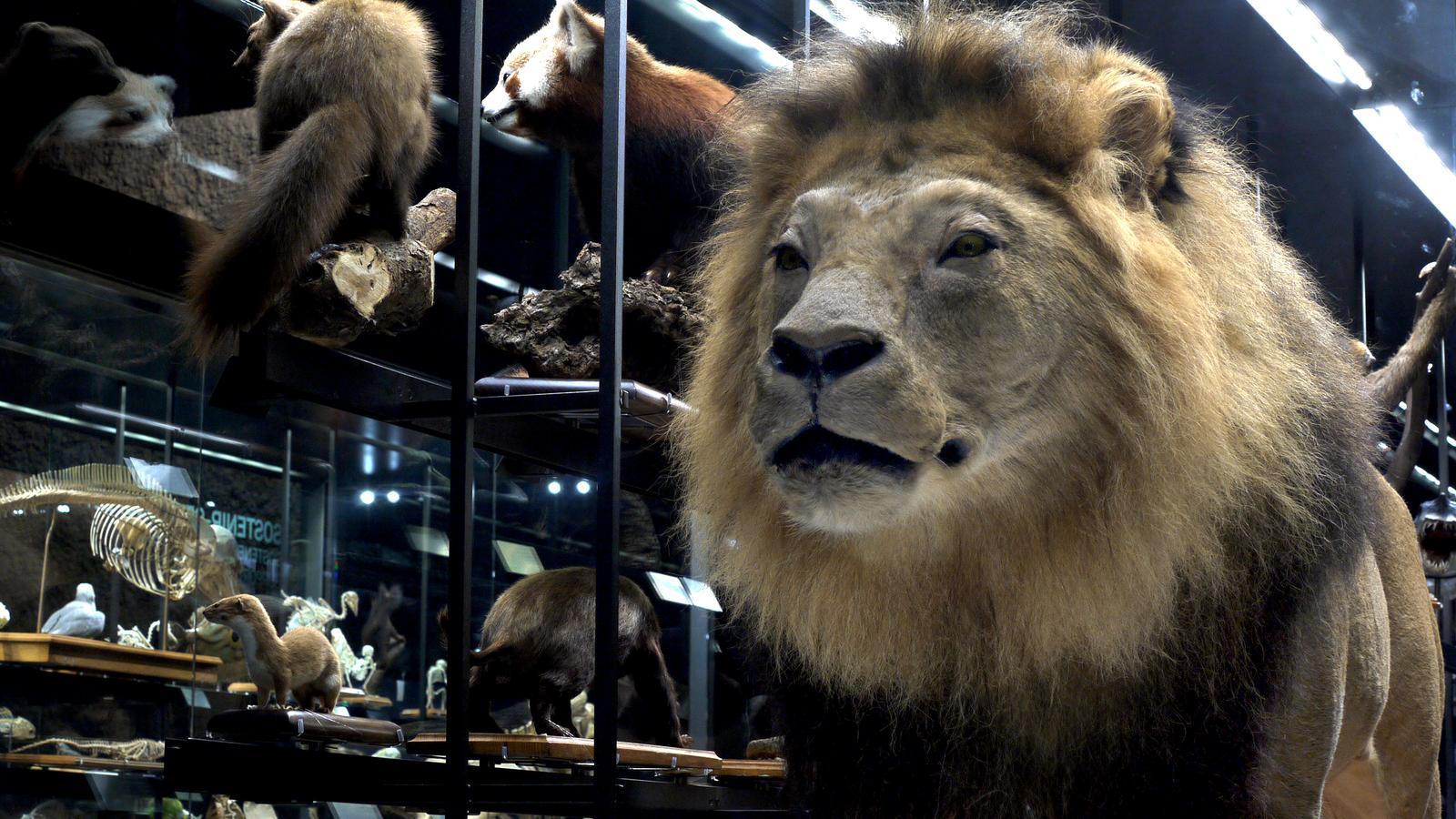
"There have been five major extinction crises on the planet so far. The last one was caused by a meteorite that fell to Earth. That's when the dinosaurs went extinct. Now we are immersed in the sixth: animals are going extinct at a faster rate than usual due to climate change and human action," explains Carles Lalueza-Fox, director of the Natural Sciences Museum of Barcelona, an expert in ancient DNA recovery techniques and evolutionary genetics. Lalueza holds a doctorate in biology and is a world authority in paleogenetics (the science that studies past genomes). This extinction, the current one, is the first that is our fault, humanity's. It is due to a few factors: habitat destruction, pollution, invasive species, climate change... It is estimated that there are currently about 47,000 species in danger of extinction. Yes, it's an outrage.This is why this museum, which should become the National Museum of Natural Sciences of Catalonia – something that is advancing at a snail's pace – has promoted several biobanks, facilities in which biological samples and even stem cells of endangered species are kept cold. For example, samples of amphibians currently threatened in Catalonia are being collected. The DNA is preserved in the biobank, and thus they can be the subject of genetic studies later, in the next century, for example."Furthermore, we collaborate with CrioZoo, where cell cultures and stem cells of animals are kept in liquid nitrogen", Carles explains to me. "We also work on biodiversity conservation, in collaboration mainly with the Generalitat. When a road is built that affects endangered native plants, they call us and we take them to the botanical garden of Barcelona, where we replant them or keep the seeds in our germplasm bank"."We are now in the process of genetically 'understanding' living beings in the context of the current biodiversity crisis," Carles explains to me while walking through the Biography of the Earth area of the "Planet Life" exhibition. "Endangered species must be able to be preserved for future generations," he adds.We enter a very well-made recreation of a collector's cabinet, the Salvador Collection. It is one of the so-called "islands of science". This collection contained, for both collecting and curative purposes, animals, herbaria, soils, minerals... and quite a few fossils. Since evolution or past life was not conceived of before, there were people who thought that fossils were "copies" that nature "made", and thus God tested believers. "God deceives the disbelievers, they thought", comments Carles while touching a pyrite (golden in color, cube-shaped). Museums have long not only "allowed" touching but "invite" touching, and this one is no exception.Some time ago, in museums everything was protected with display cases. Here there are indeed display cases, with taxidermied animals. But they are display cases "in the open air". In front of me there is a taxidermied lion, inside a display case, which shares the space with many other predatory beasts. Next to the lion is Urko – in this case in a display case for him alone –, a gorilla, son of the mythical Snowflake and Ndengue from the Barcelona Zoo. He died at 25 years of age as a consequence of peritonitis. "Shouldn't he be white?", I ask Carles. "No. What causes albinism is a recessive gene. I participated in the study that obtained the complete genome of Snowflake. We discovered that the parents were consanguineous, that is, they were related", he explains.The architects Herzog and De Meuron took charge of the museography, and designed these display cases "to the four winds". In addition, they adapted the building, which had been built for the Forum of Cultures and which after its celebration was left empty. "This is one of the curses of natural science museums: they are installed in buildings that were not designed to house them. It is a strange building for a museum: labyrinthine, with changes in levels... and dark: you have to illuminate the pieces; this makes the visit an immersive experience," says Carles. Herzog and De Meuron, authors of the renovation of London's Tate Modern and Beijing's Olympic Stadium, had to squeeze their knowledge to adapt it into a museum. One of the unique features of this museum is that it has a visitable green roof, with species from the Mediterranean area.Another "science island" that catches my attention at the museum is the one dedicated to how living beings are classified. To introduce it, it talks about the different ways we can classify buttons. "Now living beings are classified according to their evolutionary context. Without evolution, the natural world cannot be understood," emphasizes Carles. That is why the museum does not display living beings ordered as we did in school (birds, mammals...) but by concepts such as flying or avoiding being eaten. In other words, taking into account everything that has allowed them to survive throughout evolution. Lalueza's head is buzzing with projects. "I would like one day to hold an exhibition of historical meteorites in Catalonia." The Natural Sciences Museum has samples of four meteorites that fell in Catalonia between the 18th and 19th centuries. They are small fragments that explain characteristics of the origin of the solar system. One is officially known as the "Barcelona meteorite," which fell in... Terrassa!, on Christmas Day in 1704, in the midst of the War of Succession. Some said it predicted great misfortunes. In short, Catalonia lost the war.A third exhibition that Lalueza would like to carry out – this one is indeed underway – is about a mammoth found in 1920. "Our paleontologists are studying it (they want to determine its sex, age, and they are also reconstructing the missing bones)". It will take place in 2028. The mammoth was found in the Barcelona neighborhood of Pedralbes. Yes, long before building high-standing houses, mammoths roamed there.A spectacular 19th-century whale skeleton I remember seeing it at the Castle of the Three Dragons, in Ciutadella Park, where the Museum of Zoology was located, from which part of the pieces of the Museum of Natural Sciences of Barcelona originate. Fortunately, it has been preserved. It is a spectacular whale skeleton. The visitor entering the museum passes underneath it: it is located above the entrance stairs. This skeleton belongs to a cetacean that ran aground on the beach of Llançà in 1862. It weighs one ton – the skeleton alone! – and is almost twenty meters long.
