The magnificent 'road movie' by Lídia Heredia
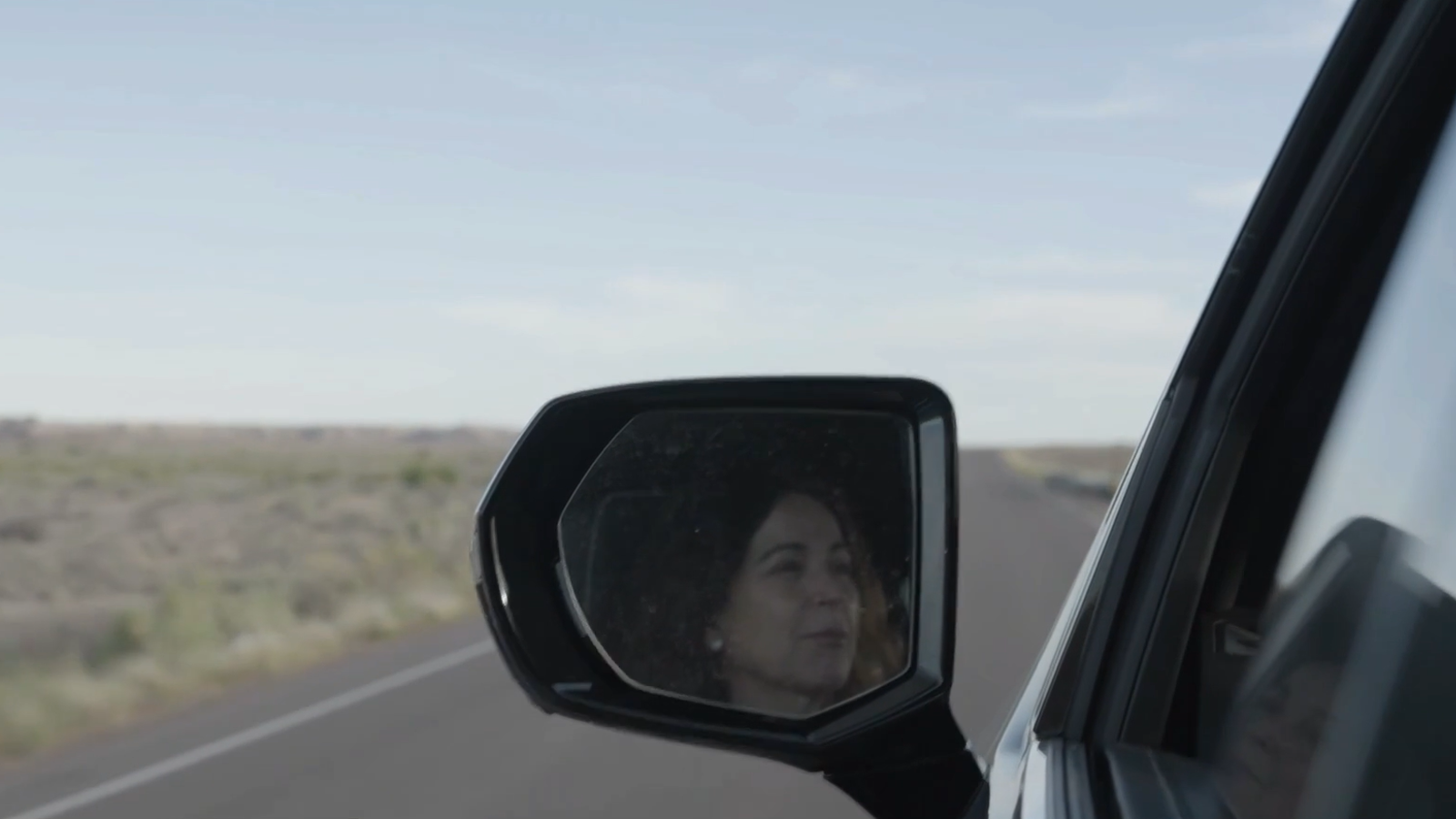

This Sunday the 30 minuts was different. Route 66, listening to the United States was a report by Lídia Heredia in which she crossed the North American country from east to west. If on the news her reports feel short and you have the feeling that the correspondent had much more to offer than what she could fit into three minutes, this time you felt you had enjoyed her journalistic potential.
As context for this week's midterms, Heredia explained at the beginning that she was moving away from Trump's political and media voracity to listen to the citizens. To do so, she traveled along one of the most emblematic highways in the United States upon which much of its mythology of freedom has been built. But it is much more than that. And Lídia Heredia hints at this with an image that lasts only a few seconds. A subtle detail. On the dashboard of the car she is driving, we see a copy of The Grapes of Wrath by John Steinbeck. In the novel, the road represents the hope for a better life, but it also signifies despair and misery. Heredia, although she plays with the iconic imagery of gas stations, roadside diners, and decaying landscapes, also wants to highlight the memory of the territory that serves to speak of inequalities, internal migrations, and social conflicts.
Coinciding with the nation's 250th anniversary, the correspondent finds a common thread managed in just the right measure: she asks some of the witnesses to read one of the most famous passages of the United States Declaration of Independence, the one that speaks of the promise of equality, liberty, and happiness as the three truths of the foundational principle. A simple and effective exercise: the text appeals to them emotionally and leads them to give a heartfelt response, even from a critical point of view.
Route 66, listening to the United States uses the visual codes of the road movie. The narrative has the visual power of the cities and the peculiar characters, with religion, industry, patriotism, and ethnic diversity as elements that traverse the spaces. The musical editing is splendid, without imposing itself on the narration. But there is another very powerful aspect, and that is the poetics that Heredia brings to it through the script. It has journalistic rigor and precision, there is an deepening of the contextualization, but it has a very evocative literary sensitivity that builds an elegant tale: “This road was the main artery of the country, but now that traffic has found wider and better-paved paths, life here languishes a little. Many stretches seem like graveyards of a past. A good postcard to drive past and an exposed place to stay.”
With this report, Lídia Heredia reminded us of the 30 minuts that we saw on TV3 for a time. The one that had ambition, that went beyond borders, that had authorship and personality. Hopefully, it will serve to recover the self-esteem and prestige of the program, because it is one of the spaces most mistreated by the grid and the budget.
