The insults against Sánchez: spontaneity or spectacle?
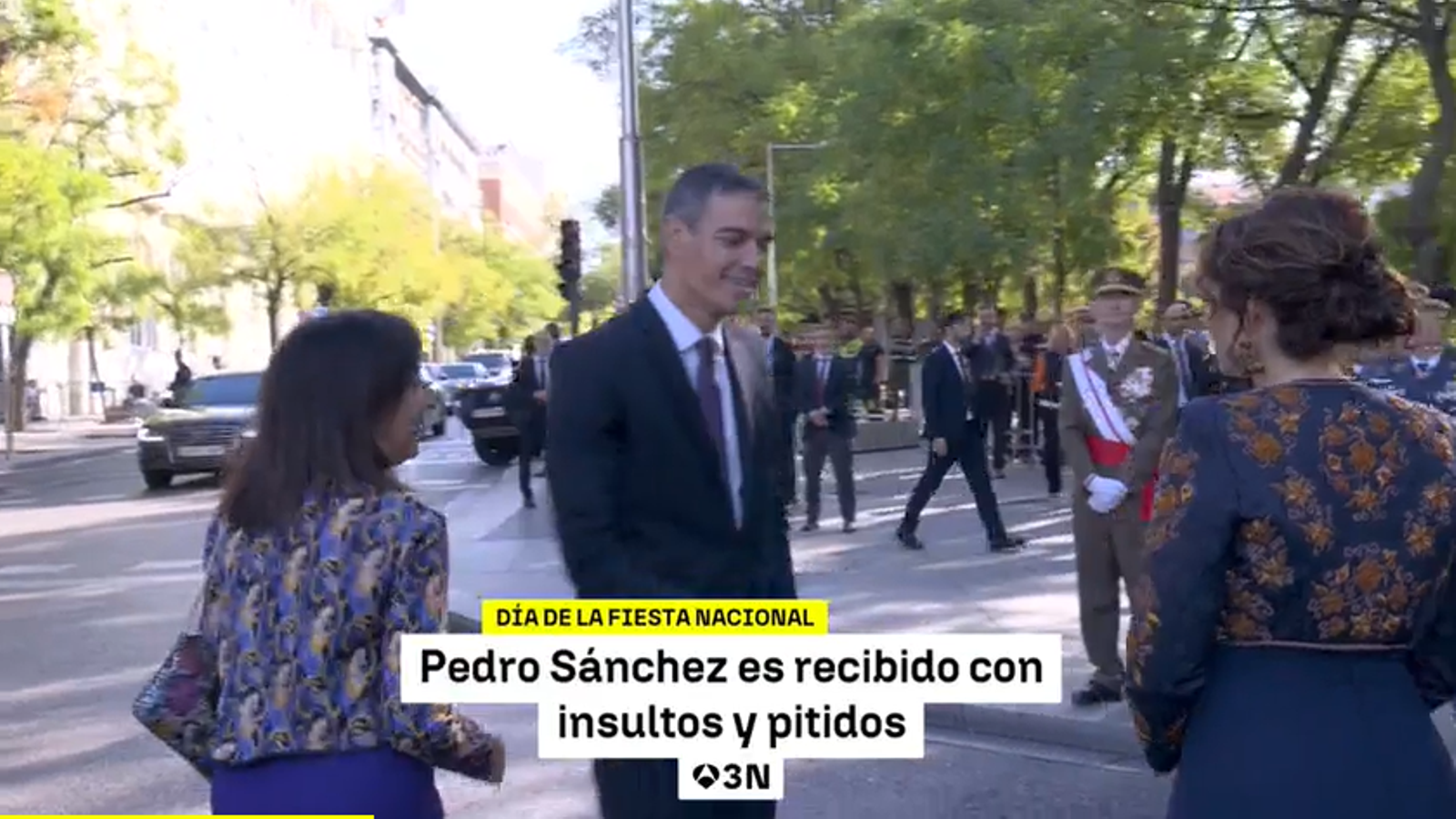

Insults against Pedro Sánchez have become the trendy chant at mass events in Spain. The October 12th parade is the origin of this trend and, once again, the news programs echoed it. On the Telenotícies migdia of TV3, they recovered one of the moments of the booing, adding subtitles to specify the chant of the famous "¡Pedro Sánchez, hijo de puta!" On the Telediario of La 1, they glossed over it quickly as if it were secondary: “También se han repetido los abucheos e insultos contra Sánchez”, including only the background sound without subtitles.
At Antena 3 noticias, on the other hand, they provided a triple explanation, just in case any viewer missed it. In the opening headlines, they highlighted the insults. Later, they returned to it, highlighting the 150 meters that separated the indignant crowd from the person being addressed. Minutes later, they repeated it: “Abucheos e insultos a Pedro Sánchez en su llegada a los actos del día de la fiesta nacional, aunque el presidente ha apurado dentro del coche oficial para minimizar estos pitidos. Esta escena, ya habitual del 12 de octubre, ha vuelto a repetirse”, they asserted, including the background sound of the insults. At La Sexta, they defined the verbal aggressions against Pedro Sánchez as “el sonido del día”. They not only subtitled the insults, but also placed a camera among the public, right next to a man with a megaphone who was setting the rhythm of the chants. They positioned themselves at the heart of the matter, among the people who were venting against the president. “Los insultos ya son una tradición”, read a caption at the bottom of the screen.
At Noticias Cuatro they opened with the chant of "¡Pedro Sánchez! ¡Hijo de puta!" before saying anything else. The scene, with the news background music, acquired more epicness. “Pedro Sánchez ha sido recibido a insultos un año más en este desfile del 12 de octubre”. They subtitled the heckling and, in the expansion of the news report, they repeated the operation, giving it almost an institutional dimension: “De fondo se oyen las ya tradicionales salvas de insultos a Pedro Sánchez”. The concept salvas de insultos to define this discharge of symbolic artillery, as if it were a military honor.
At Informativos Telecinco they started in the same way: with the sound of insults against Pedro Sánchez. During the news report, they projected a photo of the parade on set in which Feijóo, in the stands, remained in a more majestic shot, far superior to Sánchez, who went unnoticed among the plumes of the officers who were marching. The president's head was circled so that he could be seen in the lowest part of the image.
The most vulgar political hostility has ended up becoming folklore, and television has contributed to consolidating it, both in morning magazines and in news programs, to the point of making repetition a piece of news. They speak of tradition, as if they were legitimizing it. Television provides an implicit script until it turns it into a popular custom. It is difficult to establish what the insults have of spontaneity and what they have of spectacle to be televised.
