Colau, Albiol and the last 'perroflauta'
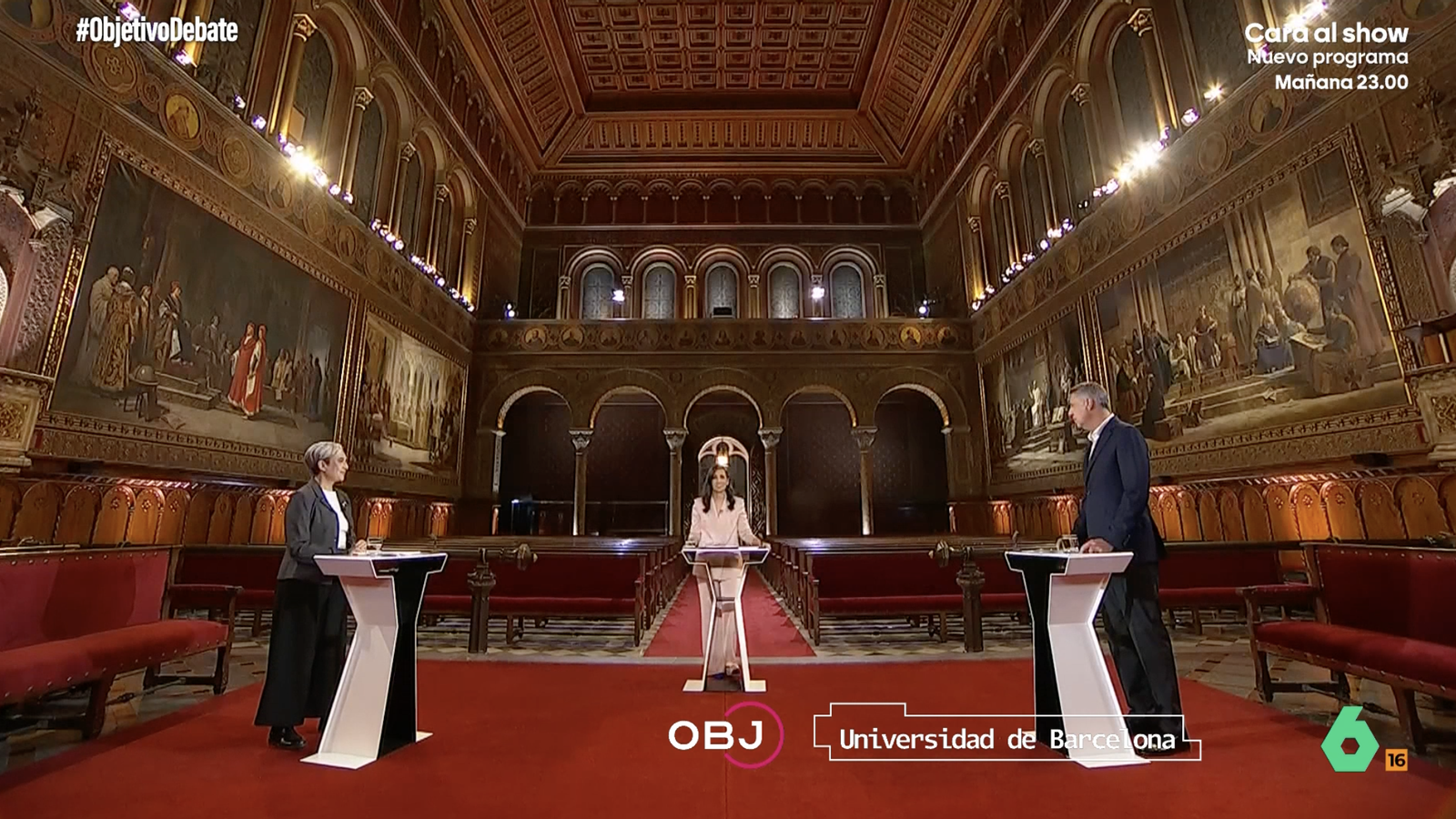

The face-to-face between Ada Colau and Xavier Garcia Albiol on Wednesday night on La Sexta was less tense than could have been foreseen. Moderated by Ana Pastor, La Sexta broadcast it from the auditorium of the University of Barcelona, a space so majestic and pleasantly unusual for a television debate that it looked like a green screen. The solemnity and palatial air of the hall contrasted with the modernity of the methacrylate lecterns, causing a curious optical effect, as if they had pasted a nineteenth-century background onto a media show. Pastor, each time she referred to the place, indicated that it was taking place “from the public university of Barcelona” which denotes that external gaze. Although in Catalonia we do not need to specify that the University of Barcelona is a public institution, the proliferation of private universities in Madrid and in Spain creates the need to specify it.
The person who had the most work was the director, especially at the beginning of the face-to-face debate. Albiol's height behind the lectern, which seemed too small for him, unbalanced the shot framing each of the candidates. To include the PP candidate in the image, the shot seemed wider and further away, while Colau's remained tighter, making her appear closer. Little by little, we began to observe how the cameras were adjusting the framing until achieving a more balanced proportion between both that equalized the image.
The show had its charm. In a Catalan context, the confrontation between the former mayor of Barcelona and the mayor of Badalona had added value, especially because the way they have managed their respective cities served to reproach each other through concrete examples. However, the fact that the broadcast started at eleven o'clock at night, with two advertising breaks of fourteen minutes each, was killer for the viewers. Both candidates participated motivated by the dialectical exchange, they listened to each other and rebuked each other opportunely. The fact that there was no stopwatch control of the blocks and interventions made for a much more natural and spontaneous debate. Logically, in a confrontation between Broad Front and the Popular Party, housing policy was the focus of the program. And perhaps this is where the show seemed most stalled. It was as if the face-to-face was very repetitive, as if it never quite advanced. At this point in the campaign, moreover, the arguments of one candidate and the other were highly predictable. Between the fact that it was late and that we already knew the lesson, it was difficult to endure. Only when it came to the management of migration did the level of conflict rise.
Despite the disagreement, cordiality and fair play were maintained throughout the broadcast. Albiol brought back from the mothballs the cliché phrase to discredit his opponent: “no se ponga nerviosa” he let slip to Colau without her being particularly nervous. In the final golden minute, the conservative candidate could not avoid using the term perroflauta, a lexical contribution that ensured the debate's fidelity to ideological stereotypes.
