Xavier Bobés: “In every grieving process, the most important thing is the word”
The creator premieres 'Epitap' at the Lliure, a show about the loss of the mother that combines visual theater and poetry

-
CAT -
CAST
BarcelonaThe mother of scenic creator Xavier Bobés Solà (Barcelona, 1977) passed away in 2023. That grief triggered a process in the artist to build a show around loss and absence, placing the lived experiences of mothers and children as witnesses at the forefront. This is how Epitafi was built, Bobés' latest show, which will be performed at the Teatre Lliure de Gràcia from December 3rd to 20th. “As a result of that event, I realized that there are experiences that can be communicated from a poetic place. I conducted many interviews with family, friends, and people who have lost their mothers, and I understood that in every grieving process, the most important thing is the word, being able to share what one remembers,” reflects Bobés.
Over more than two decades, Bobés has become one of the most relevant object theater creators in the country. On this occasion, he combines his particular poetic language with the twenty or so testimonies he recorded, the voices of which form the common thread of Epitafi. The artist explains that, with the death of his mother, “whether you like it or not, you take stock, because life marks a pause, a very deep pause.” On stage, this experience takes shape through the sound space –in charge of Federica Porello, Albert Coma, and Pau Matas– and also through live music performed by Mercè Badia and Dani Jané. “We have researched originally lyrical pieces, lullabies, and themes related to loss to put words and music to these stages of life that follow one another,” explains Badia. On stage, the singer will perform the aria Oblivion soave from the opera L’incoronazione di Poppea by Monteverdi, the song A tu vera popularized by Lola Flores, and the Seikilos epitaph, the oldest complete musical composition currently preserved.
Sewing for one's children as a metaphor
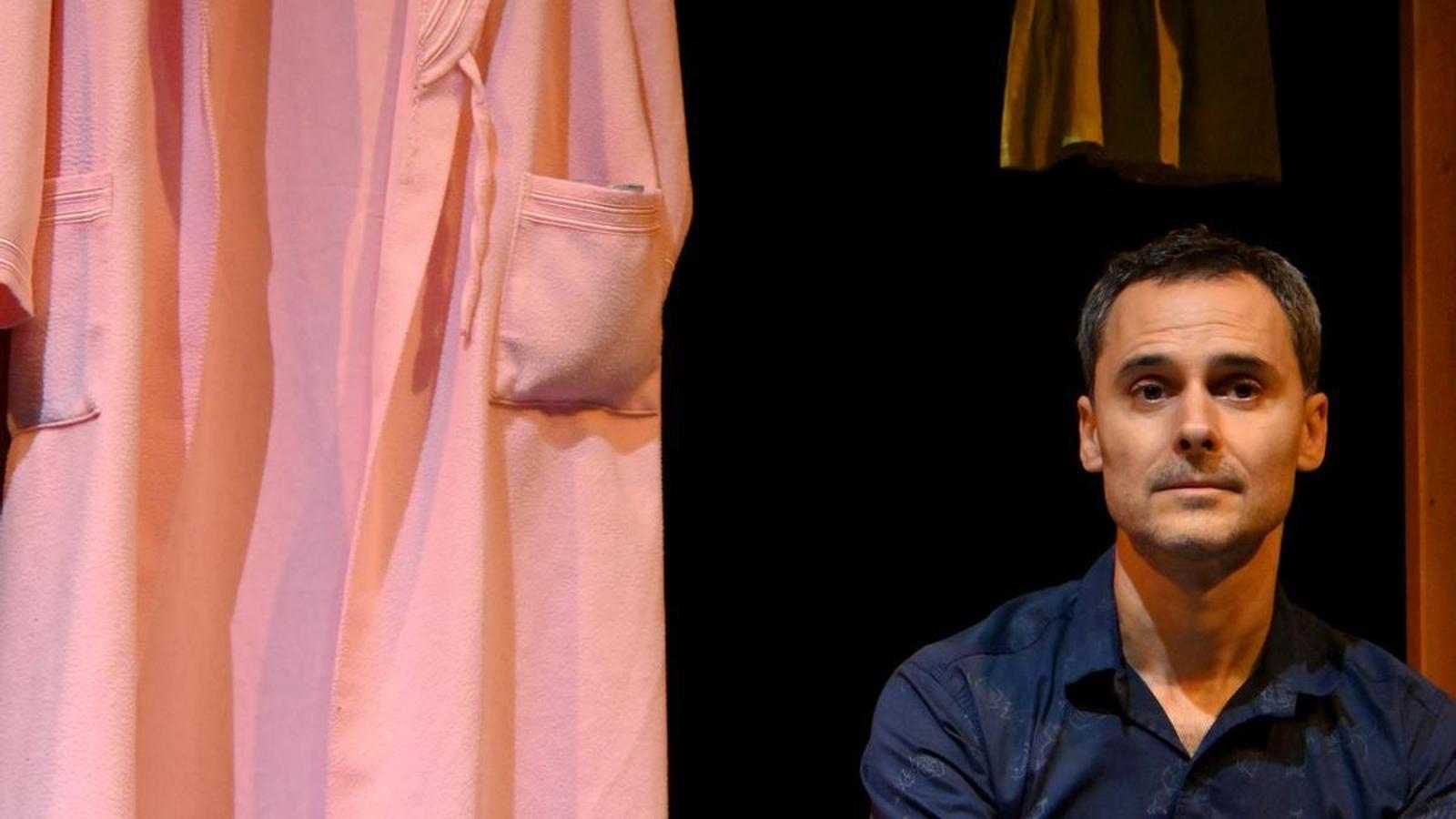
As he delved into the witnesses' stories, Bobés discovered that a large part of them had one element in common: the time their respective mothers spent sewing. “Many of them were daughters of the post-war period. Most sewed out of necessity, but this fact becomes a very great metaphor. The time you dedicate to sewing for someone else is time you gain for affection, but it is real time, and very few people, nowadays, are willing to invest it,” Bobés stresses. Based on this idea, the show enhances the presence of textiles on stage. It does so with the set design, with the clothes the performers wear – they are all pieces from their personal wardrobes that have accompanied them throughout their lives – and with the presence of large fabrics like handkerchiefs and sheets to appeal to daily life. Furthermore, all the witnesses have contributed a piece of clothing with a special meaning for the production, and some of these also appear on stage.
All of this is wrapped in a series of projections by Martí Madaula, emerging from Bobés’s family archive. “We asked ourselves what image and movement could contribute to the collection of voices, and we decided to go looking for real images of Xavier with his mother. They are moments when the family is together during Christmas or shared lunches; we can all recognize ourselves in them,” explains Madaula. The audiovisual plays with the idea of rewinding the videos to convey the sensation of the passage of time, while simultaneously appealing to sewing through a collage with images of different ways of relating to textiles.
In recent years, Bobés’s creations have been characterized by their small (or very small) format. In Cosas que se olvidan fácilmente (2015), the artist performed in front of only five spectators. In Corpus (2020) he widened the audience a bit, up to 25 people, and now with Epitafi he will have an audience of up to 100 seats. “I felt that, with this show, the communion had to be broader,” points out Bobés. “I wanted people to be able to listen to all these testimonies as if they were their own inner voice. After all, they are all experiences that have to do with life, and their narrative can also be yours.”
