Jordi Wild, the Martinenc and a lioness mother: a turn with Ada Colau
We walk with the former mayor of Barcelona, Ada Colau, through the neighborhood of her childhood, El Guinardó, now that she has returned to the political front line as a candidate for Front Ampli
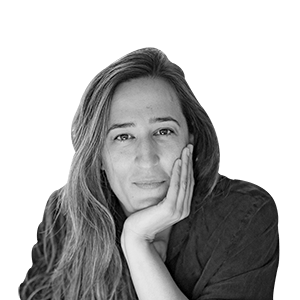
She arrives reviewing papers. She has an event in the Canary Islands, then Tarragona… “This general election business is about covering long distances,” says Ada Colau. She meets us in El Guinardó, “the neighborhood of my childhood and which I have carried in my heart wherever I have gone,” and explains that one of the memories that stay with her are the Sant Joan bonfires. She remembers knocking on doors to get old furniture and setting up bonfires. “Now it would be unthinkable,” she states.
We are on the Avinguda de la Mare de Déu de Montserrat, and the view is privileged: the Sagrada Família, the sea… “and I come down here every week.” She points to the football fields that can be seen in the background; they belong to Martinenc, the neighborhood's football club. Her youngest son, who is 9 years old, is registered there. “Do you know what that means, right?” The truth is I am not sure. It turns out it's three afternoons a week plus a game on Saturday or Sunday. I had been walking around there just before our meeting, and there were parents vibrating a lot with the match. “Some lose their composure, let's be clear,” she says, smiling. “And are you one of those who protests if the child doesn't play?”, I ask. “Me no, the father perhaps a bit more, I always tell him to stay calm.”
“Ada, I love you, you are incredible,” says a young boy who is leaning against a lamppost. They take a quick photo, and the former mayor explains that she notices the impact of the interview with Jordi Wild. Really? This morning I read a survey that pointed out that the non-interview of Abascal with this youtuber is one of the few things that have moved votes during the campaign. What a snapshot of our times. Colau explains that many young people comment on things from the interview to her, and that she is happy because she is not reaching them through traditional channels.
We talk about childhood. She says she comes from a humble family, and explains that her mother, who was from Soria, arrived in Barcelona very young. Her family told her she had to get married or return home, and she was clear that there was no turning back. So she got married, and did all kinds of work: “For me, she is a source of pride and my role model; she wasn’t above anything, she has worked in a lot of sectors without having had an education”. Her parents separated when she was only 3 years old. “Yes, it leaves a mark, but you can overcome it, you know?”, and she explains that her mother had three more daughters, her sisters with whom they are a “tribe, a matriarchy, and my mother is a lioness mother”, she says. I think about the other candidates; the vast majority have been married to their partners for a long time in relationships that are always heterosexual. Does it surprise her that her sexuality is an issue? “Look, I’m glad, because I’ve realized that being a public figure and making sexual orientation visible can help”. She assures that she has been stopped on the street by young people but also by older women thanking her.
We see some broken glass; it’s a real estate agency's shop window. “I am against destruction, but I understand that there is a lot of anger”. She has returned to live with a relative since she separated: “It’s not the same to pay a rent of 1,500 euros with two salaries as it is to pay 1,500 euros with a single salary”. And the children, what do they think about her returning to the front line? She assures that they encouraged her. Are they very politicized?, I ask. She ensures she has never pursued them to talk to them about politics, but, obviously, they have grown up in a house where this is present. “The oldest, in fact, wakes up in the morning and turns on the news, and I tell him: 'There's no need!'” I ask her about the changeover. How is it possible that the same people who appeared in 2011 around the 15-M movement are still continuing? “I like to think that I am at a moment of transition in which I can accompany a new cycle, in which younger people appear to take the reins –she adds–. And now I return to politics, but I don’t return the same as when I was mayor, I have learned some things”. And she assures that one of the most important lessons is to take care of her friends. “I recovered them when I left the political front line, and I intend to take care of them whatever I do”.
