Why observing a painting can make you feel better
We speak with the journalist specialized in art Pablo Ortiz de Zárate about how art has the power to heal us
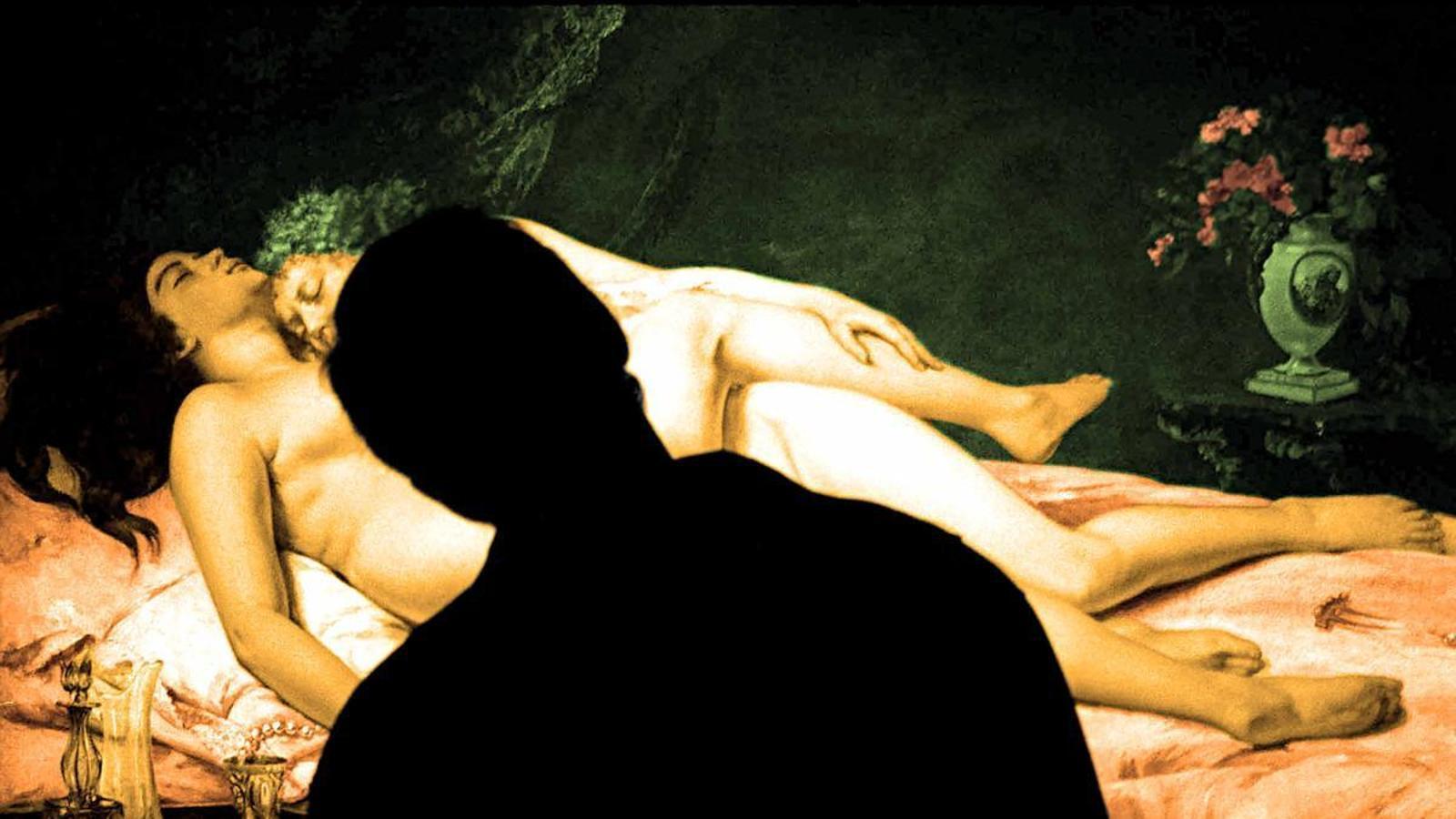
-
CAT -
CAST
When Pablo was in the depths of depression, when all light and perspective had faded, one day he managed to find a way out through paintings. Suddenly, art, which he knew so well as a specialized journalist, served to help him escape the darkness that had him trapped. He observed different paintings that told him things, looked into the eyes of characters who understood him, who perhaps had felt the same way and told him not to worry, that everything would be alright.
Surprised, he realized that it had almost never been discussed or studied whether paintings had a healing power for people. For this reason, after much research and self-experimentation, Pablo Ortiz de Zárate decided to publish The Craftsman (Destino, 2026), a guide in which he explores how paintings can become a very powerful tool in helping us get through difficult moments.
“If you know how to look at them, they can help generate endorphins, lower cortisol, and regulate heart rate,” says the expert, who asserts that paintings speak about many emotional themes that affect humans: from love and joy to sadness, depression, heartbreak, or betrayal. Therefore, while some generate well-being, others are harder to look at with attention because they make us uncomfortable and speak to us of things we do not want to see or admit.
For him, however, observing these darker paintings is necessary because they serve as shock therapy. “Sooner or later we have to face our problems and the things we don't like. They are paintings that help us look inside and bring out everything we have within,” he continues.
Curiously, when Pablo was in the midst of depression, he found great comfort in Goya’s Black Paintings, the ones the painter created during his darkest phase as he approached the end of his life. “They helped me understand what was happening to me. It was like having a friend in front of me who knew how I felt and with whom I could talk and vent,” confesses Ortiz. That is how he discovered that, once you identify an emotion or a feeling and verbalize it, it leaves you, it no longer belongs to you, and you can observe it from a certain distance. “Then it stops affecting you so much, you begin to understand it, and you can start to manage it,” he notes.
Learning to observe
All of this, of course, is possible when you know how to observe a work of art. For this reason, the author offers some tips. First of all, it is necessary to observe the objects, the details. “It is where artists hide messages and symbolism. This teaches us to scrutinize well and to be present,” he begins. Then you have to look closely at the characters, if there are any, and focus above all on the hands and eyes. “Just like in real life, when you look someone in the eyes you can see what they have inside,” he assures. And as for the hands, they are also another element widely used by painters when they want to explain how a character feels. What are they touching? How are they placing their hands? What shape and size do they have?
Light, space, colors, and the strokes of the painting also transmit emotions to us. Is it a dark and introspective painting or one with a lot of light and full of vitality? Is there a lot of space between the elements or is everything very crowded? In fact, assures Ortiz, with abstract art one can also capture its emotional message just by observing these elements.
On the other hand, landscape paintings can help us a lot to feel better. If what we want is to relax, Ortiz recommends choosing a landscape that we like and that suggests peace to us. Usually, they tend to be environments with a lot of breadth and with a more vital light. “It must be observed very slowly, for at least ten or twenty minutes, and let ourselves float through its space,” he continues.
If we prefer to lower our heart rate after a stressful day, the best thing is to look for a landscape with a dimmer light. The goal is to feel sheltered. And in both cases, the expert recommends focusing on the clouds. “The sensation of slow movement generates calm and helps us to relax,” he points out.
In his book, Ortiz also prescribes paintings according to different emotional needs. If what we want is to practice “living in the present,” he recommends focusing on still lifes. “They are simple objects of everyday life that, through their observation, help us to be present,” he remarks. One of the most famous still lifes is Van Gogh’s sunflowers.
If we prefer to practice empathy, a good option would be portraits like that of the Knight with His Hand on His Chest, by El Greco. “When you look him in the eyes, you realize that he is a man who is sad and melancholic –he points out–. This helps you later in real life to observe things in others that otherwise you might not have noticed.”
For anxiety, Ortiz does not prescribe a relaxing landscape, as many of us might think, but rather a painting in which many things are happening. An example would be The Garden of Earthly Delights, by Bosch. “One of the best ways to fight anxiety is to train your attention capacity on a single thing and be present in every detail of the painting,” he explains. Why is this character doing that? Why did he put this bird here? These are questions that take us out of our own thoughts and help us to be present there.
According to the author of the book, several studies state that people who regularly go to see art exhibitions have less chronic pain and better physical health. “When you go to see paintings, you activate your mind, you get distracted, you generate dopamine, endorphins, and other substances that activate the body and improve mental health,” he assures.
And if you don't have the time or the opportunity to visit exhibitions frequently, Ortiz has a solution: surround yourself with paintings in your day-to-day life. You don't need to buy a reproduction and frame it. You can print paintings you like in high resolution or buy the typical postcards from museums. The point is to surround yourself with art and let it speak to you and advise you every day.
