Within the darkness of loss, however, there is a calmer future. For psychologist Cristina Berenguer, when we integrate the loss of a loved one into our lives, it does not mean that we do not feel pain, or that we are not sad, or that we do not miss them, but rather that “we have incorporated them into our lives and we can move forward, that our life continues to have meaning, we have hope and the desire to live, remembering them and having integrated everything they have left us, what we have learned from them, their legacy.” For this integration to occur “it is not necessary to have physical, material objects,” she explains, but rather it is an internal, intrapsychic, personal and unique process that can lead us to resilience or transformation.
Eliminating 70 years in one day: the challenge of emptying a deceased relative's apartment
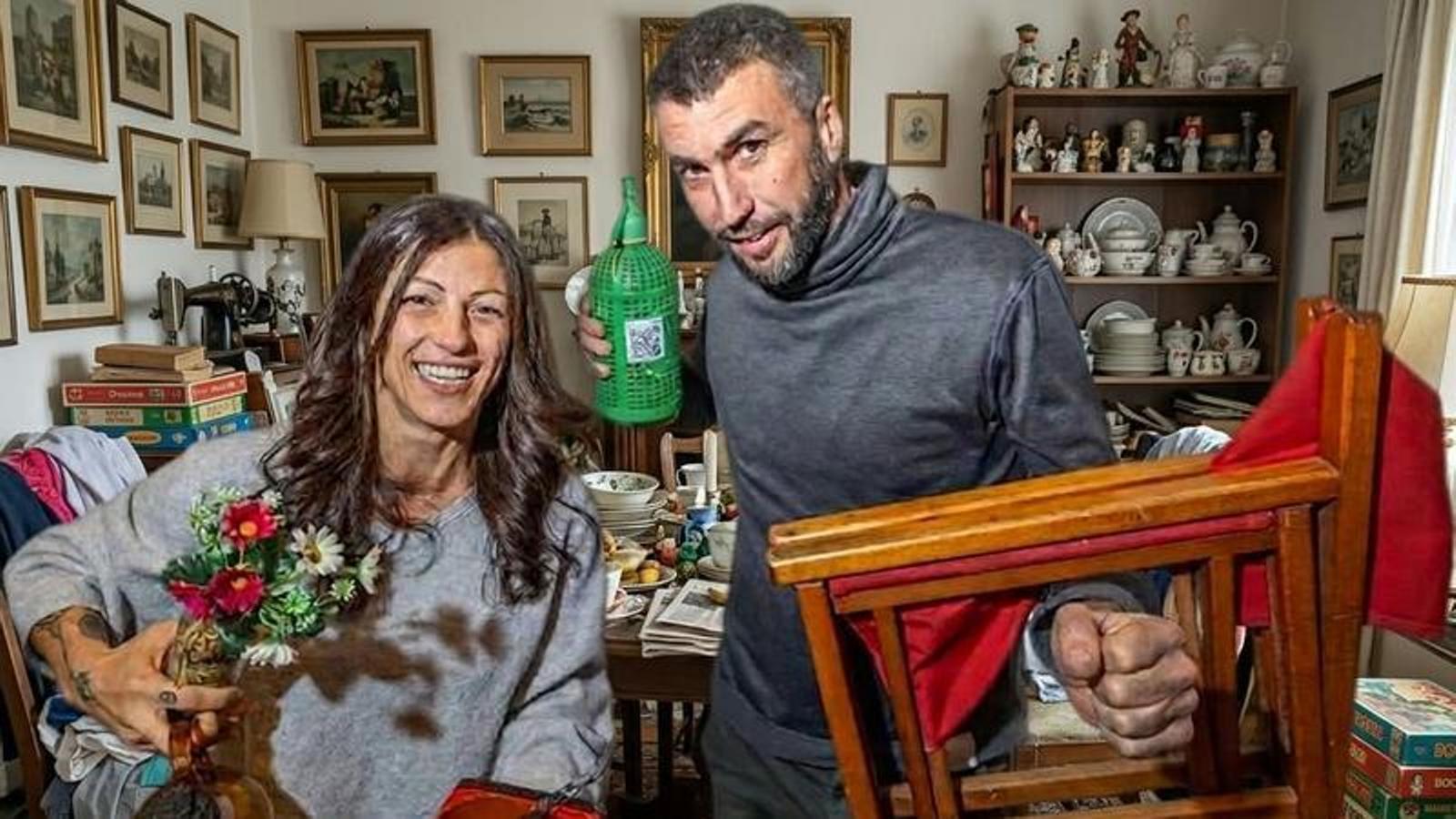
Organizing decades of memories is a challenge for the person who has to take charge of it, a fact that has driven the creation of companies that dedicate themselves to it

-
CAT -
CAST
Death has many downsides, mostly negative, and beyond the emotional challenges it leaves behind, one of its challenges is management: the remains, the organization of a ceremony, and also what we will do with everything that has remained of the person who has left us. Children, or often siblings, face this transition with very different philosophies, since grief is also a personal response, so the management of the deceased's properties, from their clothes to their furniture, generates friction within the family.
Gonzalo Amenedo, from the company El Arte de Vaciar, points out that many different types of situations occur, and the differential factor is usually whether the apartment is owned or rented. “In the case of a rental, they have a deadline to choose, and depending on the family, they may not be able to pay the rent for very long and have to empty it quickly,” he specifies. If it is owned, they can take as long as they need to be able to “rest easier” knowing that everything goes where they want. Amenedo explains that, as a general rule, many people “don't quite know how it works and need someone to solve the problem for them.” For his part, Antonio Parra, who is dedicated to emptying apartments through his company Encantes.com, explains that sometimes “time must pass so that the family can enter and sort through what they want to keep.” “Sorting through sentimental things is hard. Sometimes we are emptying the apartment with the clients and they don't want to throw anything away,” explains Parra, who details that the service costs between 500 and 1,000 euros.
Erasing a whole life in 24h
According to Parra, they clear out apartments where parents have lived for 60, 70 years or their whole lives, “and seeing how in one morning everything ends up outside, either at the recycling center or broken, is hard.” However, his job, in addition to clearing out the apartments, consists of doing it in a respectful way. “We try to do it in the best possible way so that the person who is there watching can process everything they are experiencing in one day,” he explains. Nevertheless, family members often ask him to save any photos they might find in a drawer. On the other hand, “they always want to donate the clothes,” he says, while items like sofas and appliances “end up at the recycling center.”
Travel souvenirs and VHS tapes are also saved from this selection. Regarding the choice of objects, Amenedo explains that there are no specific items, as each person is different. “There are people who really value objects from when they were little, or the watch their father wore on a daily basis, or in some cases, paintings the relative may have painted as a hobby,” he exemplifies. “Recently, I cleared out an apartment where the heir had a great affection for the piano, because he knew that the person who died held it in high regard, and he spent good money to pay for transport and ensure that it went to someone who would make good use of it and take care of it,” he details.

Be that as it may, grief expert psychologist Cristina Berenguer, a teacher at the IPIR Institute, which specializes in training professionals in grief support and psychotherapy, explains that mementos "are the only things we physically have left of the person we have lost." "Parting with them can be difficult because it can make people feel like they are saying goodbye, like they are letting go of their loved one," she details. In this area, it is very complex to decide what we keep and what we preserve: "It can be a very difficult decision, especially when it is a decision that has to be made quickly," she stresses. However, sometimes, if the loss is recent, "in the most intense moments of pain, we may think that, if we don't keep anything, it will help us not to be as sad and not to miss the loved one so much."
Her recommendation is that if you have the possibility of keeping some things, you should do so, "as perhaps at a later time it may be important to have them." "When the pain is not as intense, you will be able to make a decision about whether you want to keep any object or not," she remarks.
Long periods and family disagreements
But not everything goes quickly, since death also requires time to be accepted. “Sometimes, they call me to ask for information about the clearing and after giving them a quote, three or four years pass until we clear the apartment, which has remained untouched and with all the family’s belongings,” explains Parra.
These timelines, moreover, can be different for each member of the family: “Some want to come by first to pick up their things from when they were little; others want to come by and do not come because they lack the heart for it,” he explains. There is also the case of some who do not want to continue paying the community fees and expenses of the apartment, or conversely, others who continue paying the rent, often with old leases, and “take years to clear the apartment.” The circumstances are diverse with extreme situations of disagreement. “I have seen fights between siblings, even involving aggression,” explains Parra. “It is a bit of a mess that we are in the middle of both parties: between the one who has to go through the mourning and the one who is not materialistic, does not want the memories, and does not want more expenses to be generated or for the apartment to be occupied,” he highlights.

For him, since this is not agreed upon or signed before death, “it would be better if this were expressed before death: whether one wants to sell, rent, or what the subsequent management should be.” For Berenguer, the discrepancies between siblings have to do with the way each person copes with the loss: “Not everyone experiences it in the same way and, therefore, the needs are different for each person, even if the person they have lost is the same.” For this reason, on this point, “communication is important,” which can prove difficult when we are grieving, “either because everyone's rhythms are different, or because we do not dare to talk about it and silence sets in, whether to protect others or to protect ourselves.” In any case, haste can lead us to make “precipitous, quick decisions, without being able to think them through, and which we may regret in the future,” he warns.
A place for everything
Regarding the management of the deceased's properties, everything has its destination. Furniture, books, tableware, and everything that can be reused are sold in second-hand shops. In the case of Antonio Parra, they have their own stores, the Encants de Granollers and the Encants de Canovelles. On the other hand, the rest of the objects, such as mattresses, appliances, wardrobes, chairs, and mostly 80% of what they remove, go to the recycling center. Additionally, they collaborate with entities that request objects from them, also for props, to be integrated into film sets, theater plays, and sets for old series and advertising spots. In Gonzalo Amenedo's company, however, they try to give a second life to the objects, "and people like that," he says.
