A cyberattack spoils the food of dozens of supermarkets throughout Europe
The incident takes place two weeks after a similar attack on hundreds of French supermarkets

-
CAT -
CAST
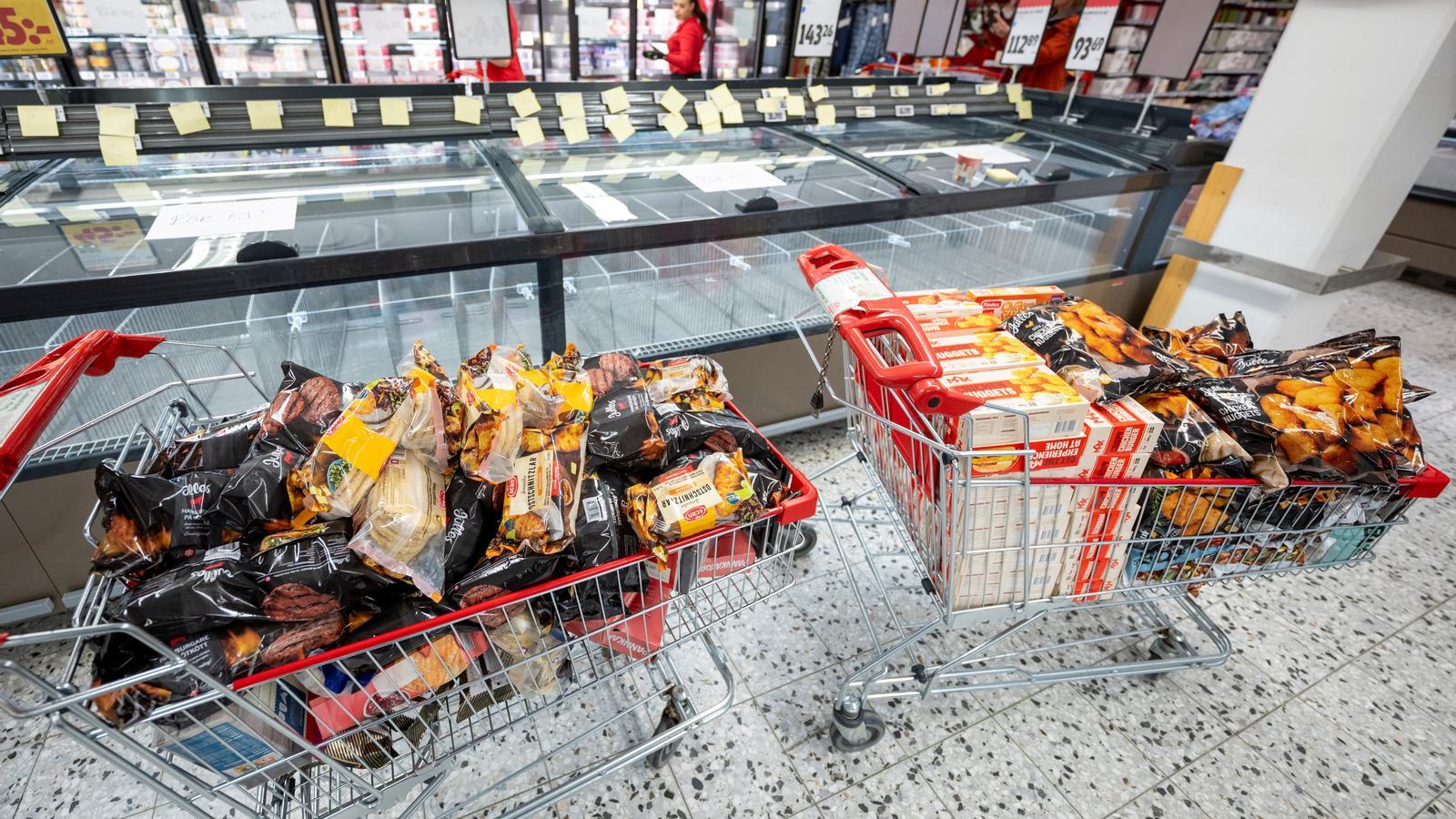
BrusselsDozens of supermarkets in Belgium and Sweden were the target of a large-scale cyberattack early this Monday. Similar, smaller-scale incidents have also been recorded in Luxembourg, Ireland, the Netherlands, Finland, and Estonia. According to local media reports, freezers suddenly heated up—some reaching temperatures of 50 degrees—and the food they contained has spoiled.
The incident took place two weeks after another similar attack against supermarkets in France and some establishments in the Netherlands and Belgium, where the temperatures of the refrigerated chambers climbed to similar temperatures that hovered around 50 degrees. At that time, hundreds of French supermarkets of the Intermarché and Coopérative U chains were affected, and the losses in the country were multimillion-dollar.
The balance of the cyberattacks, which have become known throughout the morning, includes forty stores of the Delhaize chain —one of the most popular in Belgium and which also operates in Luxembourg—, about fifteen Carrefour stores, five shops of the Spar brand, the refrigerators of the meat group De Laet & Van Haver and, even, the refrigerator of an Ikea store, in Belgium. There are also thirteen SuperValu in Ireland and seventeen supermarkets in the Netherlands, as well as various establishments of the Swedish chains ICA and Coop.
The described circumstances have been similar everywhere. Hackers allegedly accessed the refrigeration systems of freezers and refrigerators remotely to raise their temperature. Currently, these systems, just like security cameras and alarm networks, incorporate electronic controllers with internet connection that can be controlled remotely. This facilitates maintenance tasks, but it also opens the door to attacks of this kind if the equipment is not sufficiently protected. However, it is unknown if all incidents correspond to the same operation.
In Belgium, where the Belgian Public Prosecutor's Office has opened a criminal investigation to clarify the authorship and circumstances of the attacks, the Delhaize group has been the most affected, and has recorded at least 100,000 euros in losses. According to RTL Info, the managers of some of the chain's stores received a message around 4 a.m. informing them that the temperature of the freezers was rising. Faced with the emergency, staff quickly traveled to the points of sale to try to minimize the damage, and some brought refrigerated trucks to protect the merchandise. In a statement, the company reported that an "IT incident" had occurred that affected the refrigeration systems of several of its Delhaize establishments.
In Sweden, the Ica and Coop chains have reported that the interruption of the refrigeration systems in several of their stores was caused by a cyber incident related to unauthorized manipulations. The country's national cybersecurity center has stated that it has received alerts about several incidents in the refrigeration system across the country and is working to resolve them.
"We cannot regulate the temperature of the freezers or get them to cool down again. Only hot air is coming out. Everything we had in there has been ruined," asserted Rickard Nilsson, manager of the Ica store in Sjöbo, in southern Sweden, in statements to the Swedish newspaper Aftonbladet. One of the franchises located in the same city posted on social media that the freezer temperature had reached 50 degrees.
The cold storage rooms of an Estonian supermarket chain have also been hacked, with temperatures reaching 50 degrees, according to a representative of the technology company Kitman Coldtech who spoke to the public broadcaster ERR, which declined to give the name of the affected supermarket chain.
In the Netherlands, the freezing and refrigeration systems of at least seventeen establishments were also attacked, as confirmed to the media outlet NOS by a spokesperson for the refrigeration company Danfoss. In Ireland, thirteen stores of the SuperValu chain have also been affected. For its part, the Finnish chain K Group has also reported incidents of this kind.
Several of the chains that have registered incidents this Monday have reported that they were using technology from the Danish company Danfoss, which manufactures technology to control industrial and commercial refrigeration systems. The company had already appeared in the investigation of the attacks in France. In that case, hackers managed to manipulate the company's refrigeration controllers. But it is not the only manufacturer affected: the French cybersecurity agency has also identified security breaches in the systems of Copeland, an American company that manufactures compressors and refrigeration control technology.
Who is behind it?
Although no one has claimed responsibility for the attacks (nor for the one in October in France), the scope and context of the incidents have fueled speculation about a possible link to Russia, in a context where hybrid threats from Moscow have increased. Sources from the European Commission have assured ARA that they are turning to the European CYCLONe network, which coordinates the response to major cybersecurity crises, to facilitate the exchange of information between member states. The same sources recall that the EU has various instruments to strengthen protection against such attacks, such as the NIS2 directive, the Cyber Solidarity Act, and the Cyber Resilience Act.
The European Commission warns that incidents like this demonstrate that digital threats are becoming increasingly widespread. "They are a deliberate attempt to disrupt our food supply chain and undermine consumer confidence in it, a warning that we must take seriously," stated the European Union Commissioner for Agriculture, Christophe Hansen. "The repetition of these cyberattacks is deeply concerning," he said.
In the same vein, the spokesperson for Belgium's Centre for Cybersecurity, Katrien Eggers, expressed concern about the growing number of incidents, partly due to the rise of AI. "It is not known who is behind this attack, and it may never be determined," she warned. "All computer systems are potentially vulnerable, and AI can now be used to successfully exploit these weaknesses, especially by sophisticated actors," she cautioned.
