Laia Longan: "I grew up in a house where grandparents were as important as parents"
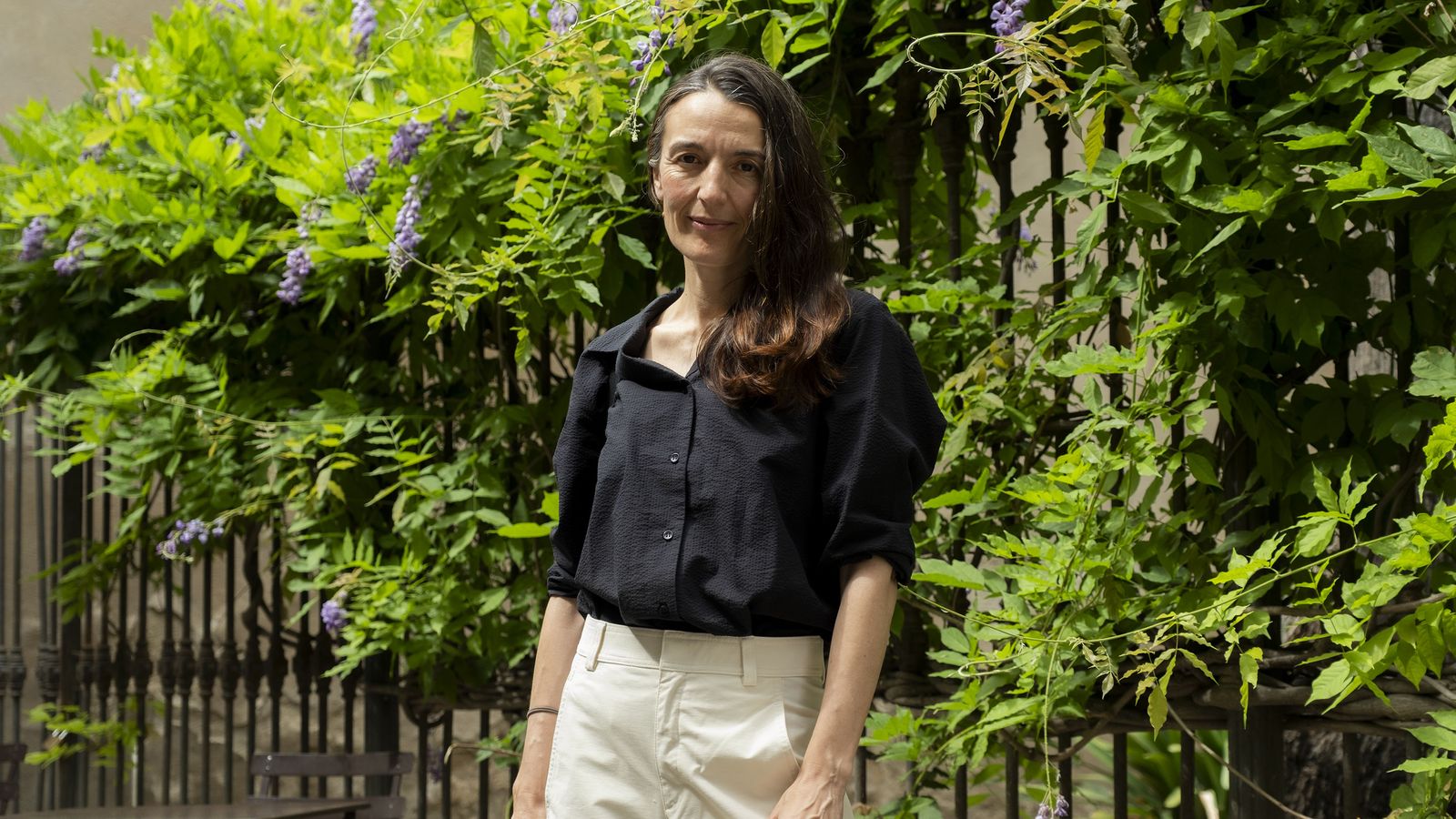
Writer, graduate in audiovisual communication, works in the publishing sector and is the mother of Greta, 21 years old. She publishes her fifth book, 'El cor del Bosc Negre' (Animallibres) illustrated by Jordi Vila Delclós. It is the story of a boy, Dinu, and his father, who arrive at a mountain village located next to a forest where no one has entered for a hundred years and where some strange force seems to be asking the boy to enter it. She is also the author of 'Jo que vaig dormir amb lleons', Atrapallibres award.

-
CAT -
CAST
I had my daughter very young and, in addition, I had to live through a moment of transition in many ways of understanding motherhood and childcare. I remember that when I gave birth, several midwives assisted because some had never seen a natural birth. Today this seems unthinkable, but at that time many things were changing very quickly.What convictions did you have, then?
— I was very clear that I wanted to build a strong emotional bond with my daughter, similar to the one I felt myself for my family. Looking back, I can say with certainty that my childhood was very happy, and that's what I wanted for her too.
What would you do differently now?
— Then, because of my youth, I took some things a bit lightly. Surely now there would be situations I would experience with more awareness. But I suppose that is inevitable. One always tends to think what would have been if this or if that. Likewise, I don't torture myself.
What worked well?
— Shared parenting. I have always believed that children grow better when they are part of a tribe, and not when all the emotional responsibility is exercised exclusively by the parents. This is something that comes from my family. My daughter has had very young and very present grandparents. They not only helped when needed, but were part of her daily life and accompanied her through all stages. My mother was a figure of reference for my daughter almost as important as myself, and I have never experienced this as a loss of prominence, but as a strength.
Now all this is memories.
— One day, you wake up and realize you are living with an adult. Being the mother of a 21-year-old girl is watching the relationship transform, almost without realizing it. Everything has loosened up naturally. It's nice to leave behind that stage when you had to be aware of everything. You no longer need to exert constant control over another person's life: each one knows what they have to do and assumes their responsibilities. When my daughter talks about her projects, about how and when she will be able to live alone, for example, it is inevitable to feel a certain nostalgia.
There is now a certain redistribution of roles, isn't there?
— When I think about how our relationship has changed, there's one thing that particularly strikes me, and it has to do with how we protect each other. For many years this protection was clearly one-way, but now I'm surprised to realize that, at certain times, it's she who protects me.
Give me an example of this protection.
— When, in a family or friends gathering, they steer a conversation away from a topic they know is particularly sensitive to me, or when they handle a situation with delicacy to avoid generating unnecessary conflict. I experience it with great tenderness. It makes me feel accompanied. It reminds me of this idea of tribe: there comes a point when care stops circulating in only one direction and becomes part of a shared network, where we all know we can count on each other.
The idea of tribe is important.
— I grew up in a house where parents and grandparents lived together. The grandparents were as important as the parents. With my daughter it hasn't been exactly the same because the parents have never lived with us, but we have all tried to make them an active part of her life. And now, when I look at her, I often recognize in her ways of doing things that come from afar: from my mother, my grandmother, and even my great-grandmother. Many of the values we have passed on to her are shared by several generations.
From motherhood, is there anything that can still surprise you?
— Surely yes. Being a mother is a permanent work in progress. Right now I am immersed in the lesson of learning to accompany without intervening, to be available without taking up too much space. Many stages still remain to be lived and, probably, the most difficult ones, because they are no longer those that appear in parenting books. For teething, diapers, tantrums or adolescence, there is always someone who tells you what to do. On the other hand, adult life is not explained in any instruction manual. In a way, I feel like I'm going without a book from now on.

