Trump promises to "hit hard" Iran after crossfire resumes in the region
Washington bombs two platforms on Larak Island and Tehran responds by launching missiles against US bases in Jordan

WashingtonCrossfire reignites in the Middle East after a month of relative calm. US President Donald Trump has promised that the military will respond to the missiles that Iran launched early this morning against two US bases in Jordan. "We will hit them hard," said the Republican in statements to Fox, where he confirmed that US forces intercepted six Iranian missiles. The Islamic Republic had opened fire early this morning against the US's Arab ally in retaliation for the US attack this Sunday against two Iranian platforms on the island of Larak, located near the Strait of Hormuz. In a statement disseminated by the Iranian agencies Fars and Tasnim, the main military arm of the Islamic Republic specified that the attack was carried out with drones and left several dead and injured, although it did not specify how many.
Although the episode is almost routine in a conflict that has already lasted half a year, the context in which it occurs is completely different. The attack, which as the United States Army Central Command (Centcom) has explained, was intended to be limited, threatens to re-intensify the crossfire between Washington and Tehran at a critical moment for the Pentagon's missile reserves. The United States is perceived cas a somewhat more vulnerable power every time a new Patriot missile is fired or THAAD anti-aircraft systems. Trump explained to Fox that all the missiles fired by Iranian forces were intercepted by their defense systems, except for one projectile that they allowed to pass because it was not going to hit anything "significant".
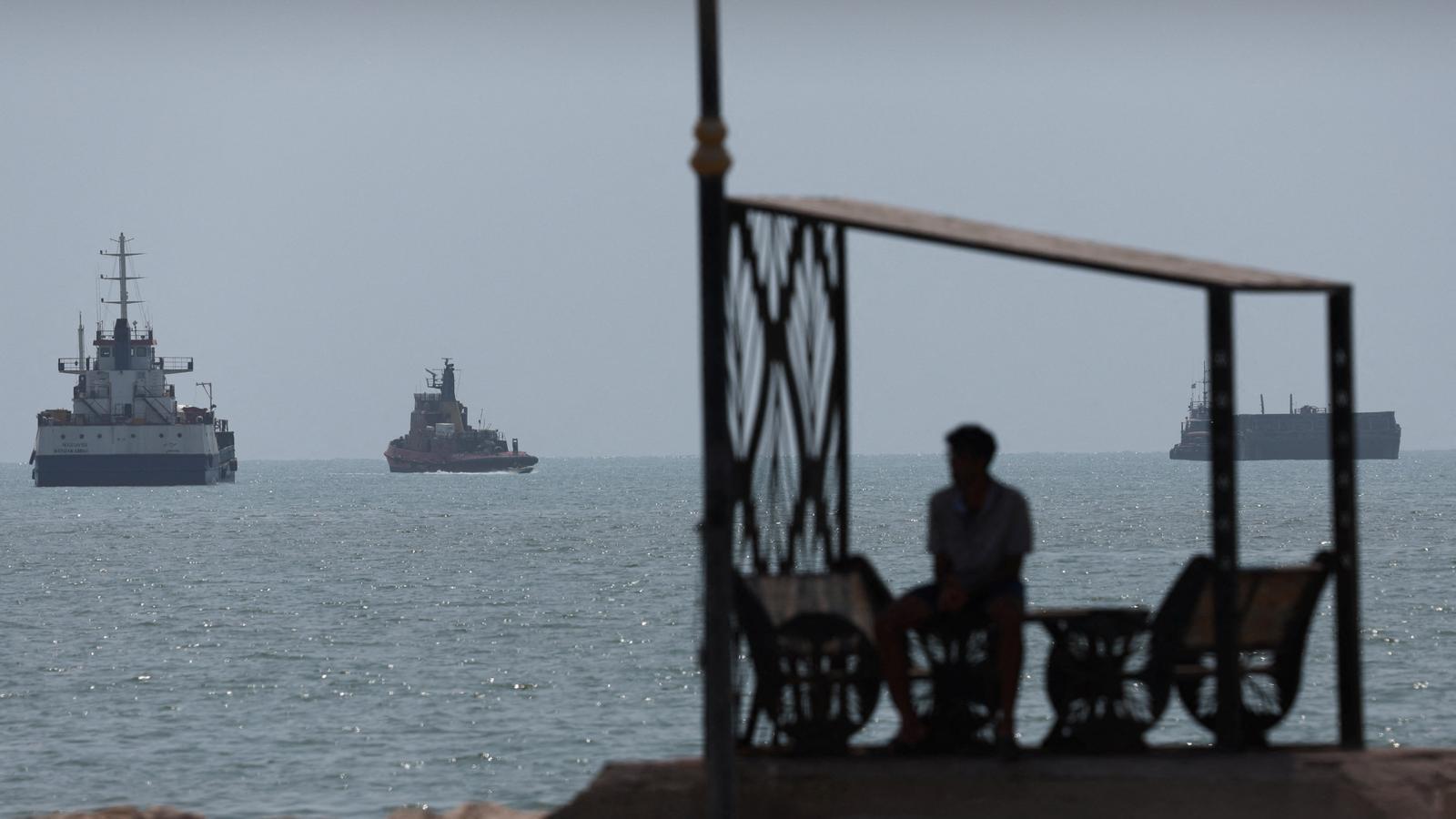
Centcom has justified the "precision" attack as a response to the Iranian threat posed by two platforms on Larak Island that were preparing to fire rockets loaded with sea mines into the Strait of Hormuz. For days, U.S. forces insist that they have been clearing Iranian mines from the waters of the strait and that tankers are successfully being escorted so they can cross to the other side of the Persian Gulf. Washington has managed to find a kind of corridor that runs along the Omani edge of the strait. However, the fact that the navy is successfully escorting some ships does not mean that the US has managed to break the blockade. The level of barrels passing through per day remains lower than in the pre-war period.
The Iranian president, Masoud Pezeshkian, said this Monday that his country does not seek war, but will respond to "aggressions", after the cross-border attacks registered last night between the United States and Iran. "We do not seek war, and this is the clear message we have conveyed to the world [...] but we will never stand idly by in the face of aggression and we will respond forcefully", stated Pezeshkian. Previously, a spokesperson for the Revolutionary Guard assured that this "terrorist aggression will be punished" and, in a subsequent statement, described the attack as a "strategic and fatal mistake".
However, from the US, Centcom assured that the American attack had not been "an act of aggression", but rather a reaction to a detected threat. "In essence, Iran generated the threat and the US military eliminated it to protect civilian sailors, commercial maritime transport, and the free flow of world trade", it concluded.
As retaliation for Washington's bombing of the Iranian island of Larak, Iran's Revolutionary Guard claimed to have attacked two US bases, Al-Azraq and Rey Hussein, in Jordan with missiles and drones. The attacks, which caused "significant damage", were intercepted by the US military, according to various US media outlets such as Axios and Fox News.
The collapse of peace talks
In June, a 60-day truce was agreed, but negotiations failed on August 17. Now, Washington had opted for Operation Economic Pariah, focused on sanctions, maritime control, and selective bans to suffocate the Iranian economy and had not resumed bombings. Until now. This morning's is the first exchange of attacks between the US and Iran since the end of July. At that time, the media reported on US bombings against dozens of Revolutionary Guard military targets.
Donald Trump continues to be trapped in the Iran labyrinth, a war without an exit that was supposed to last, at most, six weeks and which has been dragging on for six months. Without any effective triumph, the American president has posted on his social network, Truth Social, a video created with artificial intelligence that simulates an attack on the Iranian island of Jarg, the country's main oil base and a recurrent target of Trump. The images show in 9 seconds a fictitious bombing that causes a warehouse and an oil tanker to explode, with a message that says: "Jarg Island in pieces!!! President DJT".
