The Palestinians of Israel have the key to the elections, but nobody wants to make a deal with them
The electoral board banned all Arab formations, a measure that the Supreme Court partially revoked
-
CAT -
CAST
BarcelonaMany people do not know this, but 20% of Israel's population is Palestinian. And for the first time in its history, this minority could be key in deciding the outcome of the Israeli elections on October 27th. Polls point to a 50-50 tie between Benjamin Netanyahu's right-wing and far-right governing bloc and the liberal opposition forces. With this almost unprecedented scenario, the Arab minority would hold the key to the defeat of Netanyahu, a candidate against whom an arrest warrant from the International Criminal Court for the genocide in Gaza is pending. However, in a context of strong anti-Arab racism, neither the government nor the opposition wants to reach agreements with the parties that represent them. Last month, the electoral board banned all Arab parties from running in the elections, as well as the communists of the only party that brings together Arabs and Jews. The decision was so discriminatory that the Supreme Court reversed it, but only partially. The United Arab List (Ra'am) will be able to run, as will the Joint List. The candidate from one of its parties, Sami Abu Shehadeh, remains banned. The Jewish communist candidate Ofer Cassif will also be able to run. In contrast, Israeli far-right parties with candidates against whom international sanctions for human rights violations are pending have been able to run without problems.
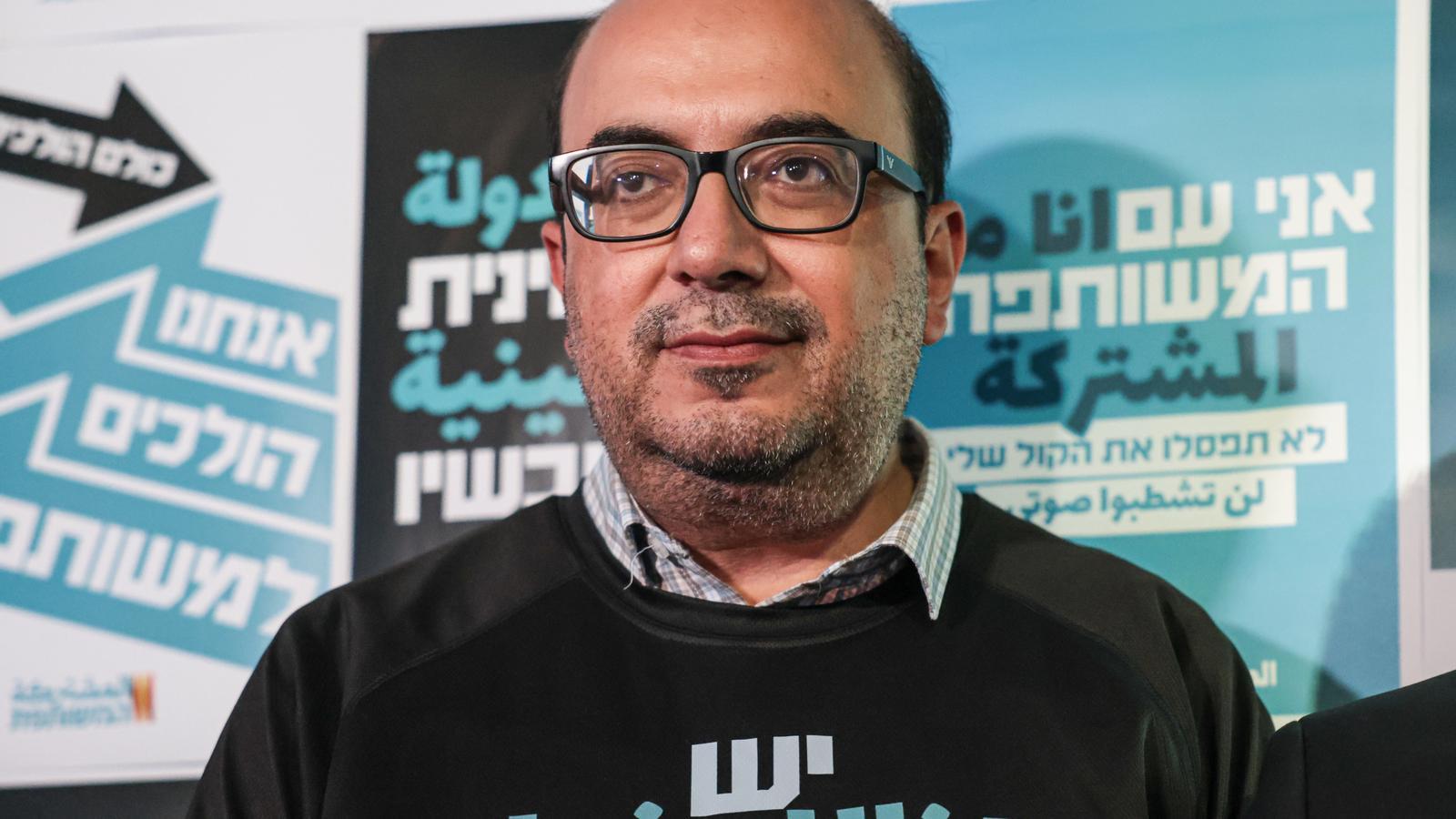
Shehadeh withdrew his candidacy after the president of the Supreme Court warned him that the majority of the court's judges supported his expulsion due to an article he published the day after the Hamas attacks of October 7, 2023. In the text, he defined those attacks as "an important historical event, from a political, military, and strategic point of view," something the magistrates interpret as an apology for terrorism. "I have defended human rights in my 30-year career, and it is a racist like [the ultra-security minister Itamar] Ben Gvir, who has promoted my disqualification, which is the result of a climate of generalized racism," explains Shehadeh, leader of the Balad party, to ARA. According to him, the underlying motive is to hinder the participation of Palestinian citizens of Israel: "Netanyahu and Ben Gvir know that if the Arab-Palestinian community participates in the next elections, it will be the main obstacle for them to revalidate their mandate."
The Arab community in Israel exceeds two million people and is made up of Palestinians who were not expelled in the violent process of creating the state of Israel in 1947-48 and their descendants. It is mostly represented by two large coalitions. The Joint List, which groups the Hadash party (a left-wing formation to which Jews and Arabs belong), Ta'al (which defends the rights of Palestinian citizens of Israel) and Balad (which demands a single state with equal rights above ethnic or religious affiliation). Shehadeh is the main leader of Balad. The three formations run in coalition so as not to split the vote and manage to overcome the 3.25% support threshold required by Israeli law to enter the Knesset, the parliament. Hadash currently has three deputies and Ta'al two. The other major Arab formation is Ra'am (United List), led by Mansour Abbas. Of a conservative Islamist sign, it has always focused on negotiating services and benefits for Palestinian citizens of Israel. Having participated in the great governing coalition of Israel in 2021-22 which was a parenthesis in Netanyahu's reign did not save them from the initial exclusion by the electoral board either. They currently have five seats in the Israeli parliament.
The Joint List and the United List are the only two candidacies of Palestinians with Israeli citizenship, out of the 38 running in the elections. Although they may hold the key to the defeat of the current governing coalition, given the polarization of Jewish citizens. Israeli authorities had previously disqualified Palestinian parties and candidates, but the exclusion of all lists is unprecedented. Due to the discrimination against non-Jews within Israeli society, the participation of Palestinians who hold citizenship is historically low: in 2021 it remained at 44.6% and in 2022 at 53.2%, well below the total average, which stands at 70%.
Netanyahu's throwing weapon
Netanyahu often resorts to the argument that the opposition has no chance of unseating him without the support of the Arab parties. A support that 70% of the Israeli Jewish population rejects. His main rival, Gadi Eisenkot, a former chief of staff with a high reputation for his discipline, who is not known for any corruption scandals, has ruled out from the beginning of the campaign that he is willing to form a coalition with the Palestinian minority parties. He has set as a condition for government partners that they recognize Israel as a Jewish and democratic state, support mandatory military service also for the Orthodox, and recognize Hamas as a terrorist organization that must be destroyed. He has explicitly ruled out an agreement with Ra'am, the party most open to reaching a deal with him.
Even Yair Lapid, leader of the centrist opposition, has ruled out governing again with the Joint List. If the Arab parties obtain a good result, they could facilitate a minority government from the outside, but if the other parties maintain the veto on reaching a deal with them, it could end up precipitating an electoral repeat, with Netanyahu at the head of a caretaker government.
