The EU approves the macro-loan to Ukraine and sanctions on Russia after Orbán's defeat
The European bloc will allocate 90 billion euros in aid to Kyiv and will apply more energy restrictions to Moscow
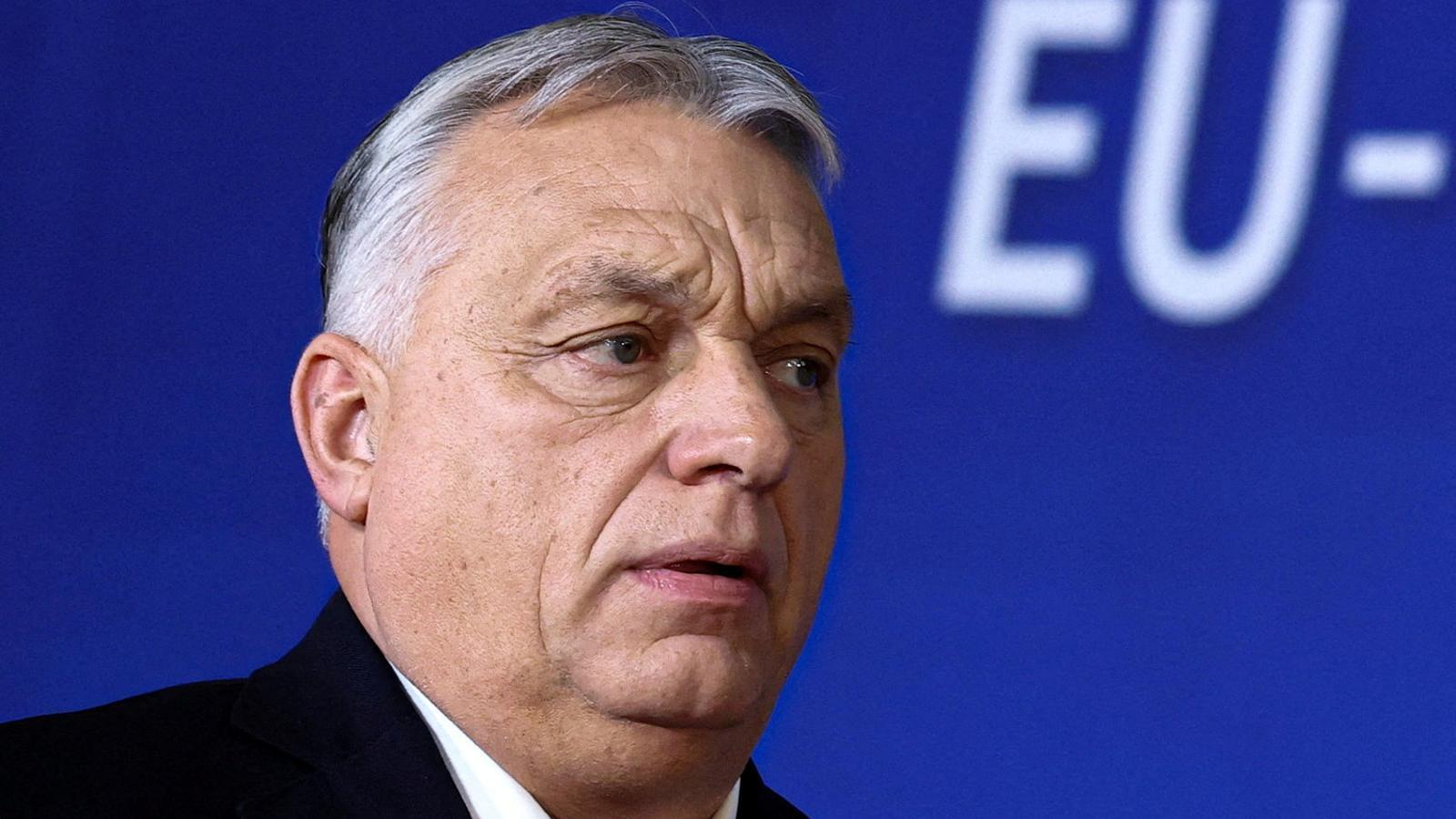
Brussels / BarcelonaThe final agreement has been a long time coming, but Viktor Orbán's electoral defeat in Hungary has paved the way for the European Union to continue helping Ukraine and applying pressure on Russia. After Budapest lifted its veto, member states have agreed to send the credit of 90 billion euros to Kyiv, according to diplomatic sources. This is crucial aid for the country at war, which has seen the United States under Donald Trump shut off its tap completely. Furthermore, European partners have processed the twentieth package of sanctions against the Kremlin, which had also been gathering dust for months and aims, among other things, to increase energy restrictions on Vladimir Putin's regime.
Orbán, who has continuously put obstacles in the way of any initiative favorable to Ukraine and contrary to Russia, made the EU's macro-loan to Ukraine one of his main battlehorses during the election campaign. After the elections, however, the current acting Hungarian Prime Minister has opted to stop vetoing the dispatch of credit to Kyiv and negotiations with Moscow.
The far-right Hungarian leader claims that the trigger was that Ukraine and Brussels have committed to repairing and restarting the Druzhba oil pipeline, which connects Russia with Hungary, next Monday. Even so, even before the Hungarian elections, the European Union assured that it was willing to bear the cost of the repair and had reached an agreement with Kyiv to fix it as soon as possible. Despite finally agreeing, this is a condition imposed by Orbán that particularly annoyed Volodymyr Zelensky, who has seen his government have to pay with community money for the repair of an infrastructure destroyed by the Russian army and which, moreover, benefits a leader who has always tried to hinder any aid for Ukraine.
this April has launched more drones than MoscowThe details of the loan
European credit is divided into two parts. Of the 90 billion euros, one third will be allocated to Ukraine's general budget so that the country can cover public expenses beyond those strictly related to the war. These 30 billion euros will give a little oxygen to the different ministerial portfolios, which in recent months have seen their budgetary capacity severely limited due to the inevitable increase in military spending.
The other part, 60 billion, will be used for Ukraine to invest in military equipment and technology. The acquisitions, which must be made from EU member states, will allow Ukraine to “innovate in military matters and, at the same time, continue with attacks on the front”, explains to ARA Konrad Muzyka, an analyst at the defense consultancy Rochan Consulting. As a whole, the loan will give stability to Kyiv and will once again show Moscow that the European Union not only supports Ukraine, but is also willing to help it militarily, the expert points out.
However, Muzyka warns that the credit will not solve some internal problems of the country, such as that it “is not capable of recruiting new soldiers to cover all casualties on the front”. At a time when US support has been reduced due to the war against Iran, European loans are even more necessary, but they will also not cover some of Ukraine's military needs such as high-precision ammunition, air defense systems, and intelligence services. “The latter two are very important, and Europe cannot provide that with this money”, warns Muzyka.
All in all, after a particularly bad 2025 on the front for Ukraine, Kyiv is improving its attack capability. While Moscow faces difficulties recruiting soldiers and covering casualties, after months of Kremlin superiority, Ukraine is starting to turn the tables. Kyiv has managed to halt the Russian advance, and this April it has launched more drones than Moscow. Even Zelensky announced in mid-month that Ukrainian troops had managed to push back Russian troops from a position using only drones and robots. “Everything suggests that for Ukraine, 2026 will not be like 2025”, concludes Muzyka.

