Students are already leading the new parliament of Serbia
The new chamber is constituted in the Balkan country after the historic triumph of the Student List, which ends 14 years of Vucic's power
-
CAT -
CAST
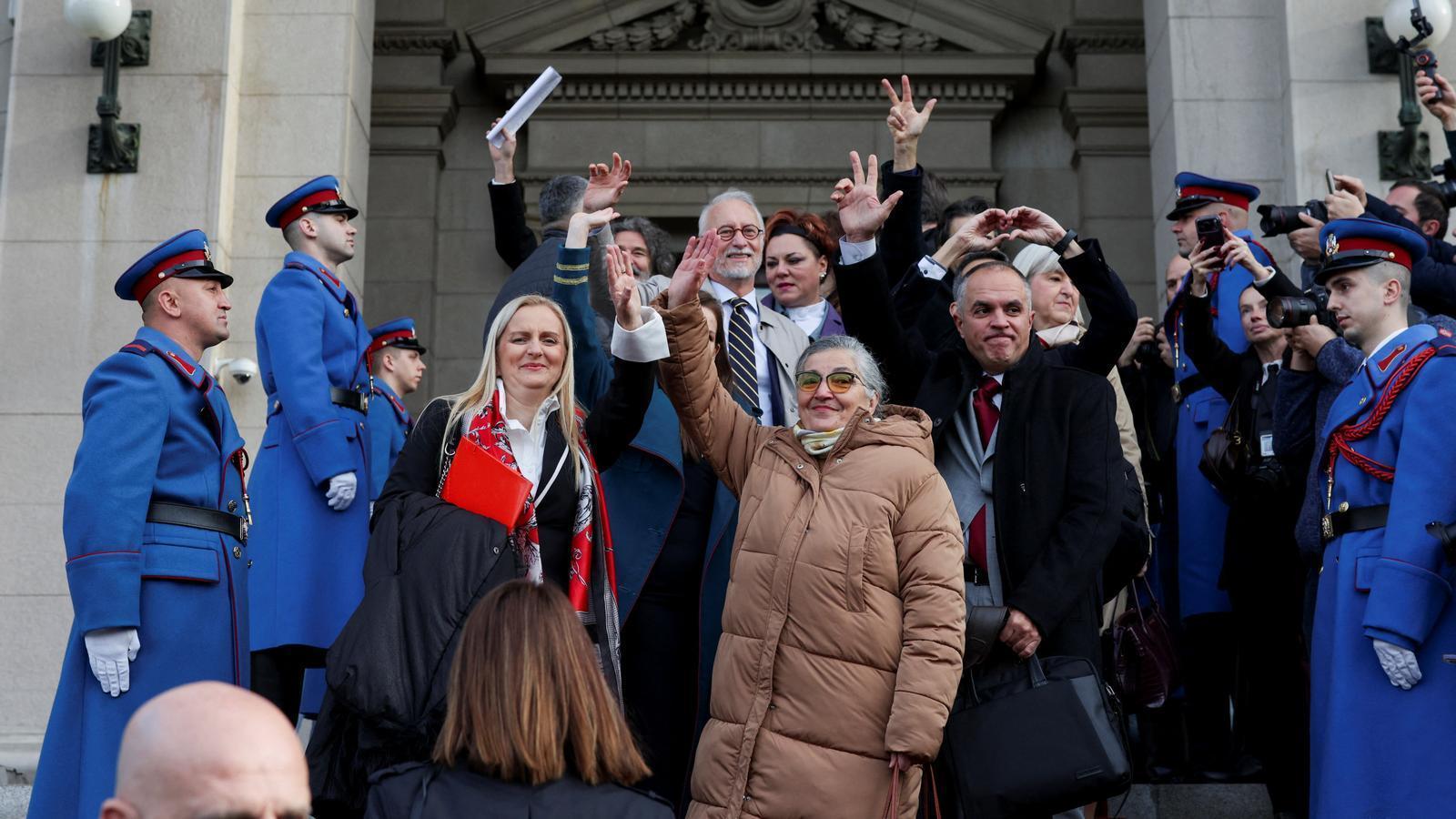
BarcelonaThe new Parliament of Serbia, emerging from the legislative elections of October 25th, took office this Tuesday with a powerful headline: for the first time in fourteen years, the Serbian Progressive Party of the very conservative Aleksandar Vucic will not dominate the chamber. Instead, it will be led by the Student List, the political party formed by the students who won the elections after months of massive protests against corruption in the Balkan country. It is a new page in the political history of Serbia.
In this sense, the students' party, which has 140 of the 250 seats, aims to form a government of experts under a list that brings together members of different ideologies, as well as professors from different fields and doctors with different specialties, and also activists: “We have all seen a dysfunctional parliament that has been constantly in conflict and full of hate. It must be – and will be – different,” said the new MP Bojan Dimitrijevic on Serbian television N1.
The movement was born out of the anti-corruption protests following the collapse of a canopy at the Novi Sad station in 2024, which caused sixteen deaths and sparked a series of protests over two years. Now, the Student List promises to restore the rule of law and freedom of the press after the various Vucic governments, who held power for fourteen years as president or prime minister. Weeks before the legislative elections, he resigned as president to be able to run again for prime minister, demonstrating that his party would win again, something that ultimately did not happen.
“Aleksandar has left”, “Victory” and “Prison for the SNS deputies”, shouted hundreds of citizens gathered in front of the entrance of the National Assembly to greet the new legislators upon their arrival, before the constitutive session opened. In contrast, the protesters booed the SNS parliamentarians and one of them even threw a yogurt at the deputy and actress Lidija Vukicevic, a fervent supporter of Vucic, who tearfully reported that they had pulled her hair and insulted her without the police intervening.
These have been intense days in Serbia. After the October elections, the Serbian public radio and television apologized for the years of “manipulation” the network had engaged in with its audience, a decision that was accompanied, one day later, by the resignation of its director, Manja Grcic, considered close to former president Vucic. During these two years, a large number of media outlets favorable to the SNS government tried to silence the gatherings, most of which were peaceful, as well as criminalize the young students.
Intention to join the EU but without condemning Russia
Among the eleven measures included in the program, the student party wants to accelerate accession to the EU, which had already offered to support them in carrying out the necessary reforms to join: “The EU remains ready to work closely with the new Serbian government on the fundamentals of the accession process, specifically on democratic criteria, the independence of the judiciary, and fundamental rights, including freedom of the media,” stated the head of EU diplomacy, Kaja Kallas, and the European Commissioner for Enlargement, Marta Kos, in a joint statement. However, the Student List refuses to impose sanctions on Russia, distancing itself from Brussels' demands.
Although the party has not announced a definitive leader, two of the possible candidates for prime minister could be Dejan Soskic, an economist and former governor of the Central Bank of Serbia between 2010 and 2012, or Ilija Srdaonovic, a cardiologist and professor of Medicine. At the same time, the new president of the chamber, yet to be defined, will assume the interim leadership of the state until the presidential elections on December 27. Now, a 90-day period is opening to form a government in Serbia, in which the main challenge will be to group together the different ideological currents embraced by the workers' party.
