The radical decision to go around the world all alone for four years
In 'La clau', by Flavia Company, the external journey matters above all for what it dismantles inside
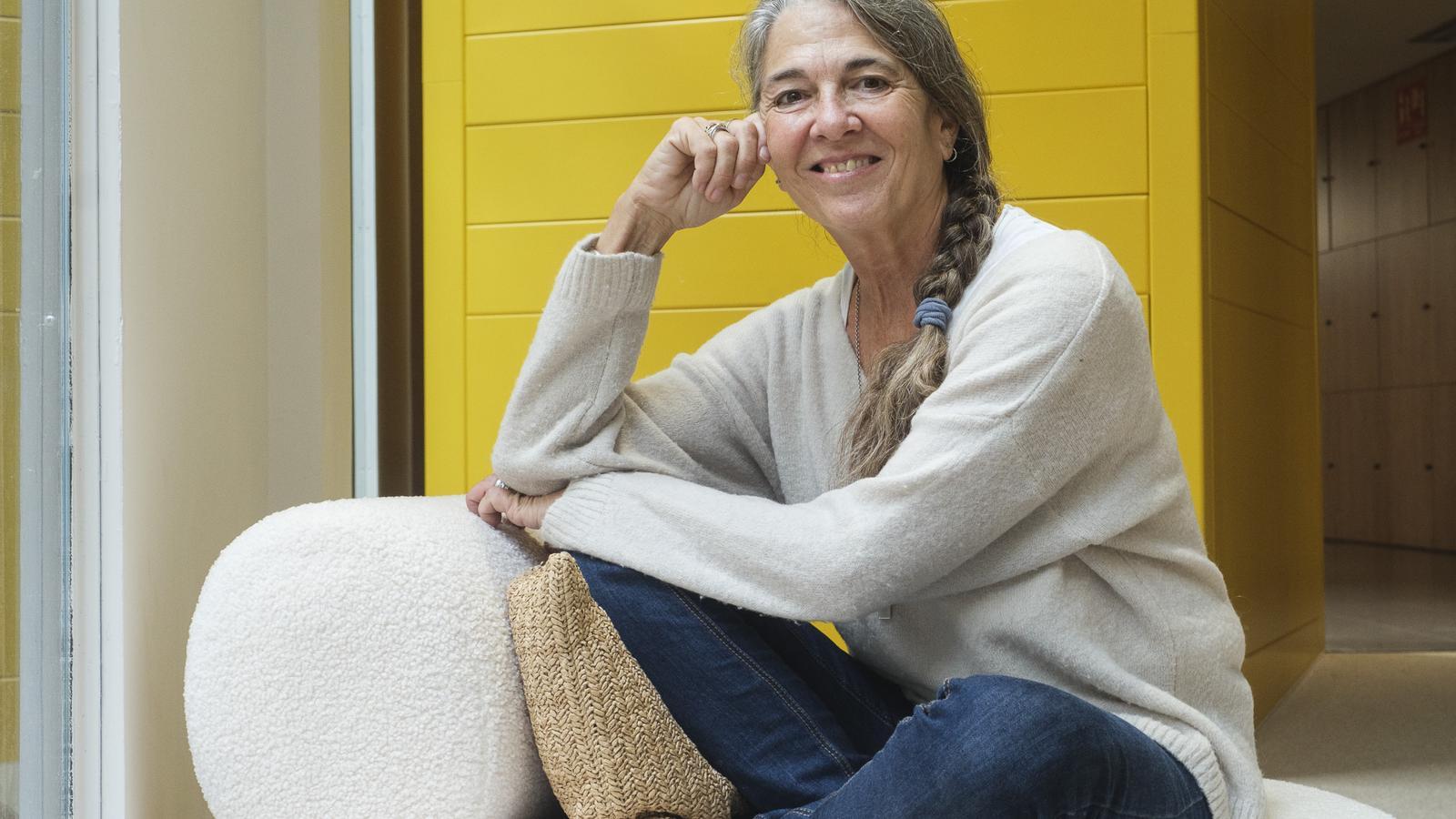

- Flavia Company
- Navona
- 288 pages / 23 euros
In The Key, Flavia Company (Buenos Aires, 1963) faces a challenge that modifies the rules of the craft: explaining a lived experience without allowing oneself the liberties of invention. The result is the story of a personal transformation that begins with a radical decision –to travel around the world all alone for four years– and ends with a less geographical and less chronological question: what happens to us when we stop living according to the coordinates that had defined us?
Company retrieves a previous book, I no longer need to be real, published under the literary name Haru, but does not limit herself to revising it. Now she puts her name in front of a personal experience and does away with the protective distance of fiction. She does not want to demonstrate that everything one lives can be turned into literature, but rather to find out what writing gains and loses when it renounces inventing. The journey begins in 2018 and is not organized as a tourist itinerary or as an inventory of extraordinary places. The landscapes have a secondary function in it compared to the people who appear on the path, the unforeseen encounters, and the situations that force the narrator to react without a prior script. The world ceases to be a backdrop to become a network of relationships.
The author does not need to reconstruct every day or establish a conventional narrative progression: she selects moments, intuitions, and experiences that acquire meaning through accumulation. The writing seeks nakedness, immediacy, and a form of truth that does not depend on the spectacularity of events. The outward journey matters above all for what it dismantles within. The distance from one's previous life allows for the observation of its automatisms and the questioning of certainties that, from the perspective of routine, seemed immovable.
Exposing oneself to vulnerability
Traveling alone also means exposing oneself to vulnerability, accepting uncertainty, and discovering that independence does not eliminate the need for others. Solitude can open spaces for connection that ordinary life keeps closed, but it also entails absence. Flavia Company does not present displacement as an infallible formula for personal fulfillment, but rather as a change in the way of understanding bonds, belonging, and identity.
The key can also be read from another perspective: that of a world that has changed while the narrator was passing through it. The trust that made that adventure possible coexists, in retrospect, with a more unsettling perception of the present. The precariousness of freedoms, the increase in inequalities, and the degradation of the planet introduce a political shadow into the narrative. Individual transformation does not occur on the margins of history: discovering one's own fragility also implies recognizing that of others and that of the world. Here, the book overcomes the temptation to offer a lesson in personal improvement: abandoning everything does not guarantee that we become better or that we find definitive answers. There is a willingness to let oneself be modified by what happens, to renounce part of the control, and to accept that life does not always confirm the ideas we had formed about it.
The key is an exercise in dispossession: of routines, of certainties, and of the idea that we can control the narrative of our own existence. Flavia Company puts to the test the boundary between living and writing, between experience and the form we give it when we try to understand it. Not all life experiences become literature, and truth, on its own, does not guarantee a successful work either. The merit of the book is the attempt to transform an extreme experience into a shared question. We already carry the key with us and it does not open any universal door: it reminds us that first we must accept that we do not know where we are.
