The 'bluenami' maps: which states have given the victory to the democrats?
At least seven seats have changed color and have given the Senate majority to the Democratic Party

-
CAT -
CAST
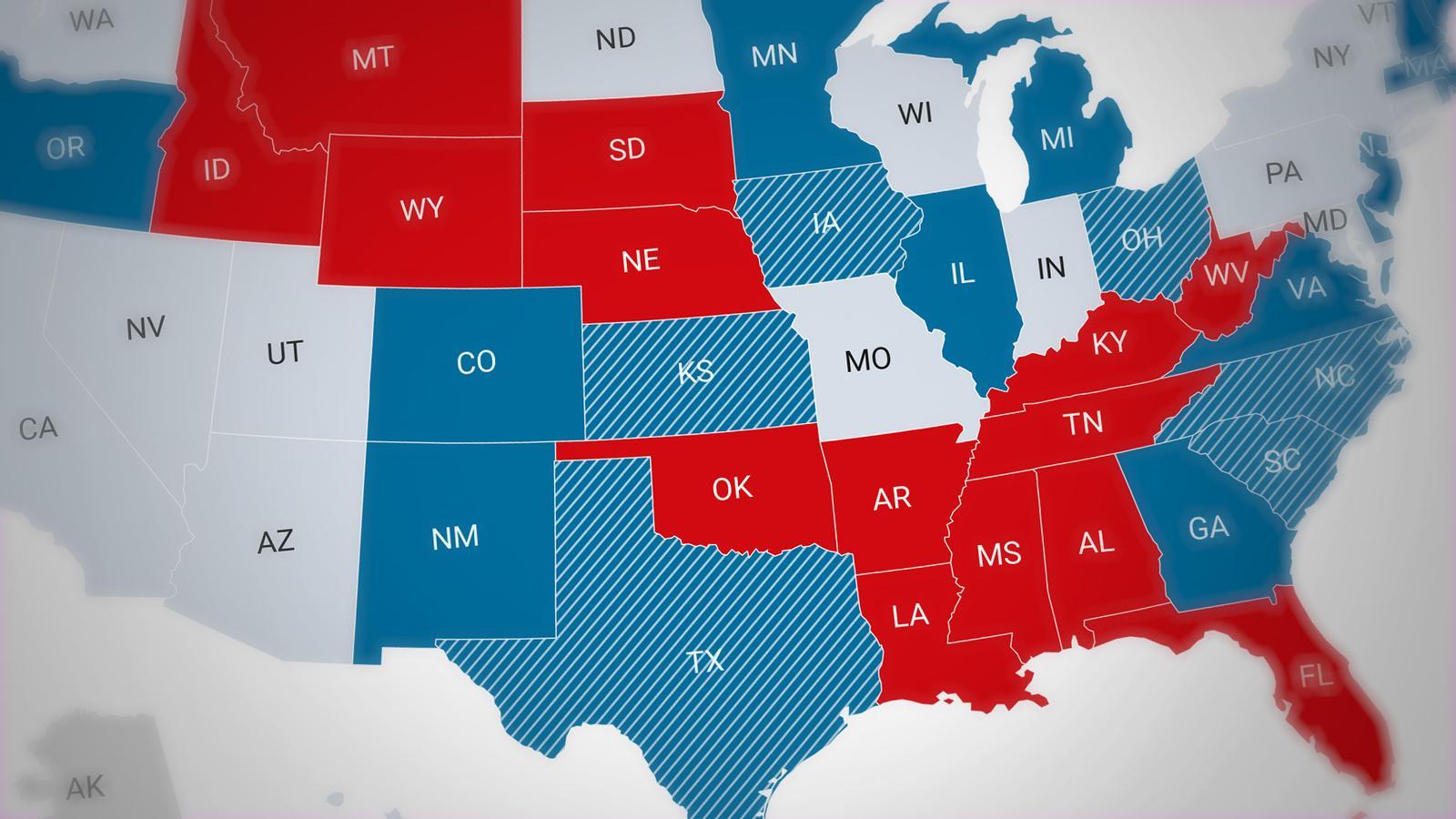
The blue wave has turned into a tsunami this election night: bluenami as some United States media outlets called it. While we wait for the figure of their majority in the House of Representatives to be confirmed, the Democratic Party already has the majority secured in the Senate as well. In this chamber, the Democrats have won all the races that were expected and have taken some unexpected victories such as South Carolina, Kansas, or Iowa, traditionally Republican states that have changed color with a punishment vote against the policies of President Donald Trump. With the count still underway, the blue party already holds 53 seats, two above the majority it needed (with only 50 it would have been hobbled due to the tie-breaking vote of Vice President J.D. Vance), but it could still snatch a few more.
Up to seven states have changed color and gone from red to blue on the Senate map: Maine, Iowa, Kansas, North Carolina, South Carolina, Ohio, and Texas.
Even Nebraska, a state that polls projected solidly for the Republicans, has been yellow for quite a while, projecting a possible victory for independent candidate Dan Osborn, who would vote alongside the Democrats. Shortly after, however, Republican Senator Pete Ricketts regained the lead in the count.
Past midnight in the United States, the seat in Michigan is still to be assigned, where Democratic candidate Abdul Al-Sayed could become the first Muslim senator in the history of the United States and at the same time would give a significant victory to the most progressive wing of the party. The result in Maine was also not yet clear, where polls showed a technical tie, but the Democrats are leading the count. Minnesota has indeed fallen to the Democrats, even though the initial ballots seemed to tilt the state towards red.
Not even the changes to electoral districts (or gerrymandering) that the Republicans had cooked up for these elections have saved them from a crushing defeat in both the House of Representatives and the Senate.
The key states
The only state that was taken for granted to change color was North Carolina, and it has already done so early on election night. But immediately came a victory that many polls had not foreseen, that of South Carolina, a traditionally Republican stronghold where Trump has won three times (in 2016, 2020, and 2024). There, the Republican Darline Graham has lost the seat she had occupied temporarily in the summer when her brother, Senator Lindsey Graham, died, who was one of Donald Trump's most faithful and devoted allies.
Texas was another of the key states that turned blue at the beginning of the night. The 80 million dollars that the Republicans have spent on the campaign in this state, including anti-trans ads, did not prevent the victory of the Presbyterian pastor James Talarico, the Democratic candidate who achieved the first Senate victory in this state since 1988. "Not all the money in the world could overcome the people of Texas, we send a message to the mega-donors: in this country, power belongs to the people," said Talarico, who used the Bible to compare his victory to that of David against Goliath.
But even more surprising than that of Texas were the victories in Kansas, a state that a Republican had not won since 1932, and also that of Iowa, which has voted three times for Donald Trump in the presidential elections and with a margin of more than 16 points. Trump himself closed the mid-term election campaign yesterday, Tuesday, in this rural state in the US Midwest, which was one of the races in doubt, but which many analysts granted to the Republicans. The increase in fuel prices and the import of meat from Argentina, in addition to tariffs, have hit rural states like these two hard and caused them to move away from the Republicans in these elections.
Ohio has also changed color, a state that had been historically considered purple (shifting from red to blue) but which in recent years had leaned towards the Republicans. Tonight, however, the Democratic candidate, Sherrod Brown, won there, driven not only by inflation and discontent with Trump's policies, but also in part by a smear campaign by the Republicans in the race for governor. The Republican candidate for governor of the state, the billionaire Vivek Ramaswamy, used the mother of his opponent, Amy Acton, in an electoral advertisement. The woman claimed her daughter was "a bad person" and called for people not to vote for her, despite the fact that mother and daughter have not spoken for 50 years, ever since the mother lost custody due to the sexual abuse Acton suffered as a child at the hands of her stepfather.
In Maine, another of the states that were in doubt, the Democratic candidate, Troy Jackson, has snatched the seat from the incumbent Republican senator, Susan Collins. This victory was not such a big surprise: Maine already voted for Kamala Harris in the presidential election two years ago, with a lead of nearly 7 points over Trump. Jackson managed to overcome the difficulties of a last-minute nomination, replacing the Democratic candidate Graham Platner, who had to withdraw due to a sex scandal.
