Russia and Ukraine accuse each other of violating a symbolic truce
Both sides use Orthodox Easter to show Trump that the other does not want peace
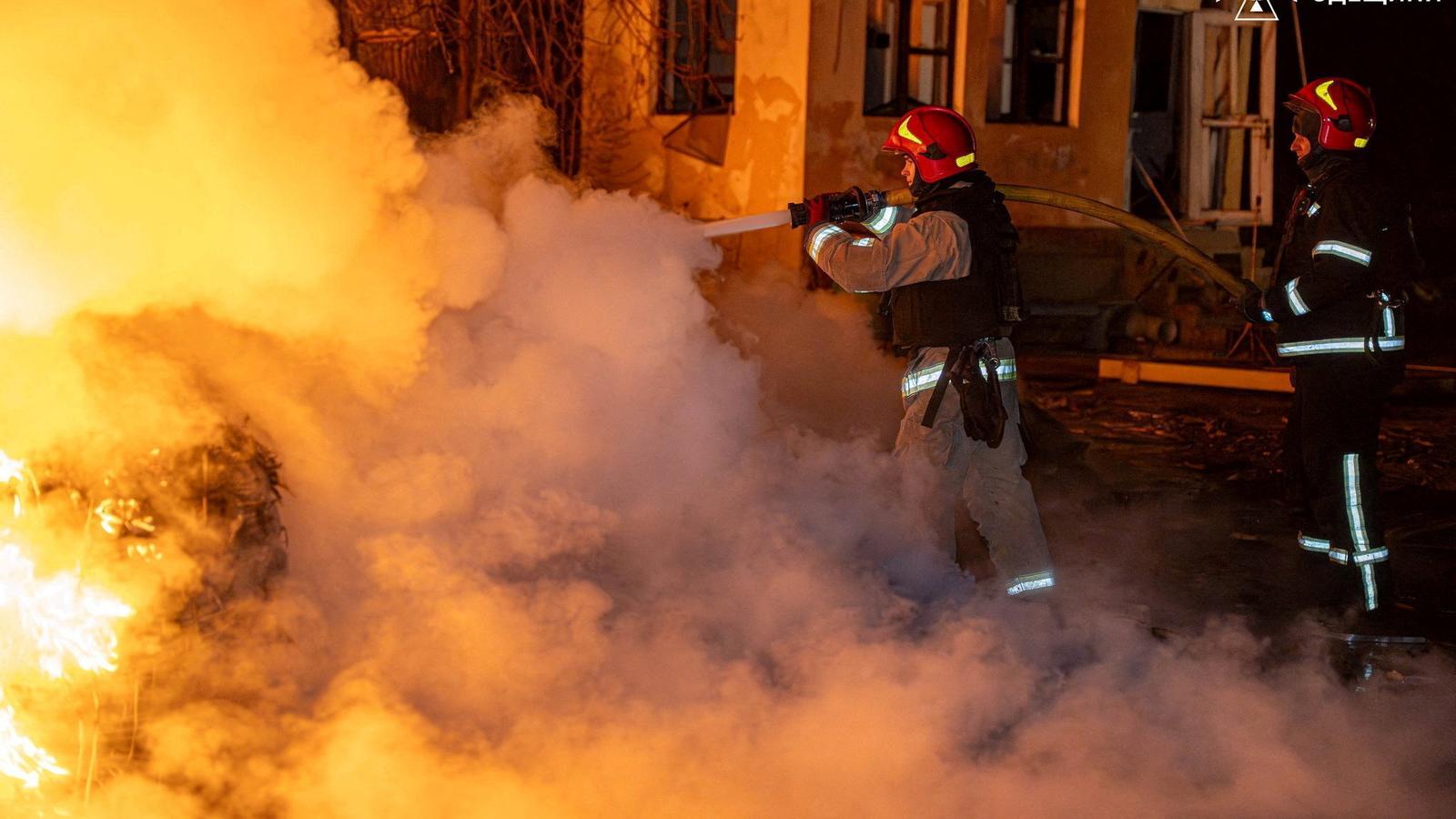

Moscow“A swallow does not make a summer” would be the Russian equivalent of our “A flower does not make a summer”. In this winter Orthodox Easter Week, with temperatures near 0 degrees and snow in Moscow, the Easter truce will have passed like a fleeting mirage of 32 hours. Faced with Vladimir Putin's refusal to extend the ceasefire beyond midnight on Sunday, as Volodymyr Zelenskyy had asked him to, both sides have mutually accused each other of repeatedly violating the pause in fighting in the hope that Donald Trump will see that the other is the main obstacle to peace.
Since the start of the truce, at three in the afternoon on Saturday (Catalan time), Russians and Ukrainians have reported hundreds of violations of the agreement. According to Kyiv, the Russian army has committed 10,721, while Moscow stated early on Sunday that Ukrainian troops had committed 1,971. These are, above all, drone attacks on the front line. Military observers note that, at first, the ceasefire was largely respected, but that, little by little, activity returned to the front. Be that as it may, there have been no long-range bombings of energy infrastructure or residential areas: no missiles or large drones have been fired, such as Shahed drones.
Analysts point out that it is common for violations to occur during truces, especially if the pause is not intended to facilitate a negotiation process, as is the case. A year ago, during the first Easter ceasefire, the pattern of accusations was identical, and both sides blamed the enemy. Publicly highlighting and magnifying the other side's “provocations” – the term used by the Kremlin – is a political decision aimed at influencing Trump's position. For this reason, Putin wanted to claim credit for the initiative. He decreed the ceasefire unilaterally on Thursday night for “humanitarian” reasons and forced Zelenskyy to comply, even though the Ukrainian president had been demanding it for a week.
Putin rejects a ceasefire
In the last few hours, Zelensky has insisted that “it would be good” for the truce to continue beyond the religious holiday. “If Russia once again chooses war over peace, it will once again show the world, and the United States in particular, who is truly in favor of what,” he said. But the Kremlin flatly refuses. Its spokesperson, Dmitry Peskov, has already warned that “the special military operation” will continue once the truce has expired until the Ukrainian leader “gathers the courage to make a well-known decision.” He is referring to compliance with Moscow's demand that Kyiv hand over the entire Donbas region to Russia and withdraw its troops.
Peskov has implied that there will be no substantive negotiations beyond territories as long as Ukraine does not comply with this condition. The Kremlin supports the United States' viewpoint, which holds that the peace agreement is fundamentally stalled in a discussion about the sovereignty of the occupied provinces, and thus hopes that the White House will increase pressure on Zelensky to eventually give in. According to the spokesperson, the discrepancy is reduced to “a few kilometers” and, once “18%” of Donetsk under Ukrainian control has been “liberated,” a “complex” negotiation process will begin.
Since Trump's return to the presidency, Putin has systematically refused to accept a temporary ceasefire. The official argument is that he fears the Ukrainian army will take advantage of it to rearm and rotate its soldiers. That is why all the truces he has proposed have been brief and cosmetic, such as the two for Easter and the one for Orthodox Christmas 2023, or self-serving, such as the 72-hour one during last year's Victory Day celebrations, when dozens of world leaders were in Moscow.
Putin has systematically refused to accept a temporary ceasefire

